
News
- 17 August 2026, 12:00 1428
 Agricultural Exports by Road Increased by 9%: Hungary and Slovakia Lead
In the first 13 days of August, Ukraine increased agricultural exports through road border crossing points by 8.9% compared with the same period in July.
- 17 August 2026, 08:00 1705
 Ukraine Expects to Receive the EU’s Response on Agricultural Sector Support by the End of August
Ukraine has officially appealed to the EU with a request for €220 million in assistance for a specific purpose — to compensate interest on loans for agricultural producers. They need these funds to carry out the autumn sowing campaign and continue their operations amid export difficulties caused by the shutdown of Black Sea ports.
- 16 August 2026, 11:15 7303
 Top 10 Buyers of Ukrainian Dairy Products
Despite an increase in dairy product exports in July, Ukraine supplied fewer commodities to foreign markets.
- 16 August 2026, 08:00 3662
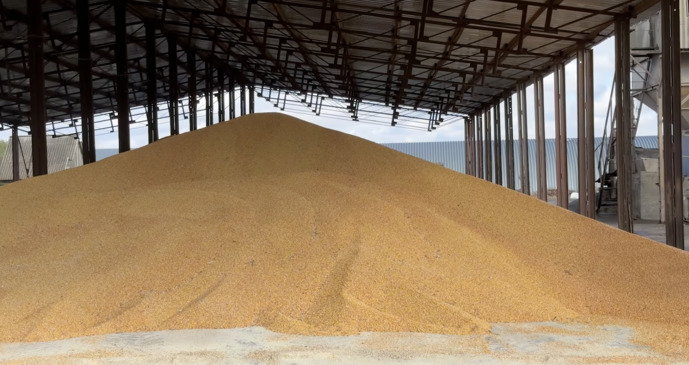 More Than 8 Million Tonnes of Grain in Ukraine Will Be Placed in Temporary Storage Facilities
At the current pace of limited exports without the ports of Greater Odesa, Ukraine will effectively face a shortage of domestic grain storage capacity in November, which could amount to between 8 million and 11 million tonnes.
- 15 August 2026, 12:00 2619
 Ukraine’s Oilseed Harvest Will Be Higher Than Last Year
The overall oilseed production potential in Ukraine in the 2026/27 marketing year remains significantly higher than last year due to the expected recovery in yields despite adjustments to planted areas.
- 15 August 2026, 08:42 3031
 Shifting Grain Exports to Alternative Routes Means $3 Billion in Additional Costs
Alternative routes for exports of grain, oilseeds and their processed products through the Danube region, by rail and road transport, during periods of their active use, provided a maximum of up to 50% of the volume that was shipped through the ports of Greater Odesa.
- 14 August 2026, 12:00 1411
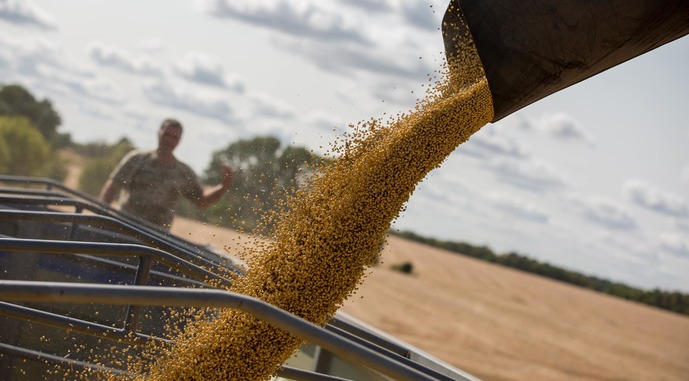 Alternative Routes Will Be Able to Handle a Maximum of 50% of Agricultural Exports
In August, vessels are no longer calling at the ports of Greater Odesa. From August 1 to 12, Ukraine exported 590 thousand tonnes of grain, which is 30% of the required volume. Currently, about 45% of agricultural exports are transported by rail, about 45% through the Danube region, and 10% by road.
- 14 August 2026, 08:45 2157
 Port Blockade Could Cost Ukraine’s Agricultural Sector $20.5 Billion in Unsold Products
The suspension of exports through seaports could result in tens of billions of dollars in lost revenue for Ukraine’s agricultural sector.
- 13 August 2026, 10:28 1393
 Dairy Product Imports to Ukraine Increased by 71% Over the Year
In July, Ukraine imported 8.79 thousand tonnes of dairy products, which was 1% more than in June 2026 and 71% more than in July 2025.
- 13 August 2026, 08:40 2351
 Blockade of Ukrainian Ports Will Affect the Vegetable Oil Market: Possible Scenarios
The effective halt of Ukrainian and Russian sunflower oil supplies through the main Black Sea and Azov Sea ports has created uncertainty in the market and is changing the rules of the game in the sector.
- 12 August 2026, 14:25 2834
 Record Raspberry Exports and Threefold Drop in Blueberry Exports: Berry Season Results
At the end of the 2025/26 marketing year, Ukraine recorded record revenue from raspberry exports, while significantly reducing blueberry shipments to foreign markets.
- 12 August 2026, 12:00 1702
 Rail Corridor Through Moldova Could Provide Transit for 4.5 Million Tonnes of Ukrainian Grain
The rail transit corridor through Moldova is capable of transporting 4.5 million tonnes of grain per year.
- 11 August 2026, 15:27 2039
 Ukraine and Poland Seek Ways to Increase Transit of Agricultural ProductsUkraine is working to maximise the use of alternative routes for agricultural exports.
- 11 August 2026, 09:52 2043
 Ministry of Agrarian Policy Downgrades Grain Export Forecast Due to Attacks on Ports
Ukraine’s grain exports in the 2026/27 marketing year will amount to 38–40 million tonnes, which is 12% lower compared with previous estimates.
- 10 August 2026, 11:10 1970
 CraftUP Ukraine Educational Stage Completed: Participants Received Certificates and Evaluated the Programme
Participants in the CraftUP Ukraine educational and grant project have completed the training programme and received certificates.
- 10 August 2026, 09:57 3834
 A Window of Opportunity Is Opening for Ukrainian Raspberries Due to Problems Faced by EU Competitors
Ukrainian raspberry and blueberry producers benefited from more favourable weather conditions in July, while the berry sectors in Poland and Serbia faced yield problems and labour shortages.
- 09 August 2026, 08:40 7524
 Prices of Previously Affordable Cereals in Ukraine Rise Amid Signs of Shortages
Production of cereal crops has declined significantly, driving up prices for staple cereals.
- 08 August 2026, 09:30 2771
 Expert Names the Main Crops Whose Cultivated Areas Have Declined Significantly During the War
Ukrainian farmers are reducing the areas sown with major cereal crops for several reasons. In particular, less barley has been planted due to weather conditions that caused crop losses. At the same time, the area under peas is increasing, although it remains 20 thousand hectares smaller than last year.
- 08 August 2026, 08:00 1856
 Ukraine Exported 34% Less Rapeseed to the EU Than Last Year
In the 2025/26 season, the European Union reduced its rapeseed imports from third countries to 5.4 million tonnes, compared to 7.5 million tonnes a year earlier. One of the reasons was the increase in the EU’s domestic harvest.
- 07 August 2026, 12:00 1985Ministry of Agrarian Policy Requests €220 Million in Non-Repayable EU Support for Farmers
The Ministry of Agrarian Policy and Food of Ukraine has appealed to the European Commission to consider allocating €220 million in non-repayable support to compensate interest payments on loans for Ukrainian small and medium-sized agricultural producers. Such a contribution would enable a credit portfolio of up to €4 billion to finance farmers’ working capital, with the final interest rate for borrowers not exceeding 10% per annum.