

A Window of Opportunity Is Opening for Ukrainian Raspberries Due to Problems Faced by EU Competitors
Record Raspberry Exports and Threefold Drop in Blueberry Exports: Berry Season Results
12 August 2026, 14:25 2084

At the end of the 2025/26 marketing year, Ukraine recorded record revenue from raspberry exports, while significantly reducing blueberry shipments to foreign markets.
This was reported by the Ukrainian Berries Association.
Thus, from June to May, 63.3 thousand tonnes of frozen raspberries were exported — 7% more than a year earlier.
«At the same time, export revenue increased by as much as 65% to €250.8 million. The average price amounted to €3.96/kg, which is 54% higher than in the previous season,» the association clarified.
The main destinations remained Poland, the Czech Republic and Germany. At the same time, the season proved significantly more challenging for blueberries.
«Total exports decreased to 7.6 thousand tonnes compared with 24.4 thousand tonnes last season — a decline of 69%. The high average price of €5.85/kg only partially offset the loss in volumes. Export revenue amounted to €44.5 million, which is 40% less than last year,» the association added.
Ukrainian blueberries were mainly exported to the markets of Poland, Austria and the Czech Republic.
Exports of other frozen berries amounted to 10.3 thousand tonnes worth €18.3 million, while the average price was €1.78/kg. The main markets were Poland, the Czech Republic and Germany.
The association believes that in the 2026/27 marketing year, the situation on the European market may be favourable for Ukrainian suppliers of frozen berries. Exporters should already consider procurement volumes and contracting, taking into account the decline in the raspberry harvest in Serbia and Poland.

 18 September 2026, 07:201039
CraftUP Ukraine: Finalists Presented Their Business Projects and Received Grants
 03 August 2026, 07:201612
UCAB Agrotechnologies 2026. West: All Winning Solutions in One Field
 03 July 2026, 07:202280
Sustainable Farming: Implementing Modern Sustainable Technologies Without Unnecessary Mistakes and Losses
- 26 September 2026, 10:25 1033

- 26 September 2026, 09:28 1129
 Berry Crops with Development Potential in Ukraine Identified
The choice of berry crops for investment in Ukraine increasingly depends not only on the potential price of the berries, but on the overall economics of production — yields, labour costs, opportunities for mechanisation and processing, and access to a guaranteed market.
- 06 September 2026, 13:20 1624
 Ukraine Ranks Among the World’s Top 10 Countries by Blueberry Area
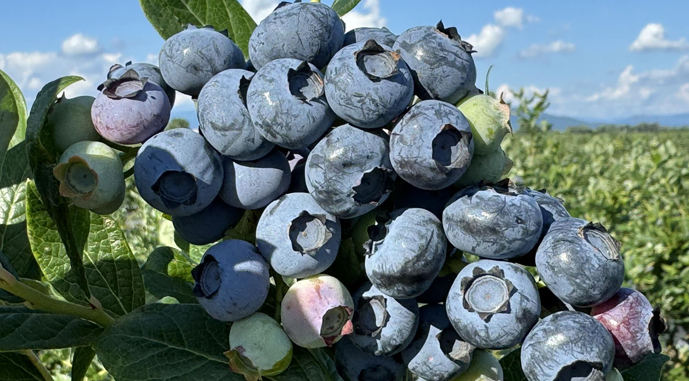
Ukraine ranks 10th in the world and first in Eastern Europe by the area of blueberry plantings. At the same time, in terms of yield, Ukrainian producers lag significantly behind the global level and their main competitors.