
ports

 02 October 2026, 12:441433
Ukraine Exported 2.4 Million Tonnes of Agricultural Products in September
 02 October 2026, 07:201379
Shifting Trade Flows: What Opportunities Are Available to Ukrainian Producers?
 24 September 2026, 12:452271
Global Markets Could Lose 38 Million Tonnes of Grain from the Black Sea Region if Ports Do Not Resume Normal Operations
- 21 September 2026, 13:50 1250
 Black Sea Voyage Insurance Could Become More Expensive as Risk Zone Expands
The Joint War Committee (JWC) has expanded the list of areas subject to elevated war risk to cover almost the entire Black Sea. The new conditions are expected to take effect from September 19.
- 14 August 2026, 08:45 2103
 Port Blockade Could Cost Ukraine’s Agricultural Sector $20.5 Billion in Unsold Products
The suspension of exports through seaports could result in tens of billions of dollars in lost revenue for Ukraine’s agricultural sector.
- 06 August 2026, 12:00 2403
 It Will Take a Month to Return to Previous Export Volumes After Port Operations Resume
Russian attacks on civilian vessels and port infrastructure have effectively halted traffic to the ports of Greater Odesa. Ukraine is expanding exports by rail, road and via the Danube. However, these routes will be able to provide only about half the capacity of the Black Sea ports. This poses a threat to exports of Ukraine’s harvest and the stability of global food markets.
- 05 August 2026, 09:47 1581
 Agricultural Sector Losses from Export Disruptions Could Reach $1.5–3 Billion
Using alternative logistics routes will cost agricultural producers an additional €50–70 per tonne of products, while the total losses of Ukraine’s agricultural sector could amount to $1.5–3 billion. This is why the support of international partners is critically important both for Ukraine and for preserving global food security.
- 04 August 2026, 11:08 2768
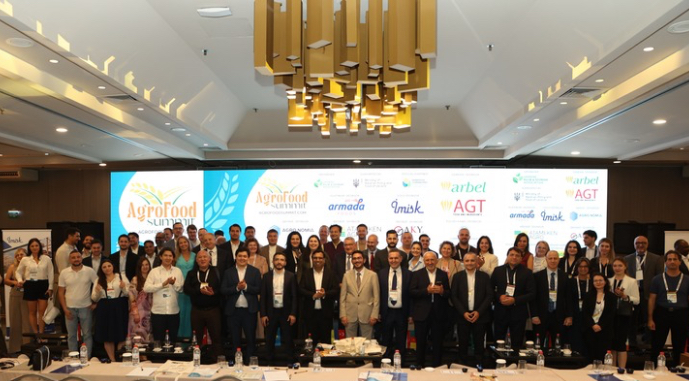
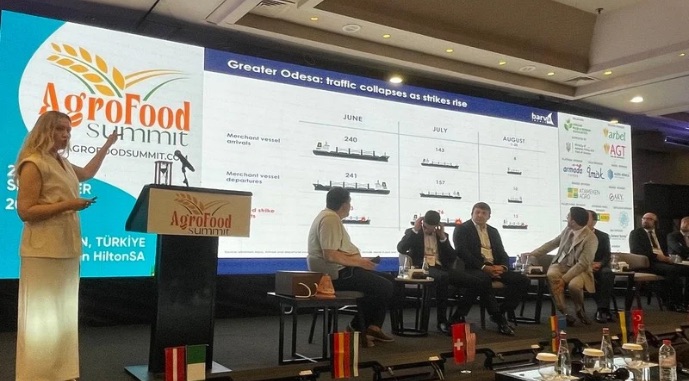
 AgroFoodSummit: Ukraine and Türkiye are entering a new chapter in agricultural trade
Following the ratification of the Free Trade Agreement between the two countries, the first major international business event dedicated to exploring new opportunities will be AgroFoodSummit 2026, taking place on 24–25 September in Mersin — a strategic Mediterranean port and one of the region's leading logistics hubs for global agricultural trade.
- 03 August 2026, 13:48 1609
 Grain Shipments Rerouted to Constanța Add $30–40/t to Logistics Costs
Exporting Ukrainian grain via alternative routes inevitably increases logistics costs. Freight rates at Danube ports have more than doubled over the past month and continue to rise.
- 31 July 2026, 08:45 1587
 Port Blockade: Wheat Market Expected to Face the Most Severe Impact
The suspension of seaborne exports is expected to have the greatest impact on Ukraine’s wheat market.
- 31 July 2026, 06:44 3408
 Port Shutdown Costs Ukraine $70 Million in Export Revenue Every Day. Can the Hryvnia Withstand the Pressure?
Ukraine’s foreign trade deficit reached $28.3 billion in the first half of 2026, while demand for foreign currency remains high. Each day that Black Sea ports remain closed costs the country approximately $70 million in export revenue.
- 30 July 2026, 11:08 1436
 Prime Minister Comments on the Situation at Ukraine’s Ports
The Ukrainian government, the diplomatic corps, and all relevant state institutions are working around the clock to restore the normal operation of the country’s ports.
- 21 July 2026, 15:31 3891
 Grain Exports Under Pressure: What Should We Expect?
Over the past few weeks, the security situation around Ukrainian seaports has significantly deteriorated. According to the Ukrainian Sea Ports Authority, in the first two weeks of July alone, Russia carried out 23 strikes on Ukrainian ports and 17 attacks on civilian vessels. Over the past week, freight rates have nearly doubled to $40+ per metric ton.
- 20 July 2026, 08:00 2352
 Port Blockade: If Disruptions Last for Weeks, Pressure on Grain Storage Will Increase
Agrein Group continuously monitors the export logistics situation and operates on the principle of route diversification. For the company, it is essential not to depend on a single logistics corridor, which is why its supply chains can be quickly adapted whenever conditions change.
- 18 July 2026, 08:00 4199
 Attacks on the Ports of Greater Odesa: Rising Logistics Costs Remain the Most Sensitive Challenge
After more than four years of full-scale war, Ukraine’s agricultural sector has learned to operate under constant logistics risks. As a result, scenarios involving partial disruptions to port operations have long been incorporated into the day-to-day operations of TAS Agro.
- 10 June 2026, 20:50 1206
 russian drones attacked two bulk carriers in the Black Sea
The enemy continues to terrorize the peaceful Odesa region and is trying to obstruct the work of the Ukrainian sea corridor. Today, russians attacked two cargo ships flying the flags of Barbados and Panama in the Black Sea with drones strikes, which were sailing through the sea corridor.
- 01 May 2026, 11:16 1191
 Enemy attacks ports in Odesa region once again: berths and warehouses damaged
Russian forces attacked the Danube and Greater Odesa ports with drones on the night of May 1.
- 28 April 2026, 10:33 2240
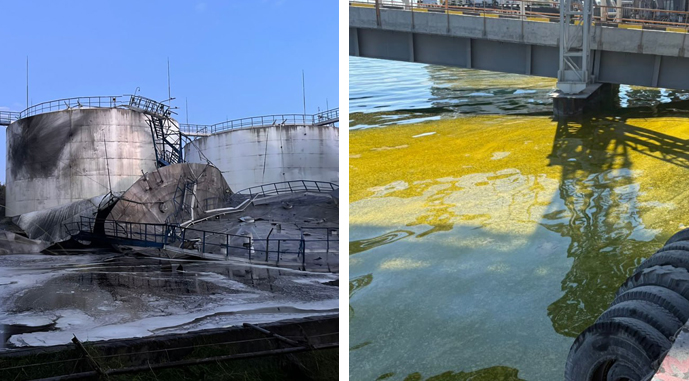 A 40 km² stain: sunflower oil has fallen into the Black Sea after shelling
The port of Chornomorsk is working to eliminate the consequences of a sunflower oil spill after the shelling by Russian troops.