

All the main news of the agricultural market on
📲 Telegram channel
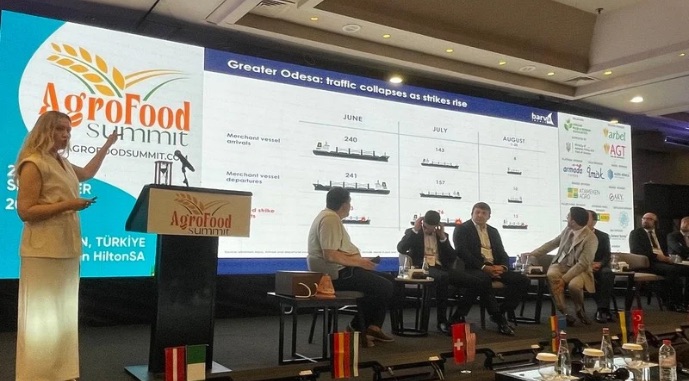
The global market could receive up to 38 million tonnes less grain from the Black Sea region if the limited operation of Black Sea ports continues until the end of the 2026/27 season.
This was stated by Viktoriia Blazhko, Senior Analyst at Barva Invest, during AgroFoodSummit in Mersin, Türkiye.
According to her, Barva Invest is sceptical about the possibility of a rapid resumption of normal grain exports through the Black Sea. At the same time, analysts believe that the global market may not yet have fully factored in the consequences of a potential further disruption to logistics.
«We have to hope for the best but prepare for the worst,» Viktoriia Blazhko noted.
She emphasised that this is a scenario rather than a fixed forecast. It assumes that Black Sea ports in both Ukraine and russia will continue to operate in a limited capacity until the end of the 2026/27 season.
Under this scenario, the global market could lose up to 38 million tonnes of grain from the Black Sea region in the current season. This includes almost 28 million tonnes of wheat and 10 million tonnes of corn.
Viktoriia Blazhko explained that under the scenario presented, part of the export potential could remain blocked due to a logistics bottleneck. In particular, 19.2 million tonnes of russian wheat, or 41% of expected exports, are at risk. For Ukrainian wheat, the figure stands at 8.5 million tonnes, or 59%, while for Ukrainian corn it is 9.8 million tonnes, or 43%.
At the same time, under conditions of limited port operations, the scenario indicates that 27.3 million tonnes of russian wheat, 6 million tonnes of Ukrainian wheat and 13.2 million tonnes of Ukrainian corn could still be exported.
The analyst emphasised that the final figures may change depending on how the situation develops. If the ports are completely closed, the volume of grain that does not reach the global market will increase. If normal shipping resumes, the volume of grain at risk will decrease.
Liudmyla Lebid, AgroPortal.ua

CraftUP Ukraine: Finalists Presented Their Business Projects and Received Grants
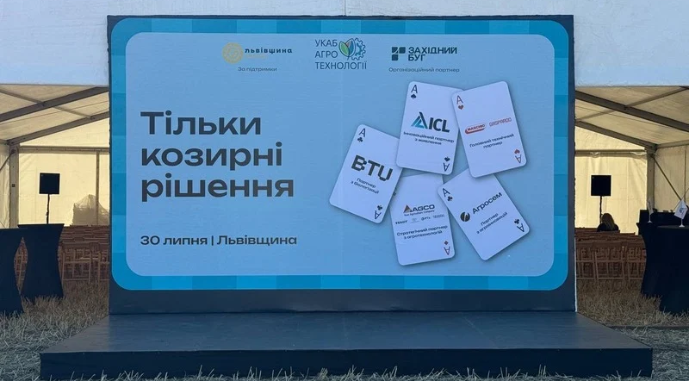
UCAB Agrotechnologies 2026. West: All Winning Solutions in One Field

Sustainable Farming: Implementing Modern Sustainable Technologies Without Unnecessary Mistakes and Losses

Record-breaking heat across Europe has had only a limited impact on early grain crops, but corn losses are expected. Ukrainian grain could help offset these shortages, although export opportunities will largely depend on logistics.