
Large-Scale Wildfires in Europe Require a New Approach: What Solutions Could Reduce Risks for Ukraine
 Yulia Novoseltseva
 The risk of large-scale wildfires can only be effectively reduced by shifting the focus from response to prevention, prioritising ecosystem resilience and integrated landscape management.
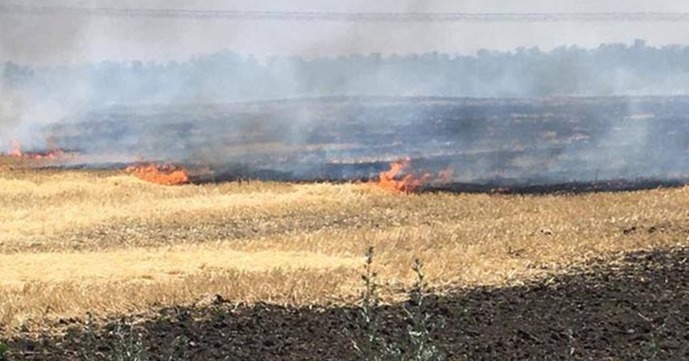
The large-scale wildfires that swept across Southern European countries this summer once again demonstrate that prolonged droughts, heatwaves and climate change are creating conditions in which even countries with well-developed emergency response systems are finding it increasingly difficult to contain fires.
Since the beginning of 2026 alone, more than 460 thousand hectares have already burned across EU countries, significantly exceeding historical averages. Recent studies also indicate that, due to climate change, the extreme weather conditions that contributed to these wildfires have become at least twice as likely in France and more than 20 times more likely in Spain.
Although most wildfires are caused by human activity, climate change significantly increases both the likelihood of their occurrence and their scale and destructive impact. Higher temperatures, more frequent heatwaves and prolonged droughts create conditions in which even a minor ignition can rapidly develop into a major wildfire.
At the same time, the degradation of natural ecosystems, the loss of wetlands, the deterioration of forest health, the expansion of monoculture plantations and decades of unsustainable land use have made many regions of Europe far more vulnerable to extreme wildfires.
As a result, a vicious cycle is formed:
- climate change causes increasingly large wildfires;
- wildfires release millions of tonnes of greenhouse gases;
- weakened ecosystems lose their ability to store carbon, retain moisture, resist fire and protect people from future natural disasters.
For Ukraine, which is also currently experiencing a period of elevated wildfire risk, these events demonstrate that, alongside the development of emergency response systems, it is necessary to invest in the resilience of forest ecosystems themselves, creating conditions in which forests become less vulnerable to fire.

War — An Additional Challenge for Ukraine
For Ukraine, the risks of wildfires are even greater. In addition to climate change, a significant share of wildfires is caused by military operations. Mined areas, restricted access to certain forest regions and the constant danger faced by emergency responders often prevent fires from being contained quickly. Since the beginning of the full-scale invasion, the number of wildfires has nearly tripled, while the total burned area has increased 90-fold compared with 2021. Under these conditions, improving forest resilience becomes particularly important.
Why Some Forests Burn Faster Than Others
The experience of European countries shows that major wildfires depend not only on weather conditions. The condition of ecosystems themselves also plays an important role.
Even-aged monoculture forests, degraded woodlands and drained peatlands create conditions in which fire spreads much more rapidly. In contrast, forests with preserved natural diversity, uneven-aged stand structures and healthy soils are better able to slow the spread of fire and recover more quickly after wildfires.
This is why an increasing number of European countries are revising their forest management approaches, combining the development of emergency response systems with measures aimed at strengthening the resilience of natural ecosystems.
What Solutions Could Reduce Risks for Ukraine
According to WWF-Ukraine, effective adaptation to new climate conditions should combine several approaches:
- create more resilient, species-rich forests that are closer to natural ecosystems;
- prioritise the protection of old-growth Ukrainian forests of natural origin;
- prohibit wetland drainage and implement a national wetland restoration programme;
- stop the loss of natural ecosystems for economic purposes.
The large-scale wildfires in Europe demonstrate that forest protection can no longer be limited to responding only to the consequences. The safety of people and the ability of forests to perform their ecological functions under climate change increasingly depend on how resilient natural ecosystems are.
Yuliia Novoseltseva, Communications Manager, Forests Programme, WWF-Ukraine

The author's opinion may not coincide with the editorial opinion. The author is responsible for the quotes, facts and figures given in the text.