
Due to logistics disruptions at Black Sea ports, Kazakhstan is currently the most reliable supplier of pulses to the Turkish market, covering demand. Ukraine could ship pulses in containers through the Port of Constanța, but the required volumes are not available.
No Supplier Gap Will Remain: Importers Seek Alternatives to Pulses from the Black Sea Region
08 October 2026, 06:16 1223
Among the world’s three most widely traded pulse crops — lentils, chickpeas and peas — Ukraine is a significant player only in the pea market. However, agricultural exports are currently facing difficulties, even though the volumes involved are relatively small: in the 2026/27 marketing year, Ukraine is expected to export 600 thousand tonnes of peas. The problem lies not only in blocked sea routes but also in constant attacks on infrastructure and vessels, meaning that restoring logistics to the required capacity will take considerable time.
The global pulses market in the 2026/27 marketing year is facing a dual challenge: weather risks associated with El Niño and complicated logistics caused by problems affecting critical sea routes. Restrictions on shipping in the Black Sea, risks around the Suez Canal, Bab el-Mandeb and the Strait of Hormuz are forcing vessels to change routes, increasing freight costs and affecting the stability of supplies.
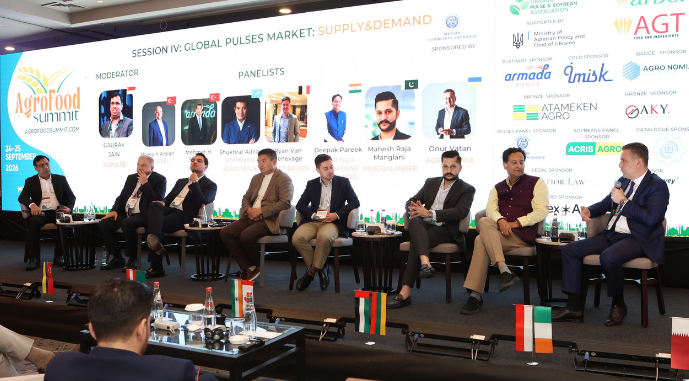
As Mehmet Hayri Sönmez, CEO of Turkish agro-industrial company Armada Foods, said during AgroFoodSummit in Mersin, Türkiye, chickpeas and peas used to reach Türkiye via the Black Sea.

Mehmet Hayri Sönmez, CEO of Armada Foods
Gaurav Jain, CEO and Lead Analyst at AgPulse Analytica (Singapore), noted that the pea market is in a state of fragile equilibrium due to logistics problems that are creating a certain imbalance.
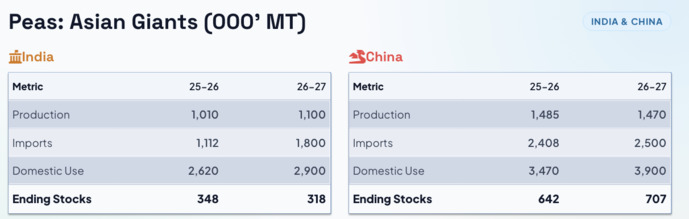
According to AgPulse Analytica, total pea production in the 2026/27 marketing year stands at 7.4 million tonnes. The largest demand for peas comes from China at 2.5 million tonnes and India at 1.8 million tonnes. The analyst does not rule out that if India reaches imports of 2 million tonnes, total demand could amount to 7.65 million tonnes.
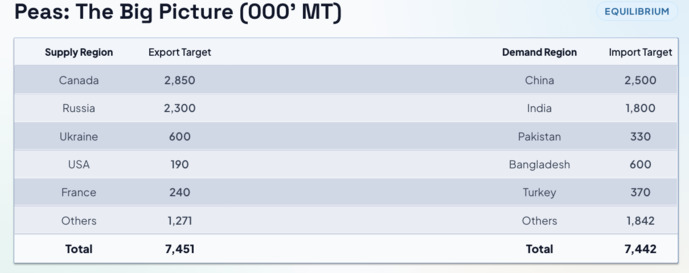
If India fails to harvest the required volumes of chickpeas due to a moisture deficit, they will be replaced by yellow peas, and India will need to import an additional approximately 2 million tonnes of the crop.
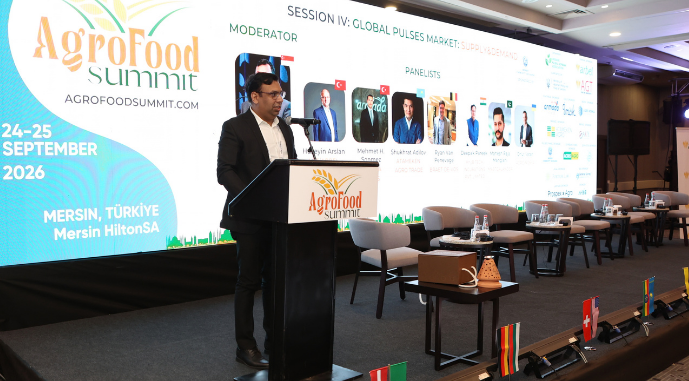
Gaurav Jain, CEO of AgPulse Analytica
As the Black Sea is currently practically closed, India cannot make large purchases of Ukrainian yellow peas. Small volumes are still exported from Ukraine to India, but not by sea. Therefore, Canada is the only major supplier capable of meeting this demand. At the same time, Canada has to meet not only Indian demand but also Chinese demand, which is exclusively for yellow peas.
Any shortfall in India’s domestic rabi crop could trigger demand of up to 3 million tonnes and rapidly redirect global trade flows.
The analyst added that when prices for desi chickpeas rise, yellow pea prices receive support, which is already being observed in the market. At the same time, given its acute needs, India is prepared to pay a premium price for food-grade peas of as much as $450/t.
Can Ukraine take advantage of this? Experts note that due to logistics problems, the country will be able to realise only half of its yellow pea export potential.
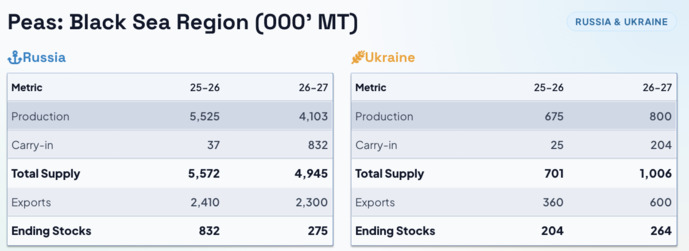
Meanwhile, russia has around 5 million tonnes of yellow pea stocks, of which 2.3 million tonnes are expected to be exported. Gaurav Jain noted that by rail and sea, russia can export around 150–200 thousand tonnes of the product per month. From Siberia, where large volumes of yellow peas are grown, the crop is shipped directly to China. In this way, russia has turned the region into one of the main logistics hubs for supplying pulses to China.
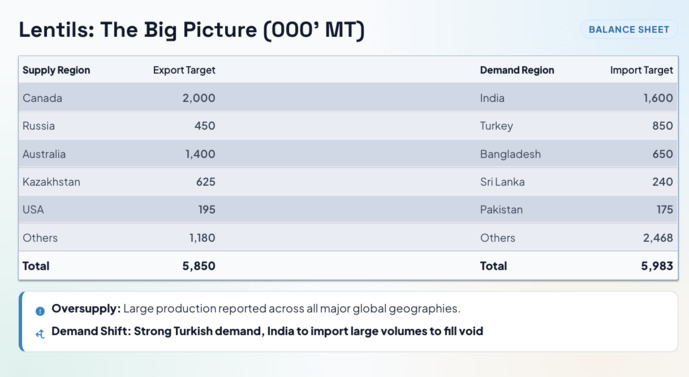
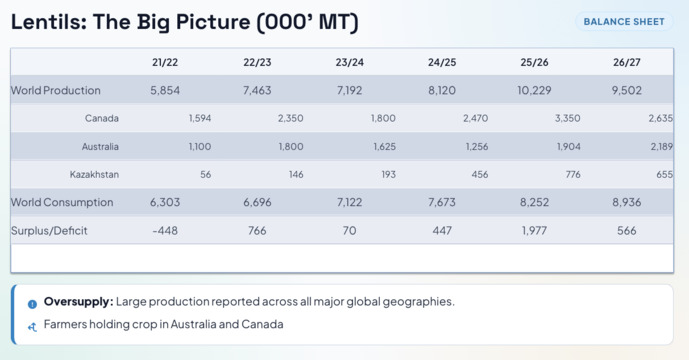
Analysing global lentil production trends, analysts are recording an oversupply of the crop and declining demand from key importing countries. In particular, Gaurav Jain noted that the global lentil market has faced oversupply for five consecutive years, with production reaching 9.5 million tonnes. As a result, stocks are rising rapidly.
- Canada and Australia have substantial carryover stocks, forecast at 1.62 million tonnes and 1.02 million tonnes, respectively.
- Kazakhstan is becoming the third major player in global lentil supplies, with production of around 655 thousand tonnes and exports of about 0.6 million tonnes, most of which are destined for Türkiye.
Transporting lentils from northern Kazakhstan and neighbouring regions to the Turkish market is a long journey. Türkiye is currently the main market for Kazakh lentils. Therefore, to reach total exports of 600 thousand tonnes, Kazakhstan must overcome all logistics challenges, as the country is landlocked, access to russian ports is complicated, and its traditional export route is currently blocked.

According to Shukhrat Adilov, Director of Kazakhstan-based Atameken Agro Trade, next season farmers will focus on growing red lentils and peas, as these crops are in greater demand than chickpeas. The area under chickpeas is expected to decline.
According to Onur Vatan, Director of Agro Nomia LTD, Ukrainian farmers consistently grow peas and are also doing quite well with lentils, gradually increasing the area under the crop. In recent years, lentil acreage in the southern regions has tripled. In spring 2027, farmers are also likely to sow pulses on areas that they did not manage to sow with winter crops.

Onur Vatan, Director of Agro Nomia LTD
Ukraine is able to grow very high-quality lentils and bring them to the global market earlier — around a month ahead of russia and Kazakhstan and three months ahead of Canada and Australia. In this way, Ukrainian farmers meet the needs of importing countries at the early stages of the season, primarily Türkiye. Therefore, lentils are considered a promising crop.
India remains the world’s largest buyer of lentils, and its demand plays an important role in shaping the global market. Further market dynamics will therefore largely depend on India’s weather conditions and policies. As of autumn 2026, the basic import duty on lentils stands at 10%, although the government may adjust it depending on domestic supply and inflation. If strong import demand persists, India is likely to remain a key driver of global lentil prices in the 2026/27 marketing year.
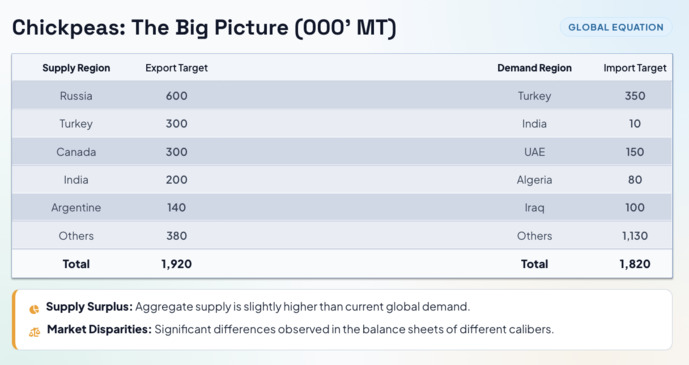
AgPulse Analytica describes the situation in the global chickpea market as mixed. The total planned volume of chickpea imports stands at 1.8 million tonnes, while total supplies amount to 1.9 million tonnes. Gaurav Jain noted that overall supply slightly exceeds demand, but a 1.3 million tonne deficit of desi chickpeas, compounded by a smaller harvest in Australia, continues to put pressure on the balance of the Indian market. Yellow peas and kabuli chickpeas are expected to partially cover this deficit.
The analyst noted:
- russia, one of the major chickpea producers, harvested a small crop this year but has substantial stocks. According to estimates, russia could export around 600 thousand tonnes;
- North America has total production of around 631 thousand tonnes and, given its large carryover stocks, is trying to find new markets for its chickpeas;
- Argentina is another supplier specialising in sorted chickpeas and is also increasing production. This could disrupt the balance in Asian markets.
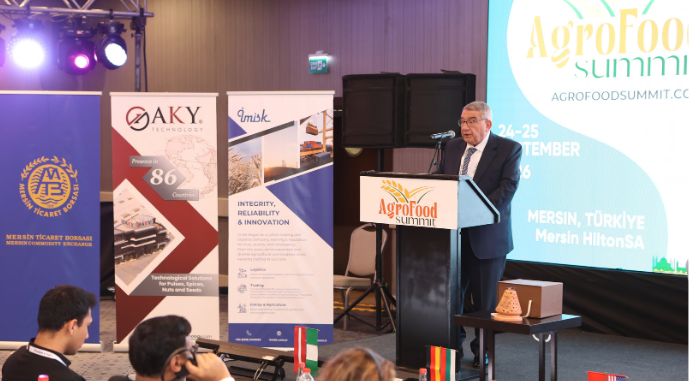
Türkiye is also interested in increasing pulse production. Abdullah Özdemir, Chairman of the Board of the Mersin Commodity Exchange (Türkiye), said that in 2027 agricultural producers will receive increased subsidies for growing pulses.
Under Türkiye’s agricultural support programme, unlike basic grains such as wheat or barley, the production of pulses and oilseeds is assigned higher coefficients. Total support for chickpeas, lentils, beans and soybeans will amount to 1,326 lira per decare (around 0.1 ha). Farmers using high-quality certified pulse seed will additionally receive between 353.60 and 442 lira per decare, depending on the crop.
Despite substantial imports of raw materials, Türkiye currently ranks third in the world for lentil and chickpea exports and fifth for pea exports. Government incentives and increased domestic pulse production could help the country become one of the leading exporters of these crops to global markets.
Liudmyla Lebid, AgroPortal.ua

 02 October 2026, 07:201051
Shifting Trade Flows: What Opportunities Are Available to Ukrainian Producers?
 18 September 2026, 07:201377
CraftUP Ukraine: Finalists Presented Their Business Projects and Received Grants
 03 August 2026, 07:201720
UCAB Agrotechnologies 2026. West: All Winning Solutions in One Field
- 07 October 2026, 08:40 813
 Ukraine Shipped Twice as Much Wheat to MENA Countries as to the EU
Ukraine exported 3 million tonnes of agricultural products worth $1.6 billion in September 2026. Compared with August, volumes increased by 41% in physical terms and by 22% in value.
- 02 October 2026, 07:20 1051Shifting Trade Flows: What Opportunities Are Available to Ukrainian Producers?
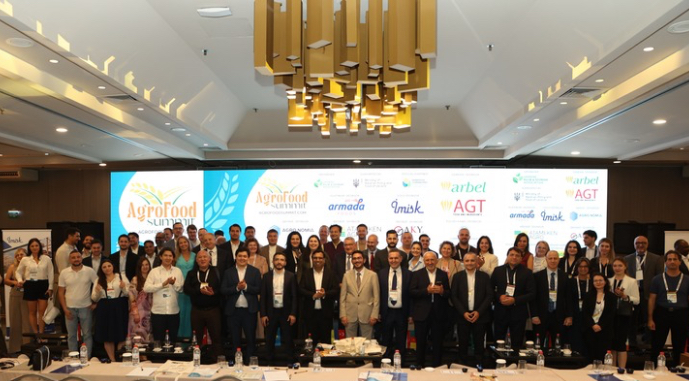
At the end of September, the Ukrainian Pulses and Soybean Association (UPSA) brought together representatives of agribusiness and international trade from 30 countries at AgroFoodSummit 2026 in Mersin, Türkiye.
- 01 October 2026, 15:24 4410
 Agroprodservice Shifts to Growing Crops Exclusively for Its Own Needs
Given the logistics difficulties, the diversified agro-industrial company Agroprodservice, which operates a fully closed production cycle, has revised its crop rotation and shifted primarily to crops that can be used for its own needs.
- 28 September 2026, 13:42 1316
 Farmers in Southern Ukraine May Use Areas Not Sown with Winter Crops for Pulses
In southern Ukraine, farmers are reducing the area sown with winter crops by around 30–40%. For now, farmers are taking a wait-and-see approach to better understand the market situation, but in spring they will have to decide which crops to grow.
- 21 August 2026, 10:25 1577
 Ukraine Enters the New Season with Large Pea Stocks: Will Its Position in Asia Strengthen?
The global pulses market is entering the 2026/27 marketing year from very different positions. In some countries, harvests are falling short of expectations, while others are becoming increasingly dependent on imports, and traditional trade flows are changing under the influence of weather, logistics and demand from the largest consumers. Ukraine is entering the new season with a substantial supply of peas: 779.02 thousand tonnes have already been harvested.