CraftUP Ukraine is a logical continuation of the competition of the online edition AgroPortal.ua «Incredible Villages of Ukraine», which we have been supporting since 2018. The experience of working with communities has shown the potential and ability to develop craft production. We are convinced that small-scale production is the basis of economic stability in rural areas. And it's not just about taxes and new jobs. It is about creating favorable living and development conditions for talented entrepreneurs.
CraftUP Ukraine: results of research of the craft food market
23 March 2026, 05:48 6319
Craft production is actively developing in Ukraine, becoming an important element of the rural economy. At the same time, the sector remains vulnerable and needs systemic support.
That is why the online edition AgroPortal.ua, with the support of the Government of the Kingdom of the Netherlands, has launched an educational and grant project for craft food producers CraftUP Ukraine. Its goal is to support small food producers in the establishment and development of their business, provide the necessary knowledge for doing business, implementing safety standards, developing their own brand, expanding sales channels, and attracting financing. The project also aims to contribute to the preservation of the Ukrainian gastronomic heritage and the formation of a community of like-minded craft producers.
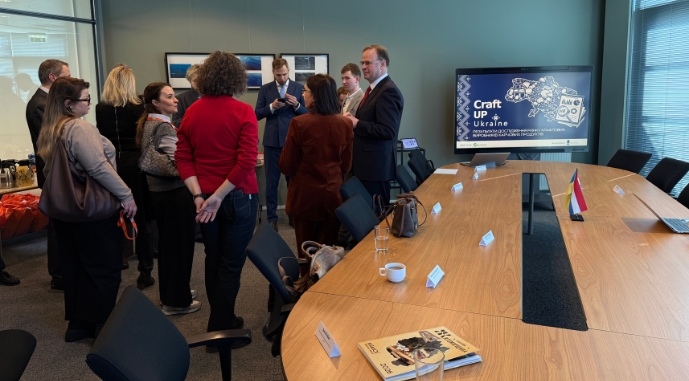
On March 19, the first stage of the project was completed, during which the partner, Pro-Consulting, presented the results of the market research of craft food producers to representatives of government institutions, associations, experts and the media.

Caroline Spaans, Agricultural Counselor, Embassy of the Kingdom of the Netherlands in Ukraine
More than 400 craft food producers expressed a desire to join the project. Half of them have completed an extended survey.The most represented categories are the production of processed milk, vegetables, fruits, and meat.
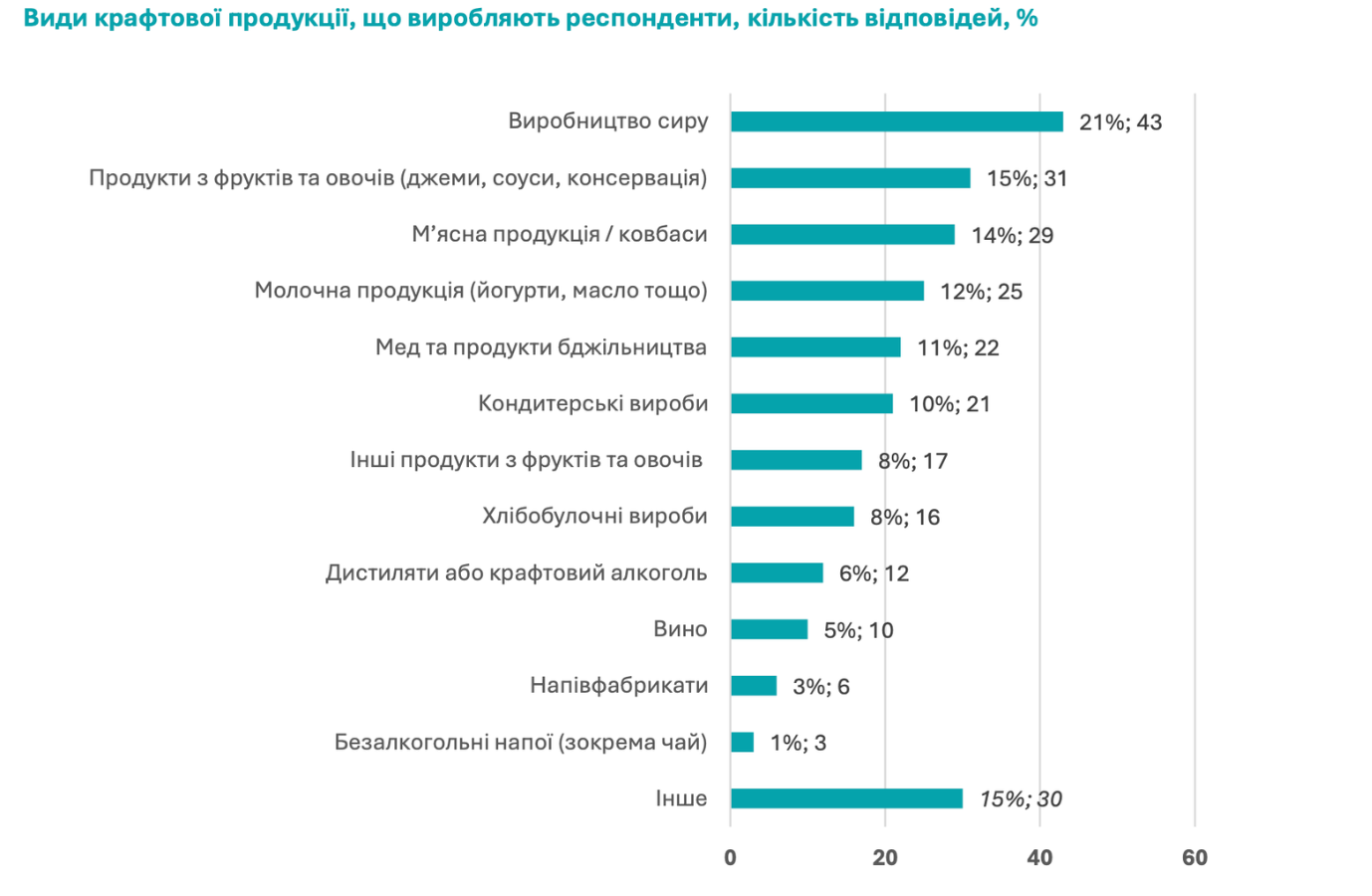
It is worth noting that a significant share is occupied by the «Other» category, which includes a variety of niche products — from hemp products and saffron to snails and shrimp farming.
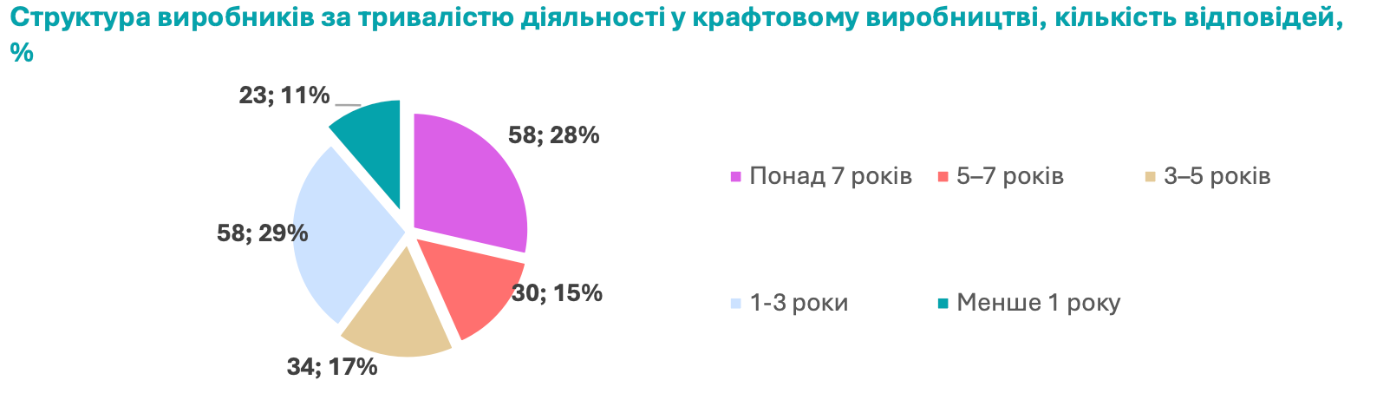
The largest share of respondents has been engaged in craft production for more than 7 years. More than half of the survey participants have been operating in this area for more than 3 years, while the smallest share of respondents — 11% — has been working in the industry for less than a year.

Denys Bashlyk, Deputy Minister of Economy, Environment and Agriculture of Ukraine
The craft sector is not yet covered by government policy, so there are no systemic tools to support or subsidize such producers. However, today we can look at this activity from the perspective of rural development. Craft can become a tool for involving IDPs, veterans, and women in community recovery. This is a comprehensive approach that should be integrated into government strategies. After all, it is not only about food production, but also about the formation of local identity.
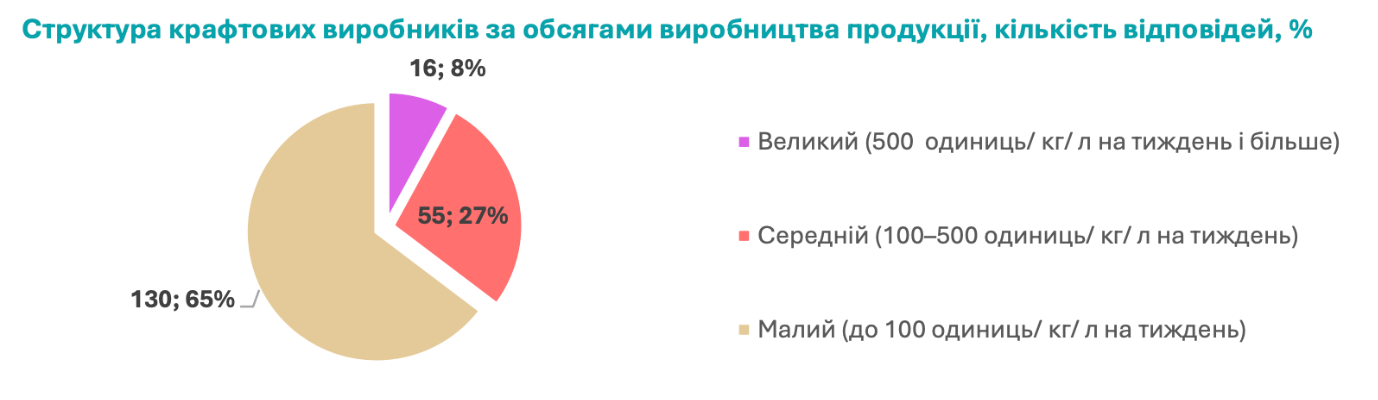
For 92% of respondents, the weekly production volume does not exceed 500 kilograms, liters or units of products, while for 65% it does not reach even 100 units of the corresponding measure. Formally, «small-scale production» in Ukraine is up to 1000 kg/l per week. That is the real craft sector is much less than the threshold that the state defines as «small».
Mykola Moroz, Deputy Director of the Department of Rural Development - Head of the Ministry of Economy
The presence of a backlash in production volumes gives craft producers the opportunity to grow and eventually move into the middle segment. If we immediately strictly limit their volumes, we will take away this potential for development. Therefore, creating such a «space for growth» is one of the tasks of the state. Talking about tax incentives, especially for excisable products, is not yet relevant due to the situation in the country. However, we are moving towards the formation of a system that will give small producers more opportunities, including access to financing.
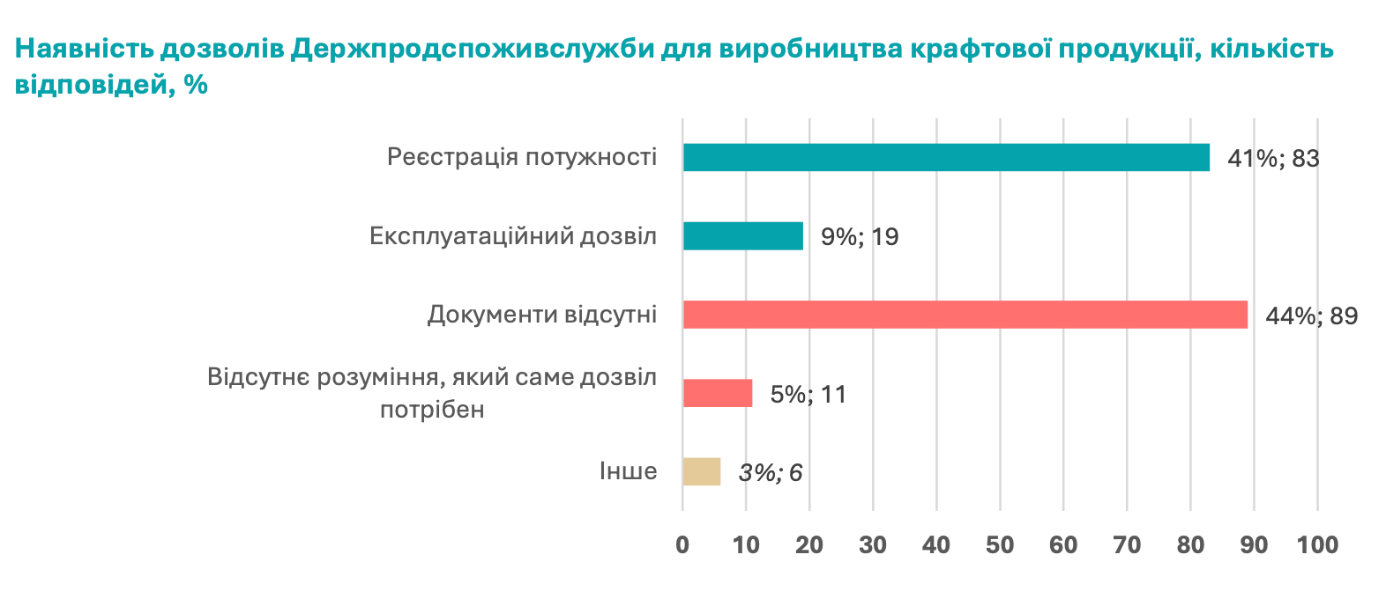
Among the respondents, 76% are officially registered. At the same time, only about half of them have a capacity registration or an operational permit. Among the craft producers who do not have permits, 42% do not have a business registration. Among them are producers of cheese, meat products, processed fruits and vegetables. This is a fairly high rate of food production without official control over quality, sanitary conditions, and without state accounting.

Olha Trofimtseva, project manager of the German-Ukrainian Agricultural Policy Dialogue
Production standards are primarily a matter of self-regulation and responsibility of the producers themselves through their associations - cooperatives, associations, etc. If self-regulation does not work, then the state intervenes. But state regulation is the second level. In the organic production sector, we see that this model is already working effectively in accordance with European standards. Over time, more support tools will be available to producers, including those related to the EU's Common Agricultural Policy. At the same time, without producer associations and proper infrastructure, there is a risk that the available resources will simply not be used effectively.
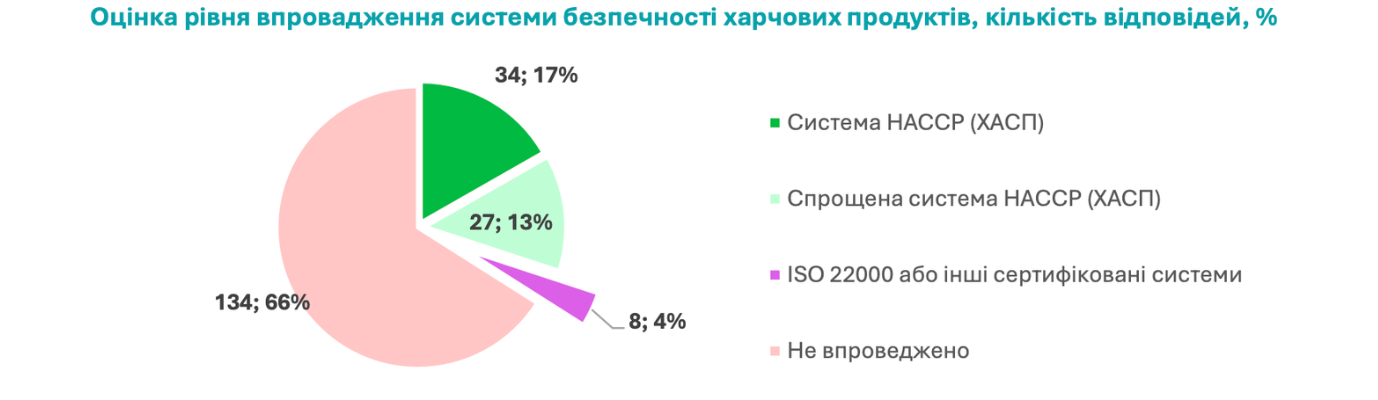
A third of respondents have implemented HACCP (regular or simplified), ISO 22000 or other certified product safety management systems. 88% of respondents are aware of sanitary requirements, with 60% indicating that they have full knowledge of all applicable requirements. Among the craftsmen who are not aware of the sanitary requirements, there are mostly honey producers, fruit and vegetable processors (in particular, pastille producers), cheese producers (few), and oil producers. About half of them do not have official registration.
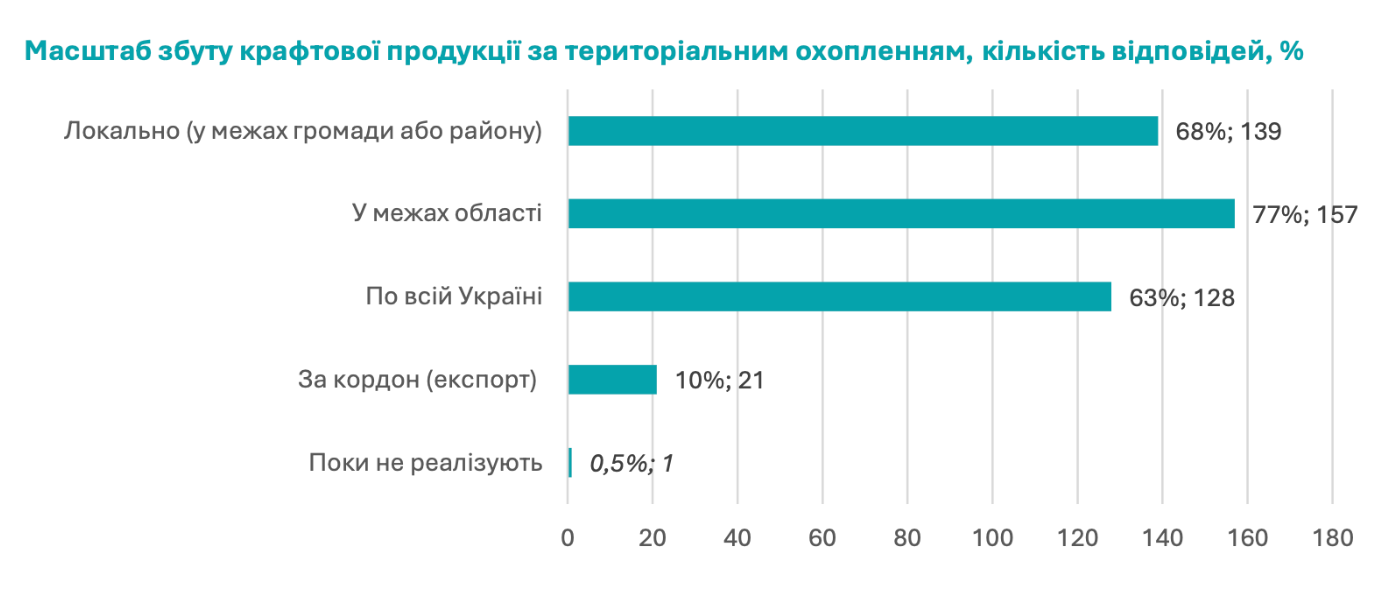
The main markets for craft products, according to the survey, are local — within the region, community or district. The majority of respondents (63%) sell their products throughout Ukraine, while only 10% of respondents export abroad. Among those who export, the main destinations are the European Union (20 respondents), the United Kingdom (5), Canada (4), and the United States (5). Other markets are represented by one respondent each: South Korea, the UAE, Switzerland, Turkey, China, Japan, Australia, and Moldova. One participant noted that he sells products all over the world (even to Antarctica).

Andriy Talama, Director of the State Enterprise «Office for Entrepreneurship and Export Development»
One of the programs we are implementing together with the Swedish Board of Trade involves training manufacturers and helping them enter the Swedish market. Last year, six Ukrainian producers signed contracts with Swedish retailers. The value of this program is that the training is provided directly by Swedish partners — those who work in this market. This year, we have extended the program, particularly in the HoReCa sector: at the end of March, 16 participants will go to training, and some of them already have contracts. Such initiatives need to be scaled up. At the same time, the process of entering the EU markets remains complicated and time-consuming, in particular due to the requirements for certification and inclusion of producers in the relevant registers (trusts), without which exports are impossible.
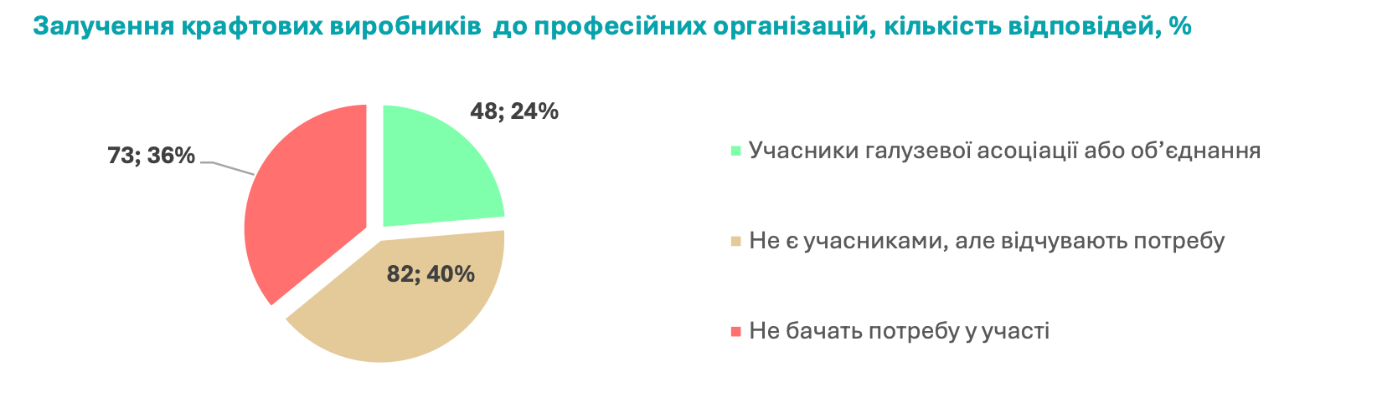
Among crafters, there is a growing demand for cooperation and the creation of associations (for example, craft unions or «honey banks») to jointly protect interests, promote products on store shelves and enter European markets.
Mykola Moroz, Deputy Director of the Department of Rural Development — Head of the Ministry of Economy
European integration changes, in particular the implementation of EU Regulation 1308, open up new opportunities for producers' associations. Such associations receive broader rights, including the ability to officially represent and lobby their interests at the state level. It also means certain relaxations in antitrust regulation and the expansion of tools for interaction with government institutions, including tax authorities. This gives manufacturers the opportunity to act more systematically, openly and efficiently.
The craft sector is characterized by a pronounced desire of players to develop. In particular, there is a high share of self-education (76%), which may indicate limited resources, including insufficient financial capacity to invest in formalized training programs or limited access to quality educational opportunities. In this context, self-education is a forced alternative to more structured learning. All in all, 96% of respondents stated a need for training, and 45% indicated that they had already planned or planned to invest in training, which confirms the existence of a formed demand for further competence development.
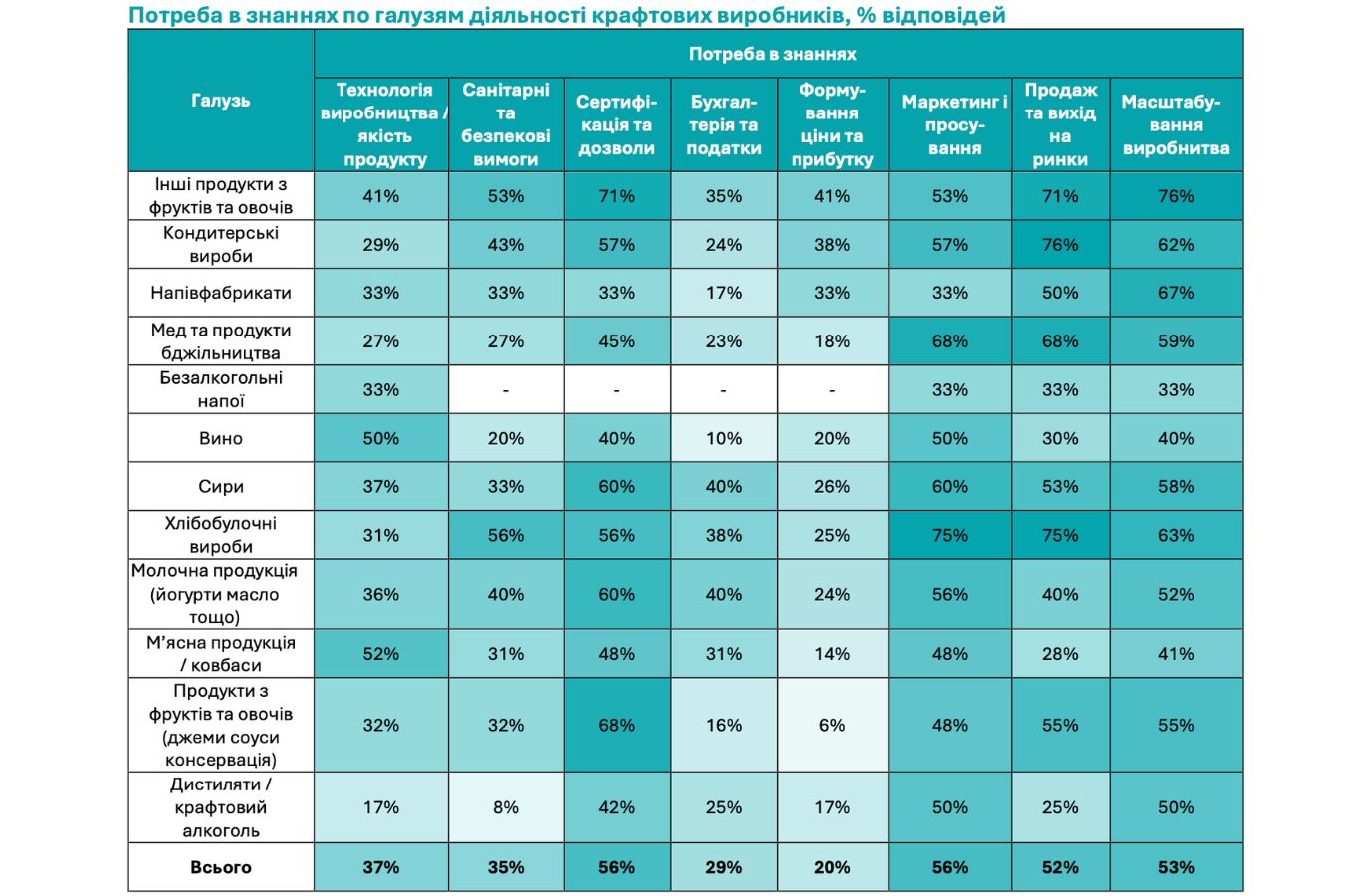
The study revealed a relative relationship between the craft industry and the type of knowledge (training) lacking in certain areas of activity. The results indicate that knowledge needs may differ depending on the specialization of production.
The research results have created a portrait of a Ukrainian craft producer. This is a multitasker who works to the limit, combining several roles and developing a business in the face of constant challenges. Despite this, craftsmen not only hold on, but also strive for growth, invest in production, and look for new markets. This means that the craft sector is not just a niche business, but a real resource for the development of communities, the economy, and Ukrainian identity."
The results of the study will form the basis for the formation of the educational program and mentoring support of the CraftUP Ukraine project. After that, the most active program participants will have the opportunity to present their business ideas to the Expert Council. Based on the results of the selection, the most promising projects will receive funding to scale up production, implement certification, or enter new markets. The total support budget of 20 thousand euros will be distributed among the finalists according to the results of the project defense.
Ivanna Panasiuk, AgroPortal.ua