
The Agricultural Sector on the Path to the EU: Practical Steps for Adaptation in Livestock Farming
Taras Vysotskyi: I Will Work for the Public Good for as Long as the State Needs Me
06 August 2026, 06:33 3463
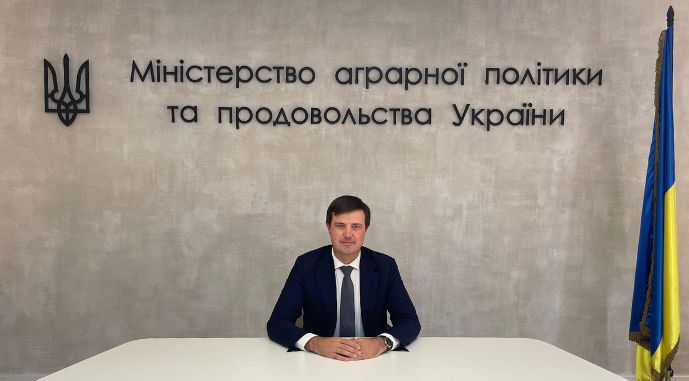
Taras Vysotskyi is not a new figure at the agricultural ministry. Having served as Deputy Minister for seven years, both in a separate ministry and within merged ministries, he remained a source of stability for participants in the agri-food sector.
How efficiently Minister Taras Vysotskyi now intends to organise the administrative structure and functions of the newly re-established Ministry of Agrarian Policy and Food, and what he hopes to achieve in this position, are discussed in an exclusive interview with AgroPortal.ua.
Taras Mykolaiovych, the agricultural ministry has been dissolved twice and is now being re-established once again. How has this turbulence affected the institution’s work?
Taras Vysotskyi: In all organisational decisions, people are the most important factor. During the first merger process, a relatively small number of specialists moved to the merged ministry. Most of them returned when the ministry was re-established, while new people from other sectors also joined the team. At that time, it took around a year to fully restore operations.Today, we do not have a similar reserve of time. What gives us optimism about the speed at which full operations can be restored and the core staff recruited is the fact that, during the merger that took place in 2025, we managed to retain the overwhelming majority of employees. They remain in their positions and are awaiting the administrative procedures required to transfer to the Ministry of Agrarian Policy and Food.
There is also a positive aspect to these processes: each time, we had an opportunity to take another look at the existing procedures and improve them. This does not mean that the previous procedures were poor; it means that we are continuing to improve. When everything is functioning, it is often difficult to find the time to review it once again. But when an emergency situation arises, you notice the details, and ultimately the structure becomes even more effective.
How efficient do you intend to make the administrative structure and functions of the Ministry of Agrarian Policy and Food? Is it difficult to attract specialists, given that salaries in the civil service are not particularly competitive?
Taras Vysotskyi: Working in the civil service today is primarily about an idea, a philosophy of life and a mission. The main objective is to unite in order to improve the public good of the state, and that will always be the stronger motivation. The financial factor is important, but under the current wartime conditions, it cannot be the primary one. I hope that the financial component will change after the war ends.
In addition to the challenges caused by the war, the agricultural sector is going through a very important stage of European integration. This is not a matter for debate; we are following this path, and we need specialists who are prepared to devote their time and make their contribution so that the process is as favourable as possible for the agricultural sector.
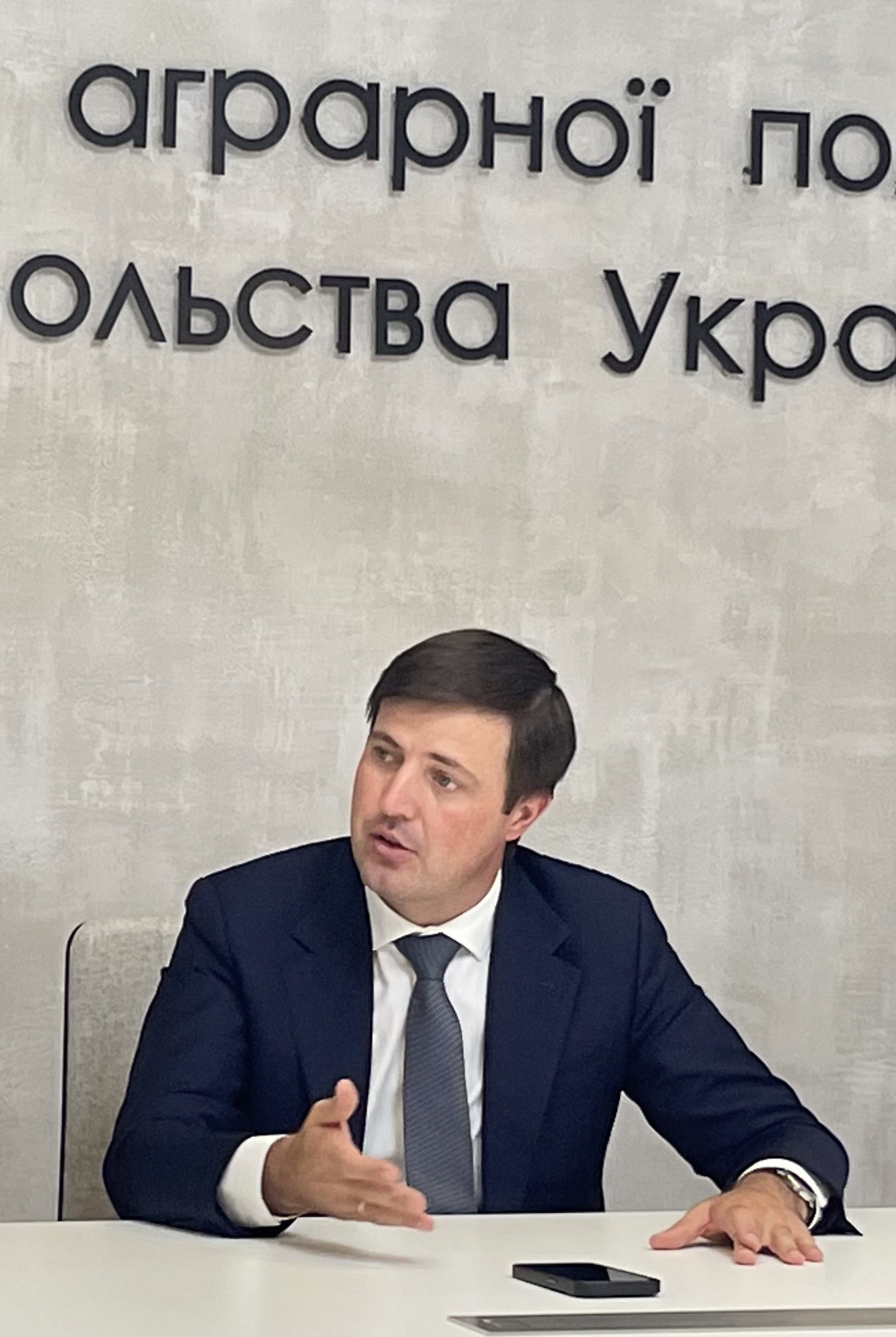
The re-establishment of the Ministry of Agrarian Policy and Food of Ukraine provides for a 60-day transition period for the transfer of powers. When do you plan to announce and approve your deputy ministers, how many will there be, and what criteria will you use to form your immediate team?
Taras Vysotskyi: There will definitely be significantly fewer deputy ministers than in comparable ministries in any European country. My approach is that these positions will be held by people with whom I already have practical experience of working and who possess strong competencies in different areas. One person cannot be strong in everything, so the team must have all the qualities required for effective work.
Experience in the civil service is also an important factor.
From my own experience, I can say that when I became Deputy Minister, despite having some experience in public service as head of Cherkasy Region, I needed approximately two months to adapt and reach full effectiveness.
Today, there are many challenges. We do not have two months; we do not even have two weeks for adaptation. It is therefore very important that people are able to start working effectively immediately.
Can you announce the names now?
Taras Vysotskyi: Once the relevant decisions have been made and approved, they can be announced. No more than five deputy ministers are planned, which is standard for a sectoral ministry.
The market is very concerned that ministers change frequently, as this is a political position. Did that make you hesitate before accepting the offer to lead the ministry?
Taras Vysotskyi: No one is irreplaceable. I had the honour of accepting the proposal to lead the re-established agricultural ministry and to relaunch its work as quickly as possible so that this institution could function effectively.I am convinced that our agricultural sector will always have qualified professionals who are sincerely committed to working for the industry on the basis of patriotism. As for political decisions, political processes are difficult to predict completely. My position has always been simple: once a decision has been made, do everything possible within its framework.
What do you hope to achieve in this position?
Taras Vysotskyi: To rebuild an effective institution by preserving its core human resources and further strengthening them.To ensure the continuity and sustainability of the institution's work.
To open negotiations on the agricultural cluster within the European integration process so that this process becomes irreversible and ultimately leads to a successful conclusion.
To develop mechanisms for responding to current challenges, which unfortunately continue to arise. In other words, to transform certain annual support programmes into permanent instruments so that market participants understand that the state is always ready to provide support and respond quickly. We already have relevant experience, although it has been gained under extremely difficult circumstances and at the cost of many sacrifices made by farmers themselves.
To increase exports of value-added products. Today, processed products already account for 57% of production. This path has already been established, and now it is important for everyone to understand and believe that it is possible, economically viable, and worth investing in and developing further.
If these foundations are firmly established and continue to be implemented regardless of future changes, then it will already mean that an important minimum has been achieved and that all efforts have been directed effectively.
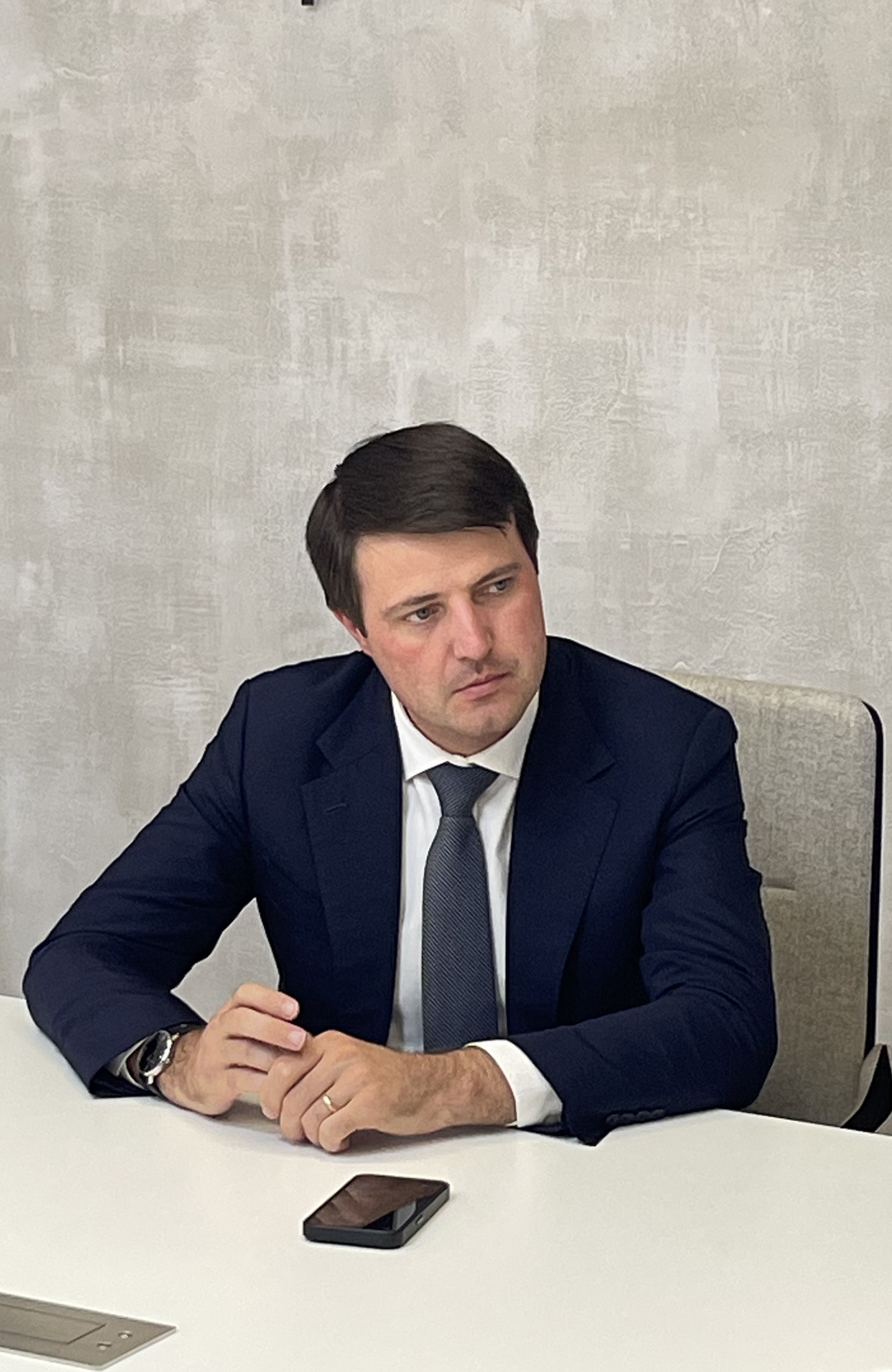
You mentioned opening the agricultural cluster within the EU accession negotiations. According to your expectations, when could this happen? Previously, September had been mentioned.
Taras Vysotskyi: This objective has not changed. September has not yet arrived, and all efforts are focused on ensuring that everything happens in September. September will show whether we succeed or whether we need to adjust our approach. Our goal is to open the negotiations as early as possible.
What are the main obstacles on Ukraine's European integration path today?
Taras Vysotskyi: One clear benchmark today is the update to the Association Agreement that took place last year.
In particular, it includes an annex listing the production standards that must be implemented by the end of 2028 in order to move forward with the further development of our free trade area on the path towards accession to the European Union.
Among the key issues under discussion is the difference between the lists of active substances authorised in the EU and those currently available in Ukraine. Regarding plant protection products, we will need to find a common solution, as studies indicate that around 10 million hectares of farmland could become unprofitable or experience lower yields.
Another important issue concerns the Common Agricultural Policy, particularly access to development funds and farmer support funds. It remains unclear whether such funds will be available, whether Ukraine will have access to them, or whether a combined model may eventually emerge. At this stage, these are still informal discussions, and various interim arrangements may be possible on Ukraine's path towards full EU membership.
As for animal welfare, much has already been implemented. The next priority is to establish an effective animal waste disposal system. We do not question the necessity of this; we clearly understand that it must be done and know which countries have effective systems that can serve as models. However, this requires substantial resources, as much of Ukraine's livestock infrastructure is outdated and new facilities are not being built at the desired pace.
In addition, the new law on genetically modified organisms (GMOs) will enter into force in September. Considerable progress has already been made, although significant work still lies ahead.
You took office at a time when the agricultural sector is facing numerous challenges, including logistics, port disruptions, rising input costs, and more. What will be the Ministry of Agrarian Policy's main priorities?
Taras Vysotskyi: Experience has shown that during wartime there are always two parallel tracks. The first consists of medium-term priorities that cannot simply be postponed because they determine our future. The second involves force majeure situations that require immediate action, because without addressing them there may be no future at all.
The medium-term priorities have already become quite clear, and the most obvious among them is European integration. As Deputy Minister, I was responsible for two chapters within the fifth negotiation cluster. A decision will be made regarding who will oversee this area in the future.
In addition, we are finalising proposals at the working-group level so they can be submitted to the Government as soon as possible. These include clear compensation mechanisms for losses incurred in frontline and temporarily occupied territories, as well as support for farms whose land has been used for fortification purposes.
We also need to introduce economic support instruments for relocated agricultural enterprises, since at present only organisational assistance is available.
We will continue working to increase value-added production through a range of measures, including the development of irrigation systems.
We also support the parliamentary initiative on compensating capital investments (CAPEX) through tax incentives (Draft Law No. 13415), which, together with Draft Law No. 13414, is aimed at attracting substantial investment into the food processing industry.
Later this month, we plan to hold an agricultural forum where these issues will be discussed with stakeholders in order to receive direct feedback from the sector.
As for force majeure challenges, logistics remain the top priority. They have always been in focus. There have been more difficult periods and less difficult ones, but the current situation is extremely challenging.According to preliminary assessments, it is even more difficult than in March 2022 because we are now at the beginning of the marketing season. Harvesting has only just begun, and we have already harvested the first 13 million tonnes of wheat. In contrast, in 2022 we were nearing the end of the season, and most of the 2021 harvest had already been exported before February 2022.
In addition, russian forces have significantly improved their capabilities to attack critical infrastructure.Another urgent issue is military reservation of key personnel. We understand the need to maintain a balance in support of the country's defence sector, but at the same time we are working to ensure that the agricultural sector retains the minimum number of specialists necessary to continue operating effectively.
Given the demanding schedule of your current position, and the one you held before, where do you find the energy to work around the clock and stay informed about developments not only in Ukraine's agri-food sector but also globally?
Taras Vysotskyi: I cannot say that I always have plenty of energy. Sometimes I have very little, but somehow I always manage to find more.First and foremost, I am someone whose purpose in life is to contribute to the public good and work in the interests of society. That is what motivates me. The more challenges there are, the harder I work.Secondly, since the beginning of the full-scale war, I made a personal decision that as long as the state needs me, I cannot allow myself to say that I am tired or that I want to do something else.We are a resilient nation. No matter how difficult circumstances become, we cannot simply say, «That's it, we're done.» You have to find the strength, no matter how.That is my own source of motivation.Another important source of motivation is the feedback I receive from the agricultural community. It is not necessarily expressed in words; often it is something you simply feel. There is a shared sense that we are all moving in the right direction together.Yes, the road is difficult, and at times it may become even more challenging, but knowing that we are all continuing to fight together until the very end is deeply motivating.
Farmers have often told us that they could contact Deputy Minister Taras Vysotskyi directly whenever they had questions. Will that approach remain the same now that you are Minister? Will farmers still be able to contact you directly? What issues did they most frequently raise?
Taras Vysotskyi: I think they exaggerate a little. Calling me directly has never been easy, but sending me a message and receiving a reply — yes, that has always been possible and still is.
This practice began with the launch of the land reform, when I publicly shared my phone number so that people could contact me about issues that concerned them. I truly believed that opening the land market would benefit the country, and that is exactly what happened.
I never delegate these replies to someone else. I follow a personal principle of responding within 24 hours.The questions vary depending on the period, but they are always professional and relevant. There are no inappropriate questions.In fact, people should normally receive this information through agricultural associations or the relevant departments of local administrations.Before the full-scale invasion, we also initiated the idea that every territorial community should have a designated agricultural representative who could promptly address all current issues.So far, however, we have not succeeded in building such a system.
The fact that people continue writing to me personally shows that not everyone receives the information they need. We are working to improve this communication system so that information flows effectively both from the top down and from the bottom up.
Do you have any free time in your schedule? If so, how do you spend it? Do you still have time for hobbies?
Taras Vysotskyi: Unfortunately, there is almost no time left for hobbies.The one thing I make sure to do is walk at least 10,000 steps every day in order to stay physically fit. These are not leisurely walks—I usually accumulate those steps while taking phone calls and holding meetings as I walk through the Ministry's corridors.
My free time usually comes late at night or during a few hours on weekends.Whenever possible, I spend that time with my family, giving each other enough positive emotions to carry us through the coming week.My family is my reliable support. They fully supported my decision to work for the public good.The last time we had a proper vacation was in 2021. They understand that there will not be one this year either.
In previous interviews you mentioned that visiting your hometown inspires you. Do you still have the opportunity to go there? How often? Do you still enjoy working with your hands on the land?
Taras Vysotskyi: Thankfully, both my parents and my wife's parents are alive, and our children love spending time with them during the summer.Occasionally, I manage to get away for a few hours over the weekend. It gives me the chance to be with my family and also do some physical work.Working outdoors helps me unwind emotionally.Digging potatoes, picking raspberries—simple things like that.In the past I could put my phone away for half a day. Now I cannot afford to do that anymore, so I can disconnect only about 90%.
What achievement in your life are you most proud of?
Taras Vysotskyi: I can look anyone in the eye without hesitation because I have never wished harm upon anyone.If I encounter intrigue or hostility, I simply stop communicating with those people. I never seek revenge.That is important to me—not only because of reputation, but because it is my way of living.I also accept constructive criticism calmly because making mistakes is part of being human.
What did you dream of becoming as a child? Have those dreams come true?
Taras Vysotskyi: I always wanted to be a director, just like my father.So, in a way, my dream has come true—I became a manager.
There is still a considerable lack of public trust in the state. What should be done about it?
Taras Vysotskyi: This is a long-term process that requires consistently delivering on promises.When communicating with stakeholders in the agricultural sector, I have always been open and honest about what the government can realistically do and what would merely be populism.There may be people who believe the state has not done enough—that is one thing.But making promises and then delivering nothing is something entirely different.
Could you name the three core principles that have guided Taras Vysotskyi throughout his life?
Taras Vysotskyi: All three are equally important.
The first is a team-based approach—bringing people together, because that is the only way to achieve success.It is not always easy, but I always strive to find common ground, build synergy, and establish dialogue rather than confrontation.
The second is integrity in all its forms.Yes, there is still an open criminal proceeding involving me, but I am fully confident in my actions—what I did and what I did not do.For me, this is a matter of principle.
The third is humanity, which includes a people-centered approach, empathy, and respect for others.By default, I choose to believe that every person is fundamentally good, well-intentioned, and wants to contribute to something better.Even if reality sometimes proves otherwise, it does not change my principles.
Thank you for the interview. And while we have the opportunity, on behalf of myself and the entire AgroPortal.ua editorial team, I would also like to wish you a happy birthday. We wish you resilience, strength in decision-making, and the support of a strong team.
Alla Stryzheus, AgroPortal.ua

 18 September 2026, 07:20557
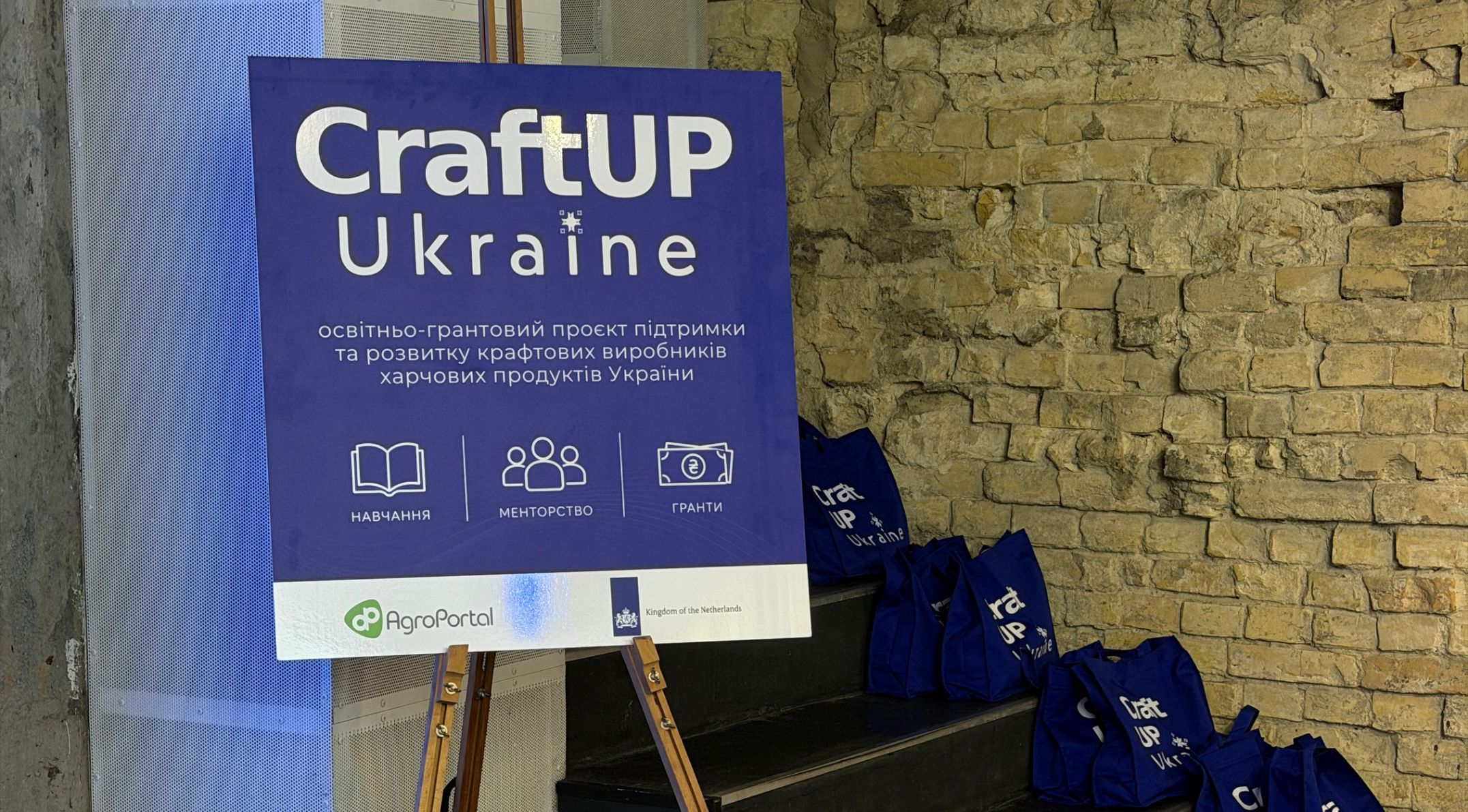
CraftUP Ukraine: Finalists Presented Their Business Projects and Received Grants
 03 August 2026, 07:201548
UCAB Agrotechnologies 2026. West: All Winning Solutions in One Field
 03 July 2026, 07:202256
Sustainable Farming: Implementing Modern Sustainable Technologies Without Unnecessary Mistakes and Losses
- 19 September 2026, 08:00 1783
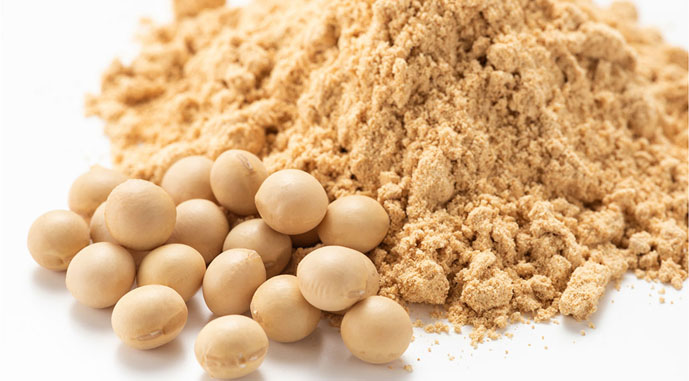 Share of Soybean Processing in Ukraine to Rise to 70%
Soybean production in Ukraine in 2026 will amount to 3.8 million tonnes, of which 2.8 million tonnes will be processed. Exports will total 1 million tonnes.
- 14 August 2026, 12:00 1181
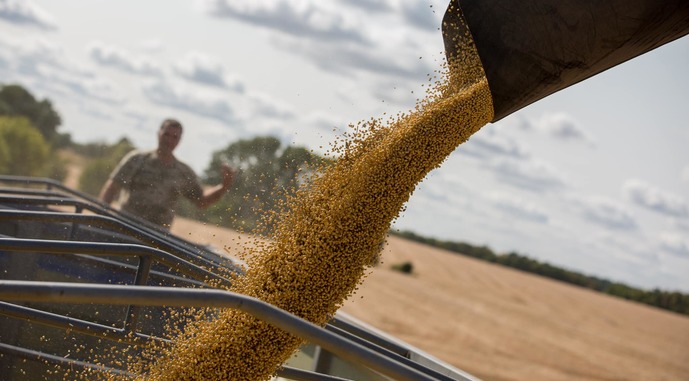 Alternative Routes Will Be Able to Handle a Maximum of 50% of Agricultural Exports
In August, vessels are no longer calling at the ports of Greater Odesa. From August 1 to 12, Ukraine exported 590 thousand tonnes of grain, which is 30% of the required volume. Currently, about 45% of agricultural exports are transported by rail, about 45% through the Danube region, and 10% by road.