
Bread for Locals: The Story of the Creation and Development of the Only Stone Mill in One of Zhytomyr Region’s Communities
Pesto with Pumpkin Seeds: How to Turn Surplus Basil into a Popular Sauce
05 September 2026, 06:18 3224
Green Clover is a hydroponic farm in Khmelnytskyi Region that grows basil. Today, its capacity allows it to produce up to 40 kg of fresh herbs per week. But the farm did not stop at growing: some of the basil is dried and processed into powder, while surplus fresh herbs are used to make Ukrainian pesto. The farm is also experimenting with other products — it recently produced a test batch of dried tomatoes with basil.
It all began in 2021, when Green Clover founder Anton Korolchuk purchased premises for a car service station together with a friend. After the start of the full-scale war, Anton’s partner joined the defence of Ukraine, the premises remained empty, and a decision had to be made about what to do with them next.
«The idea of hydroponics had been in my mind for a long time. So I decided: why not bring it to life right now? We started by demolishing everything inside the premises, leaving only the load-bearing walls. We renovated the space and installed all the utilities. Viktor Shuleshko, who is well known in this market, helped us understand the technology,» the entrepreneur says.
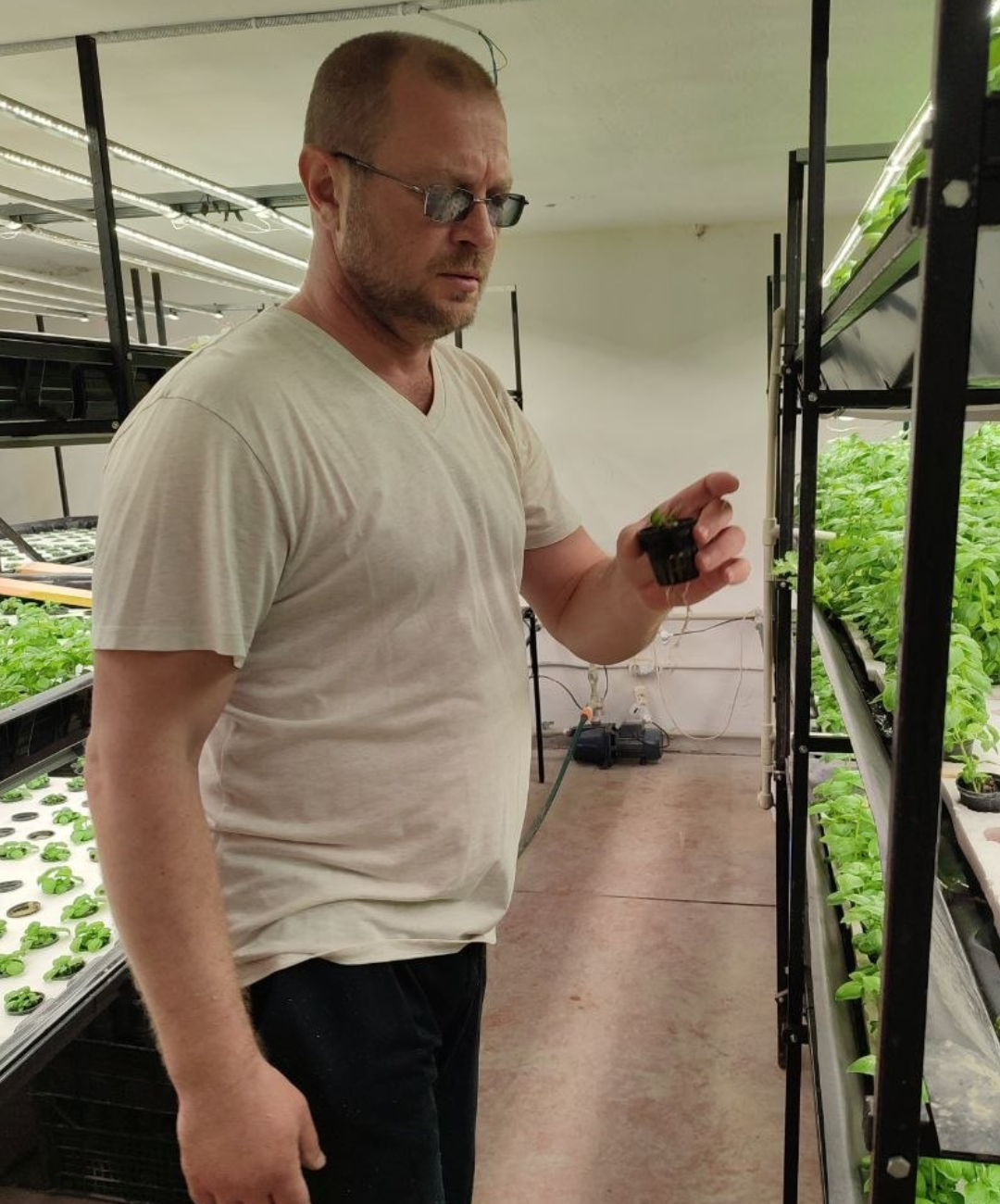
Anton Korolchuk, founder of Green Clover
They tried growing dill, parsley, mint, basil, arugula and various types of lettuce hydroponically. However, experience showed that not every type of greenery is profitable to grow this way. This is especially true in summer, when there is plenty of inexpensive produce on the market. So they decided to focus on basil.
The farm currently has 10 racks, which allow it to produce up to 40 kg of basil per week. There is another room on the premises that is currently mothballed. If a large buyer is found, Green Clover can increase production to 200 kg per week. However, according to Anton Korolchuk’s calculations, reaching this capacity would require around UAH 10 million in investment.
Today, the entrepreneur sells fresh basil wholesale to the HoReCa sector at UAH 500–600/kg. However, according to him, the war has changed this market: establishments have begun optimising costs and switching to more budget-friendly dishes. Therefore, the farm decided to process its surplus basil. This is how its own pesto appeared.
The craft producer found the first recipe online and then began adapting it to his needs. He completely removed cheese from the recipe because it affects the product’s shelf life. He also stopped using garlic. As a result, the sauce is based on basil, oil, nuts or seeds, salt and citric acid.
Instead of the olive oil traditionally used in pesto, Green Clover uses sunflower oil. Anton explains his choice by saying that it is better to use high-quality oil whose origin he can trust than olive oil of unknown quality.
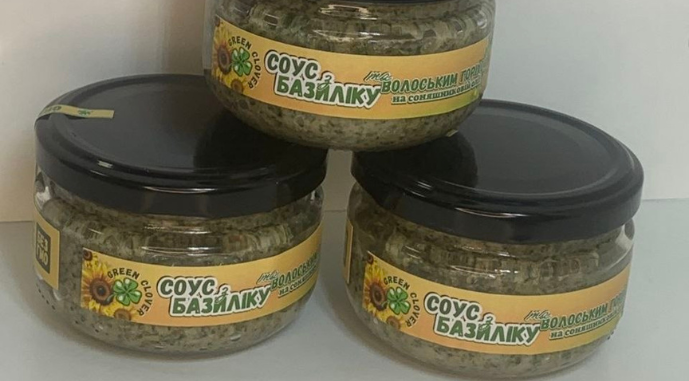
They also began experimenting with nuts. The pesto is made with walnuts and hazelnuts. According to the producer’s observations, the latter are less fatty, sweeter and keep better. However, Anton’s favourite version is pesto with pumpkin seeds. The sauces are made to order. A 100-gram jar of pesto costs UAH 100.
Another product is basil powder. It can be added to dishes to provide the taste and aroma of basil without pieces of leaves or stems. Recently, they also produced a test batch of dried tomatoes with basil. For this, they used vegetables from a producer they know who grows tomatoes using environmentally friendly methods.
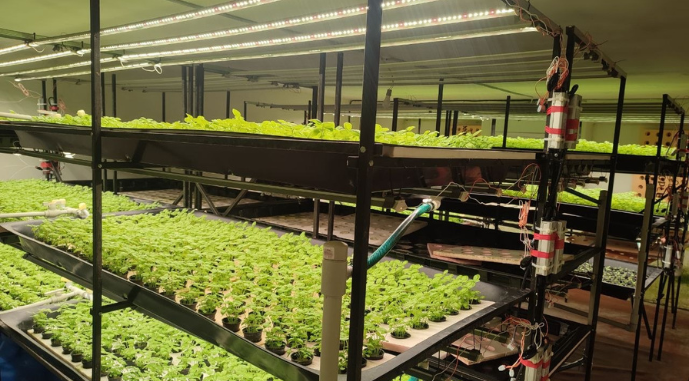
Hydroponics makes it possible to grow herbs all year round, but it requires significant amounts of electricity, for which Green Clover pays an industrial tariff. Winter is particularly challenging because basil is sensitive to cold and temperature fluctuations. Because of this, Anton suspended production during the coldest periods of previous winters.
The producer plans to solve the problem with a solid-fuel boiler, which he wants to purchase as part of the CraftUP Ukraine educational and grant project.
For reference: CraftUP Ukraine is an educational and grant project for craft food producers organised by the online publication AgroPortal.ua with the support of the Government of the Kingdom of the Netherlands in Ukraine. The project consists of several stages. The first was a study of Ukraine’s craft production market, based on the results of which a training programme was developed. Its participants included 40 craft producers from different regions of Ukraine.
Following the educational stage, 10 finalists were selected and are now preparing for the final presentation of their business projects. On September 15, they will present them to the Expert Council. At the same time, the CraftUP Ukraine team is introducing the audience to the stories of all the finalists.
Information about the project is available on the page of the Embassy of the Kingdom of the Netherlands in Ukraine
Ivanna Panasiuk, AgroPortal.ua


 14 October 2026, 07:201204
Chickpea and Lentil Paste: How One of the World's Largest Legume Processing Plants Operates
 02 October 2026, 07:201482
Shifting Trade Flows: What Opportunities Are Available to Ukrainian Producers?
 18 September 2026, 07:201691
CraftUP Ukraine: Finalists Presented Their Business Projects and Received Grants
- 20 October 2026, 06:19 1641
 The Soybean Equation: Can the Crop Offset Ukrainian Farmers’ Losses?
Soybeans could become one of the crops delivering positive margins for Ukrainian farmers this season. They offer higher profitability and greater export attractiveness compared with grain crops: to generate comparable revenue, a farmer needs to sell approximately 1 tonne of soybeans versus 3 tonnes of wheat.
- 18 October 2026, 13:20 841
 Fresh-Milk Ice Cream Producer Receives Development Grant
Viktoriia Lukashova, founder of the natural ice cream brand FUNNY BEAR from Vinnytsia, invested UAH 50 thousand in purchasing packaging for her products.
- 27 September 2026, 15:25 1700
 EuroTier: Future and Innovation in Livestock Farming to Be Showcased Across 13 Halls
The international EuroTier 2026 exhibition will take place on 10–13 November in Hanover, Germany. Across 13 halls, more than 2,100 exhibitors from 55 countries will present technologies and solutions for professional livestock farming.
- 24 June 2026, 08:00 3772
 An Electronic Agronomist Created in Ukraine Reduces Costs by 20%
Green Future Engineering, a company engaged in the development, production and sale of equipment for professional hydroponic systems and also operating its own vertical farm in Dnipro, has developed a fully automated growing control system that allows all processes to be managed without the involvement of an agronomist.