

All the main news of the agricultural market on
📲 Telegram channel
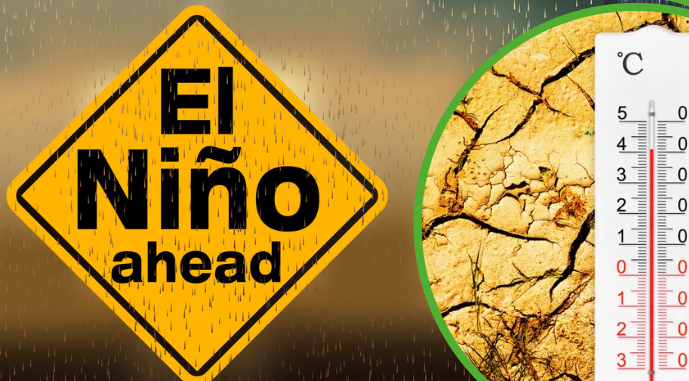
The 2026/27 El Niño has already formed and continues to strengthen. According to estimates by the World Meteorological Organization as of early September, the phenomenon could peak in November–December and persist until February 2027.
Vira Balabukh, Head of the Department of Applied Meteorology and Climatology at the Ukrainian Hydrometeorological Institute of the State Emergency Service of Ukraine and the National Academy of Sciences of Ukraine, PhD in Geography and Senior Researcher, told AgroPortal.ua about this.
She explained that specialists at the Ukrainian Hydrometeorological Institute do not conduct their own monitoring of El Niño. Instead, the phenomenon is studied by an international network of meteorological services, oceanographic centres, satellite programmes and universities, with the World Meteorological Organization playing a key coordinating role.
According to Vira Balabukh, the influence of El Niño on weather processes is already clearly visible in global atmospheric circulation and the tropical latitudes of the Pacific Ocean. In particular, the trade winds are weakening, while convection and precipitation are increasing in the central and eastern Pacific and decreasing over Indonesia and the western part of the ocean. At the same time, Ukraine is located far from the Pacific Ocean and is not among the regions directly affected by El Niño. Its influence on the country is mainly indirect — through changes in global atmospheric circulation.
«In Ukraine, this may manifest itself in temperature and precipitation anomalies and their uneven spatial distribution,» the scientist noted.
According to her, El Niño changes the distribution of heat and the intensity of convection in the tropics, generating planetary waves and altering the position and strength of jet streams. As a result, atmospheric circulation over the North Atlantic and Europe changes, as do cyclone trajectories, the frequency of blocking anticyclones and the inflow of Arctic or subtropical air. However, the expert emphasised that El Niño is only the background against which atmospheric processes in Europe will develop, while specific weather conditions in Ukraine will depend on processes in the Euro-Atlantic and Arctic regions.
Possible risks for Ukraine include higher temperatures, prolonged periods of abnormally high temperatures in autumn and even winter, an extended growing season, a warm and unstable winter with thaws, the absence of stable snow cover and short-term intrusions of Arctic air. Sharp temperature fluctuations are also possible, along with alternating prolonged dry periods and intense precipitation that could cause flooding.
At the same time, a very strong El Niño does not mean that all of these phenomena will necessarily occur. It changes the probability of such processes and the global background but does not determine the sequence of specific synoptic processes over Ukraine.
For farmers, an important issue is soil moisture availability during the summer and autumn period. Vira Balabukh noted that El Niño may affect it mainly through a chain of indirect processes: higher air temperatures increase evaporation, prolonged rain-free periods contribute to rapid drying of the upper soil layers, while intense downpours increase surface runoff, making the replenishment of soil moisture reserves less efficient.
A warm autumn is characterised by prolonged plant vegetation, while a winter with little or unstable snow results in weaker replenishment of soil moisture in spring. At the same time, for the 2026 autumn sowing campaign, what matters is not so much the El Niño index itself as the actual combination of productive moisture reserves in the 20 cm and 100 cm soil layers, precipitation over the previous 30–60 days, temperature and evaporation, the duration of rain-free periods, sowing dates and the condition of seedlings.
«We are already observing severe soil drought, particularly in western Ukraine, where the summer was 1.0–1.5°C warmer than the climatic norm and precipitation across a significant area amounted to less than half of the normal level,» the scientist noted.
She emphasised that it is important not to attribute the entire current soil drought to El Niño. These conditions developed as a result of regional weather processes. El Niño may continue to influence general atmospheric circulation conditions, but it is not the sole cause of such weather conditions. The regions of Ukraine that may be most vulnerable if El Niño strengthens are the western, southern and south-eastern regions.
Southern and south-eastern Ukraine are the most vulnerable even without a pronounced El Niño signal. In 2026, these areas already experienced a prolonged precipitation deficit, so even a moderately dry autumn could have a significant cumulative effect. Similar risks may arise in western regions, where prolonged drought is also being observed. If pressure gradients and wind speeds increase, the risk of hot dry winds and dust storms will rise. In the Carpathian region, alongside drought-related phenomena, the risk of intense precipitation and flooding remains.
Among crops, corn and soybeans are the most sensitive to heat and drought in summer, particularly during flowering and grain and pod filling. Sunflower is more resistant to short-term drought but is vulnerable when prolonged drought is combined with heat. Winter crops, including wheat, barley and rapeseed, may face risks in autumn if the drought continues to develop. It affects sowing dates, emergence, tillering and crop readiness for winter.
In spring 2027, a combination of an early resumption of vegetation followed by frosts could create a high risk for rapeseed, fruit crops and vegetables. For vegetables, water availability, the risk of localised heavy rainfall, hail, squalls and heat stress will also be critical.
Vira Balabukh noted that the current El Niño event is most often compared with the very strong events of 1982/83, 1997/98 and 2015/16. However, direct comparisons with the temperature regime in Ukraine should not be made. An analysis of average winter temperatures in Ukraine showed that during such strong anomalies, winters could be either cool or warm. In particular, in 1997/98 the anomaly in the average winter temperature was -1.4°C, while in 2015/16 it was +1.3°C.
Therefore, the same intensity of El Niño does not mean the same distribution of warm and cold areas. Their location will largely depend on conditions in the Atlantic and Arctic, snow cover and the polar vortex.
According to the expert, the strong 2026/27 El Niño is a significant global climate signal, but at present it does not provide grounds for stating that Ukraine will necessarily experience drought, heat or excessive precipitation.
The most realistic scenario for Ukraine and its agricultural sector is that the overall temperature background will remain elevated, the probability of anomalous and contrasting weather conditions will increase, and the south, south-east and west of the country are likely to be the most vulnerable to precipitation deficits.
The main period of potential impact on Ukraine will most likely fall in autumn 2026, winter 2026/27 and spring 2027.
For practical agrometeorological decisions, the El Niño index should be considered together with regional seasonal forecasts, actual productive soil moisture reserves, soil temperature, drought indices and short- and medium-term weather forecasts from the Ukrainian Hydrometeorological Center and the regional hydrometeorological centres of the State Emergency Service of Ukraine.
Yelyzaveta Kotenko, AgroPortal.ua
Shifting Trade Flows: What Opportunities Are Available to Ukrainian Producers?
CraftUP Ukraine: Finalists Presented Their Business Projects and Received Grants
UCAB Agrotechnologies 2026. West: All Winning Solutions in One Field
Weather anomalies linked to El Niño are dampening the outlook for sugar production in key producing countries. After an expected surplus, the market may shift to a deficit in the new season, and raw sugar futures have risen by more than 25% since July.
The current situation with complicated logistics caused by the blockade of Black Sea ports has not had a critical impact on the autumn sowing campaign. However, the area under winter crops will still decline.

The international EuroTier 2026 exhibition will take place on 10–13 November in Hanover, Germany. Across 13 halls, more than 2,100 exhibitors from 55 countries will present technologies and solutions for professional livestock farming.