
If we are talking about disruptions lasting days or a few weeks, we can offset the impact thanks to the flexibility of our own Agrein Trans vehicle fleet without any critical increase in costs. However, if the situation drags on, logistics costs on alternative routes could rise significantly. According to industry estimates, shifting cargo from maritime to overland transport has historically increased logistics costs by several dozen percent.
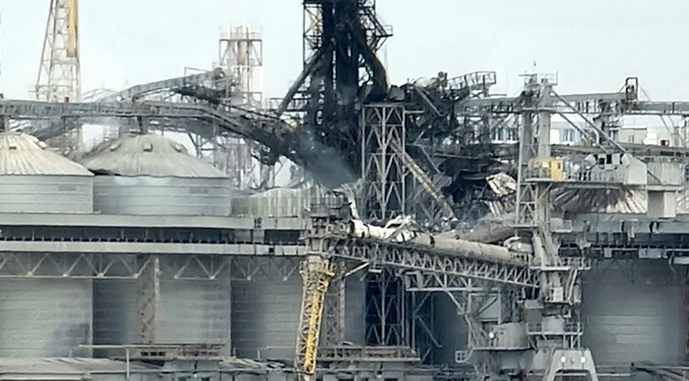
Port Blockade: If Disruptions Last for Weeks, Pressure on Grain Storage Will Increase
20 July 2026, 08:00 2382

Agrein Group continuously monitors the export logistics situation and operates on the principle of route diversification. For the company, it is essential not to depend on a single logistics corridor, which is why its supply chains can be quickly adapted whenever conditions change.
This was stated by Vitalii Shtempel, Director of Economics and Finance at Agrein Group, in a comment to AgroPortal.ua.
«At present, we do not see any critical risks to fulfilling our export programmes. Despite the challenging conditions, the Ukrainian maritime corridor continues to operate, allowing us to continue shipping our products. At the same time, we do not rely exclusively on the deep-water ports of Greater Odesa — part of our export volumes traditionally moves via overland routes, including rail and road transport, as well as through Danube terminals,» he said.
At the same time, Agrein openly acknowledges that these routes cannot fully replace the deep-water ports.
«The capacity of Izmail and the border crossings is limited, transport distances are longer, and logistics costs are higher. Therefore, we are not talking about a «backup plan» that can fully compensate for lost export volumes. Instead, we are implementing a comprehensive approach that includes redistributing cargo flows between routes, coordinating shipment schedules with partners in advance for the new marketing year, and working closely with grain storage facilities to manage inventories more flexibly in the event of delays,» Vitalii Shtempel added.
The company has already experienced an increase in logistics costs.
«When part of the deep-water ports temporarily drops out of the logistics chain, cargo flows are redirected to longer and more expensive routes — rail, road transport, and Danube terminals. This means more kilometres per tonne, longer transit times, and higher fuel consumption,» the Director of Economics and Finance explained.
The extent of the increase in logistics costs will depend on how long port operations remain restricted.

Vitalii Shtempel, Director of Economics and Finance at Agrein Group
According to him, it is still too early to provide company-specific figures.
«We are monitoring the situation in real time and will be able to provide a more accurate assessment in a few weeks, once it becomes clearer how stable the situation at the ports will be.»
The group’s grain storage facilities were designed with reserve capacity specifically for situations like this, when shipments are delayed while the new harvest continues to arrive.
«Our advantage is that, when this latest wave of attacks on the ports began, we did not have significant carry-over grain stocks from the previous season. Our storage facilities had already been largely cleared to accommodate the new harvest. This provides us with a buffer: even if part of the crop remains temporarily undelivered because of slower exports, we do not expect any critical shortage of storage capacity,» Vitalii Shtempel said.
At the same time, he noted that if port disruptions last for weeks rather than days, pressure on storage facilities will inevitably increase. In that case, the focus shifts to logistics solutions, including accelerating cargo turnover through alternative export routes and, where necessary, temporary storage at field storage sites. For now, however, he described the situation as being under control.
Alla Stryzheus, AgroPortal.ua

 14 October 2026, 07:201459
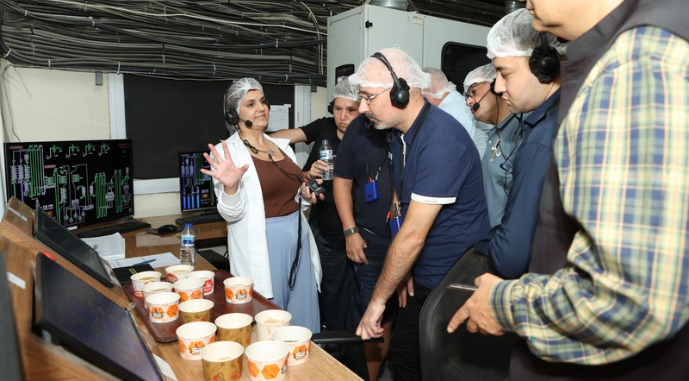
Chickpea and Lentil Paste: How One of the World's Largest Legume Processing Plants Operates
 02 October 2026, 07:201543
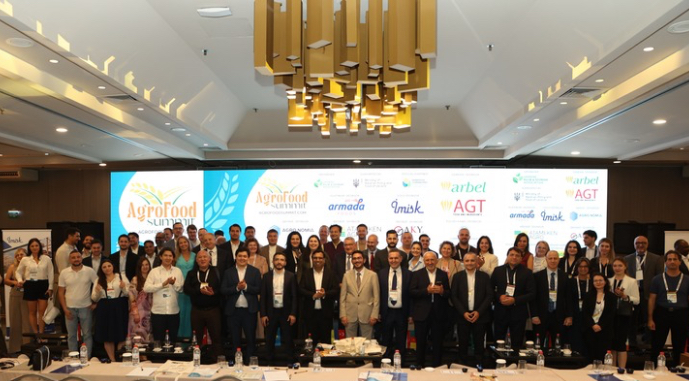
Shifting Trade Flows: What Opportunities Are Available to Ukrainian Producers?
 18 September 2026, 07:201738
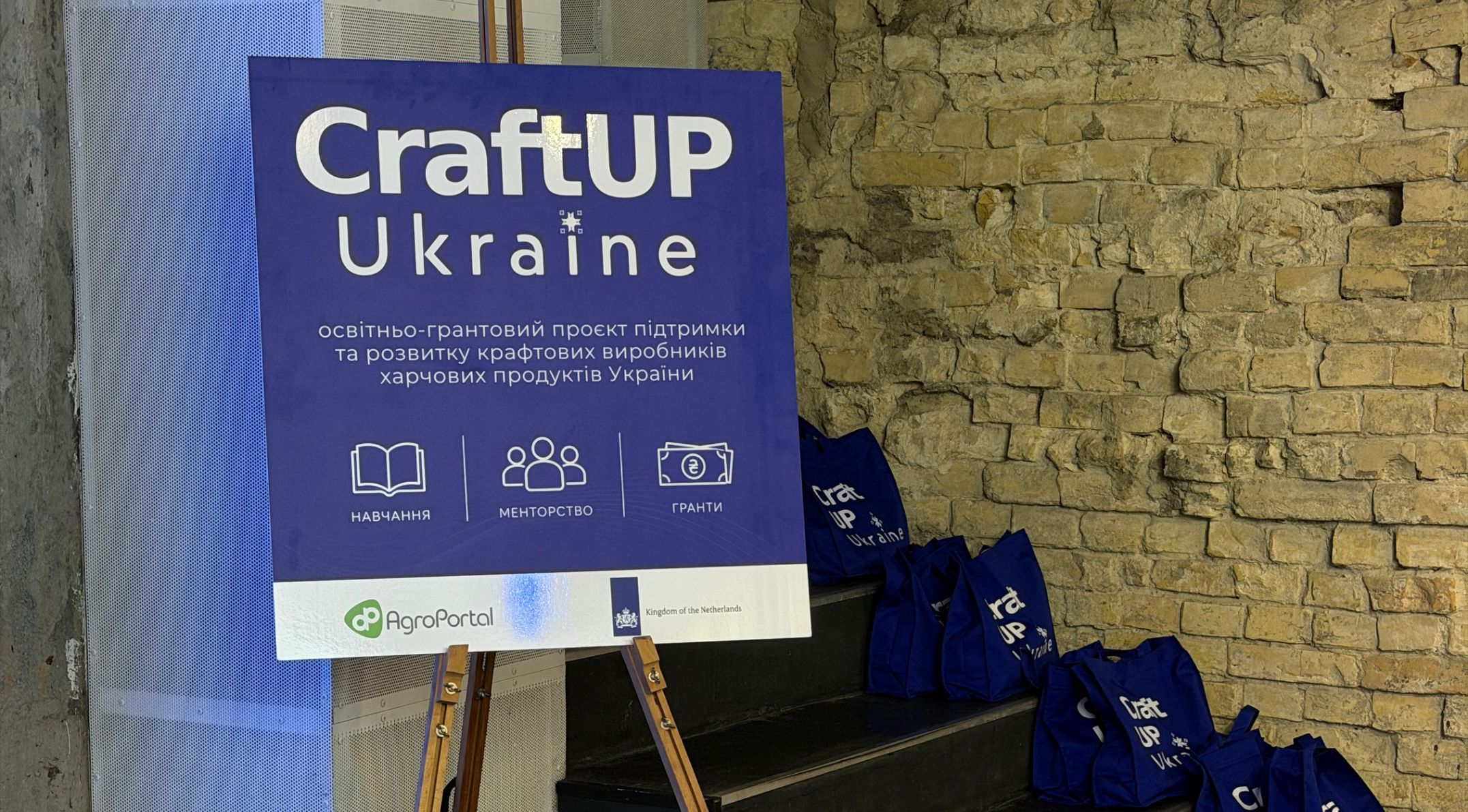
CraftUP Ukraine: Finalists Presented Their Business Projects and Received Grants
- 12 October 2026, 14:27 1200
 Port Blockade to Cost Ukraine Around 2% of GDP
Dragon Capital forecasts two years of decline in Ukraine’s gross domestic product (GDP).