
As of 1 July 2026, the NBU’s international reserves stood at $51.3 billion. This level of reserves is sufficient to maintain the stability of the hryvnia throughout 2026, even if the shutdown of the Black Sea ports continues until the end of the year. At the same time, in order to preserve its international reserves, the National Bank may accelerate the depreciation of the hryvnia.
Port Shutdown Costs Ukraine $70 Million in Export Revenue Every Day. Can the Hryvnia Withstand the Pressure?
31 July 2026, 06:44 2668
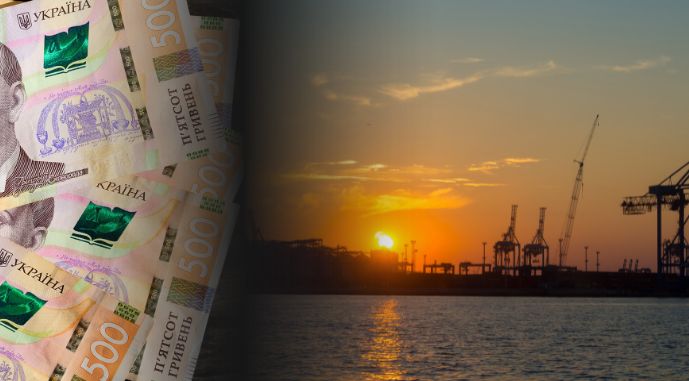
Ukraine’s foreign trade deficit reached $28.3 billion in the first half of 2026, while demand for foreign currency remains high. Each day that Black Sea ports remain closed costs the country approximately $70 million in export revenue.
This opinion was shared with AgroPortal.ua by Oleksandr Khmelevskyi, PhD in Economics and an independent expert.
According to Khmelevskyi, even a temporary suspension of exports through the Black Sea ports lasting several months would widen the trade deficit by several billion dollars. To maintain the stability of the hryvnia, the National Bank of Ukraine (NBU) would have to increase its foreign exchange interventions, resulting in a decline in the country’s international reserves.

Oleksandr Khmelevskyi, PhD in Economics, independent expert
The expert added that, by the end of the year, the hryvnia could weaken beyond the average exchange rate of UAH 45.7 per US dollar projected in the state budget, potentially reaching UAH 47–48 per US dollar and UAH 56–57 per euro.
Looking ahead to 2027, however, the outlook for the hryvnia appears significantly more challenging. According to Khmelevskyi, the NBU’s international reserves are largely supported by foreign loans. At present, Ukraine’s international partners are not prepared to provide sufficient funding to fully cover the country’s financial needs next year.

Moreover, even if the Black Sea ports are reopened, Ukraine is unlikely to significantly reduce its foreign trade deficit in 2027. As a result, the hryvnia could face substantially stronger depreciation next year than in 2026, the expert said.
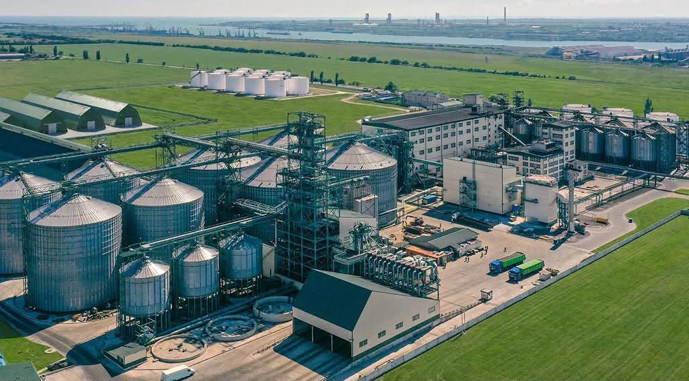
According to Khmelevskyi, the agricultural sector would be the first to suffer from the shutdown of the Black Sea ports, as they have traditionally handled the bulk of Ukraine’s agricultural exports. With the harvest now underway and exports suspended, grain stocks could quickly exceed available storage capacity, resulting in significant post-harvest losses.
The Ukrainian Agri Council (UAC) estimates that the volume of surplus agricultural production caused by the port shutdown could reach approximately 30 million tonnes.
Oleksandr Khmelevskyi, PhD in Economics, independent expert
The closure of the ports will also create serious challenges for other sectors of Ukraine’s economy. It will lead to lower GDP, reduced budget revenues, and a decline in the overall standard of living. In 2022, the ports remained closed until July following the outbreak of the full-scale war, and this was one of the factors behind Ukraine’s 29% GDP contraction that year. We do not expect a decline of that magnitude this year, but a contraction of 5–7% is entirely possible.
The expert stressed that alternative logistics routes cannot fully replace the Black Sea ports. Danube ports remain under constant attack, water levels in the river have fallen significantly, and the ports themselves lack sufficient capacity to handle a substantial increase in cargo volumes.
Rail and road transport also face severe capacity constraints. Ukraine has already appealed to the European Union for assistance in redirecting part of its cargo through European transport corridors. However, a significant increase in overland exports through the western border is unlikely.
Additional risks include the possibility of renewed border blockades by Polish farmers and political groups, similar to those seen in 2023. Slovakia and Hungary could also join such actions.
Khmelevskyi concluded that the only viable solution is to significantly strengthen air defence systemsaround the Black Sea ports to ensure the safety of maritime shipping. However, given the shortage of interceptor missiles, it will be impossible to provide complete protection for the ports and shipping routes.
Alla Stryzheus, AgroPortal.ua

 03 August 2026, 07:201427
UCAB Agrotechnologies 2026. West: All Winning Solutions in One Field
 03 July 2026, 07:202205
Sustainable Farming: Implementing Modern Sustainable Technologies Without Unnecessary Mistakes and Losses
 26 June 2026, 07:202011
Agro Ukraine Week 2026: How Ukraine’s First Three-Day Agricultural Forum Took Place