
EuroTier: Future and Innovation in Livestock Farming to Be Showcased Across 13 Halls
EuroTier: Livestock Innovations Focus Not Only on Automation and Productivity, but Also on Improving Animal Welfare and Health
15 October 2026, 06:08 145
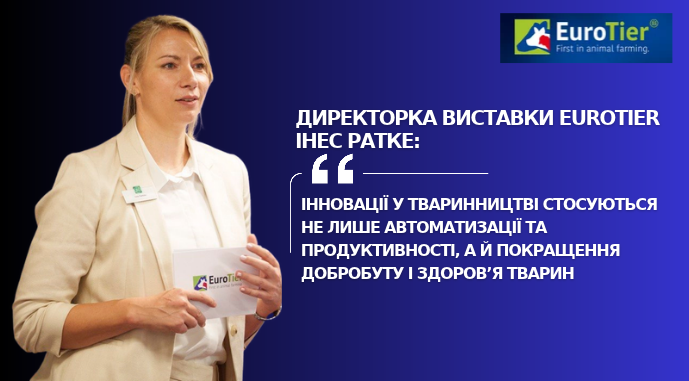
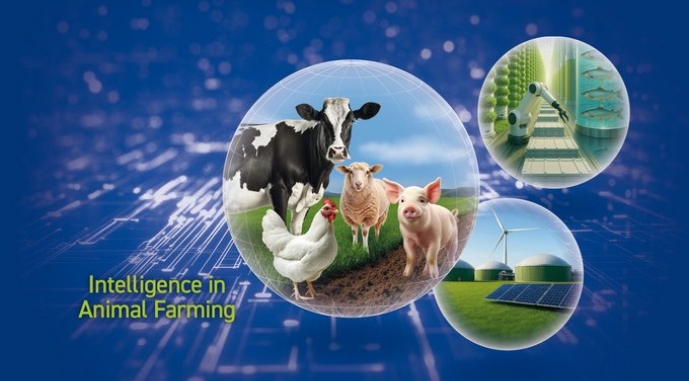
In one month, Germany will host EuroTier, the world’s largest exhibition bringing together leading solutions for all sectors of livestock farming. This year, the event is being held under the main theme «Intelligence in Animal Farming» and focuses on the implementation of intelligent technologies, automation, artificial intelligence and robotic systems to achieve maximum efficiency, sustainability and high standards of animal welfare.
AgroPortal.ua spoke with EuroTier Project Manager Ines Rathke about the special features and new formats of EuroTier 2026, trends in livestock farming identified through the Innovation Award EuroTier, and the participation of Ukrainian companies in the exhibition.
What will make this year’s EuroTier exhibition special? Have any new participating countries joined, has the exhibition area expanded, or have new formats been introduced?
Ines Rathke: EuroTier 2026 will once again bring together the global livestock industry in Hanover with more than 2,100 exhibitors across 13 exhibition halls. One of the event’s greatest strengths is that it covers all major livestock species under one roof, creating valuable synergies for farmers who can compare solutions for dairy, pig and poultry production during a single visit.
Alongside EuroTier, EnergyDecentral will showcase renewable energy and on-farm energy solutions, which are becoming increasingly important for livestock businesses seeking additional sources of income and greater energy independence.
For livestock producers, the benefit is clear: within just a few days they can compare technologies, speak directly with manufacturers and exchange experiences with fellow farmers, making important investment decisions far more efficiently.
New features include the EuroTier Milky Way platform for dairy farming, DLG VetCon for veterinary professionals and the Innovation Boulevard. We are also placing a new strong focus on biosecurity and emission reduction. In addition, visitors will discover more than 175 world premieres and numerous award-winning innovations.
We are also pleased to welcome many international visitor groups, including delegations of livestock producers from Ukraine, underlining EuroTier’s role as a global meeting place for the livestock industry.
These new formats reflect some of the most important developments currently shaping livestock farming worldwide.
For the first time, EuroTier will feature the EuroTier Milky Way platform dedicated to dairy farming, the DLG VetCon veterinary area and the Innovation Boulevard. Why did the organisers decide to highlight these particular areas?
Ines Rathke: The EuroTier Milky Way was created because dairy farmers face increasing challenges related to profitability, sustainability, animal welfare and labour efficiency. The platform brings together technologies, knowledge and networking opportunities specifically for the dairy sector.
DLG VetCon reflects the growing importance of animal health, preventive medicine and veterinary expertise. Animal health has become a key success factor for farm performance, animal welfare and public acceptance of livestock production.
The Innovation Boulevard will provide visitors with a compact and easily accessible overview of the most important innovations at EuroTier 2026. It helps visitors quickly identify technologies that may be particularly relevant for their own businesses.
Have you seen an increase in the number of Ukrainian companies participating in the exhibition compared with previous years?
Ines Rathke: Despite the challenging circumstances facing Ukraine, Ukrainian companies continue to show a strong commitment to innovation and international cooperation.
This year, seven Ukrainian exhibitors will showcase their solutions at EuroTier. In addition, we expect a significant number of Ukrainian visitors and organised farmer delegations.
For many Ukrainian livestock professionals, EuroTier provides an important opportunity to exchange knowledge, establish business contacts and gain first-hand insights into new technologies and management approaches from across Europe and beyond.
This year, the German Agricultural Society (DLG) recognised175innovations out of 217 submissions as part of the Innovation Award EuroTier 2026. What key trends in livestock farming can you identify based on the submitted innovations? Looking at these entries, where is the market heading, and what are manufacturers currently focusing on?
Ines Rathke: The innovations clearly show that livestock farming is becoming increasingly intelligent, connected and data-driven.
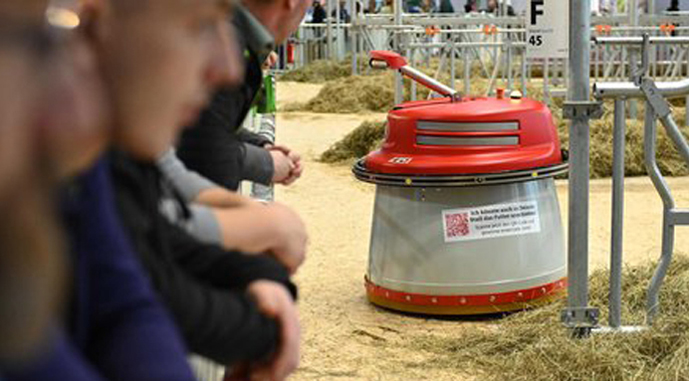
A particularly strong trend is the integration of sensors, cameras, artificial intelligence and automated control systems into everyday farm management. Animal-related sensor technology is increasingly becoming the interface between livestock and barn management, enabling farmers to react more quickly and precisely.
Another important trend is the move from standalone technologies towards integrated systems that combine sensors, control systems, automation and management tools into complete solutions. These systems help improve productivity, reduce labour requirements and optimise the use of resources.
The innovations also demonstrate that animal welfare, animal health, labour efficiency and sustainability are no longer separate goals. Increasingly, manufacturers are developing solutions that address all of these challenges simultaneously.
Climate adaptation, feed efficiency, improved biosecurity and digital herd management were also key themes among the award-winning innovations. In addition, the separate Animal Welfare Award highlights the industry's strong focus on practical innovations that improve animal welfare.
Overall, the market is moving towards more connected, data-driven and sustainable livestock production systems.
In the Gold Award category, 2 our of 4 gold medals were awarded to innovations designed for the cattle sector, particularly for cows. What do you think is behind this trend?
Ines Rathke: What is particularly interesting this year is that the four Gold Awards were shared equally between the cattle and pig sectors, with two Gold Awards in each category.
This reflects the fact that both sectors are undergoing particularly rapid technological development. Producers face growing demands regarding efficiency, animal welfare, labour availability and sustainability, creating strong demand for innovative solutions.
The Gold Award-winning innovations from Lock and WEDA are especially noteworthy because they demonstrate how sensors, cameras and artificial intelligence are increasingly moving from theory into practical farm applications. These technologies help farmers make faster and more reliable management decisions while improving operational efficiency.
It is also worth noting that both companies received the Animal Welfare Award which is a distinction. This underlines that innovation today is not only about automation and productivity, but also about improving animal welfare and animal health.
All submissions were evaluated according to the same criteria by an independent Innovation Commission. The fact that all four Gold Awards went to innovations in the cattle and pig sectors highlights the pace of innovation currently taking place in these areas.
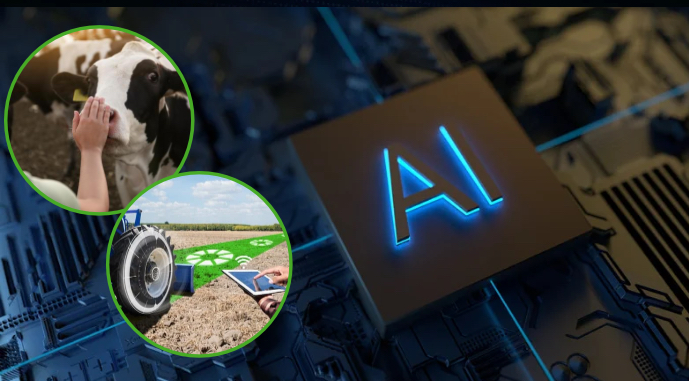
Which countries submitted the largest number of entries for the Innovation Award EuroTier 2026? Do you see any trends compared with previous EuroTier exhibitions?
Ines Rathke: First of all the submissions span 14 product areas, ranging from digital herd management and smart farming to cattle, pig and poultry housing and feeding technology, milking systems, farm inputs, manure management and environmental solutions. So we see all areas covered. What is interesting is the international profile.
Germany remains the strongest source of innovations, reflecting its position as one of the world's leading livestock technology markets.
At the same time, the Innovation Award once again demonstrates EuroTier's international character. Award-winning innovations came from exhibitors representing nine countries across three continents. In addition to Germany, recognised innovations came from countries including the Netherlands, Denmark, France, Belgium, Switzerland, Spain, Canada, South Korea and Ukraine, USA.
South Korea is a particularly interesting example, as two Korean companies received a Silver Medal. This demonstrates that innovation in livestock farming is increasingly global and is no longer concentrated only in traditional agricultural technology markets.
Across all participating countries, we see remarkably similar trends. Manufacturers are focusing on digitalisation, artificial intelligence, animal health monitoring, automation, feed efficiency, animal welfare and resource efficiency. This shows that livestock farming is becoming increasingly connected, data-driven and internationally collaborative.
The broad international profile of this year's medal winners demonstrates that many of the technical challenges facing livestock farmers are shared across countries and production systems. The award-winning solutions show how advances in automation, digitalization, animal housing, feeding, milking and environmental technology can improve operational reliability, efficiency and sustainability on farms. EuroTier provides the international professional platform where these developments can be evaluated in terms of their practical relevance.
Among this year’s participants in the Innovation Award EuroTier 2026 were three entries from the Ukrainian company ABM Trade LLC. What can you tell us about their innovations?
Ines Rathke: We are very pleased to see Ukrainian companies participating in the EuroTier Innovation Award programme.
ABM Trade LLC submitted three innovations: StabioSIL TOP, StabioSIL Alfa and StabioSIL Platinum. All three entries were recognised by the independent Innovation Commission and fulfilled the criteria for innovations presented to the market for the first time.
Their participation demonstrates the innovative strength of Ukraine’s agricultural sector and highlights the continued commitment of Ukrainian companies to developing new solutions for modern livestock production despite the challenges they currently face.
This year’s event will be held under the guiding theme «Intelligence in Animal Farming». In your view, to what extent can artificial intelligence improve and advance livestock farming? Which processes in particular could benefit from its use?
Ines Rathke: In today's challenging economic environment, livestock farmers are under increasing pressure to improve efficiency, productivity, sustainability and animal welfare simultaneously. Intelligent technologies are becoming indispensable in helping farmers meet these objectives.
However, Intelligence in Animal Farming means much more than artificial intelligence alone. It is about connecting livestock housing, feeding systems, milking technology, manure management and logistics with robotics, sensors, artificial intelligence, big data and digital platforms.
The real opportunity lies in integrating these technologies into holistic systems. This enables more precise management of livestock production, improves process quality, animal performance, animal health and animal welfare, while helping reduce feed, energy and labour costs as well as emissions.
Particularly promising applications include animal health monitoring, behaviour analysis, calving detection, farrowing supervision, feeding optimisation, climate control and predictive management. Several of this year's Gold Award winners show how AI-supported systems are already helping farmers make faster and more reliable decisions in everyday livestock management.
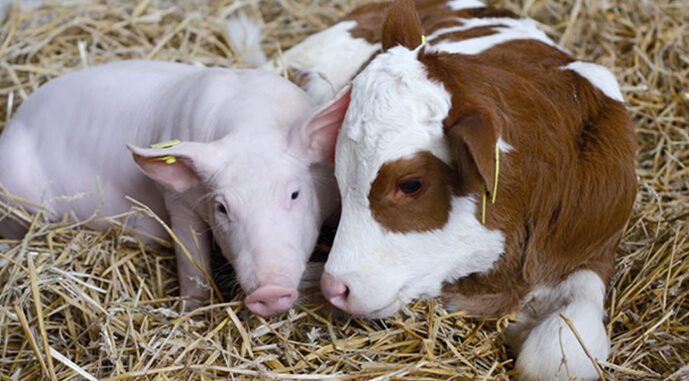
Ukraine is currently progressing along its path towards European integration and transitioning to EU standards, including in the livestock sector. What would you advise Ukrainian livestock producers to pay particular attention to?
Ines Rathke: Ukraine's livestock sector is currently facing a dual challenge: managing the consequences of the ongoing war while simultaneously moving closer to European standards and markets.
My advice would be to focus particularly on animal health, biosecurity, traceability, documentation and resource efficiency. These areas are becoming increasingly important throughout Europe and will play a key role in future competitiveness and market access.
At the same time, producers should view this transition not only as a regulatory challenge but also as an opportunity to moderniseproduction systems and strengthen long-term resilience. Investments in technology, management systems and employee training can help improve productivity while meeting future requirements.
Equally important is participation in international networks and knowledge exchange. By learning from practical experience across Europe and identifying proven solutions that fit local conditions, Ukrainian livestock producers can strengthen their position and take advantage of the opportunities created through closer integration with the European market.
Thank you for the conversation, and see you at EuroTier 2026.
For reference: the international EuroTier 2026 exhibition will take place on 10–13 November in Hanover, Germany. EuroTier 2026 is organised by DLG (German Agricultural Society). DLG has more than 30,000 members and is a politically independent, non-profit organisation. The German Agricultural Society operates through subsidiaries in 10 countries and also organises more than 30 regional agricultural and livestock exhibitions worldwide. DLG’s leading international exhibitions — EuroTier for livestock farming and Agritechnica for agricultural machinery — are held every two years in Hanover, Germany.
Svitlana Yatsenko, AgroPortal.ua

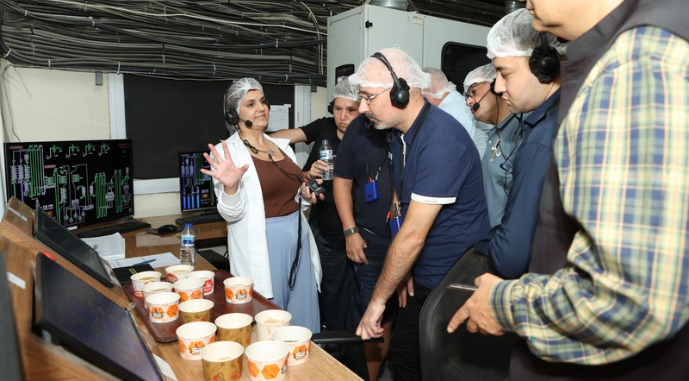 14 October 2026, 07:20257
Chickpea and Lentil Paste: How One of the World's Largest Legume Processing Plants Operates
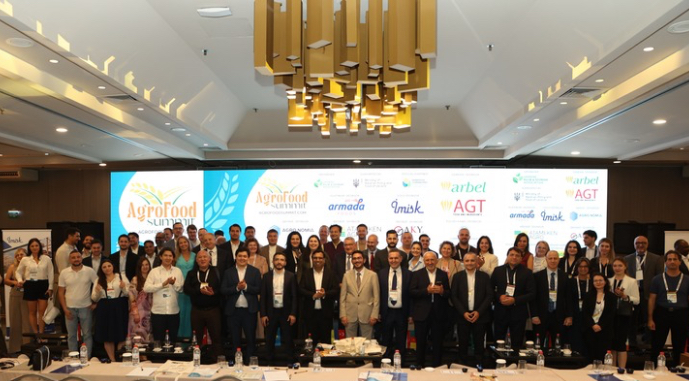 02 October 2026, 07:201310
Shifting Trade Flows: What Opportunities Are Available to Ukrainian Producers?
 18 September 2026, 07:201549
CraftUP Ukraine: Finalists Presented Their Business Projects and Received Grants
- 27 September 2026, 15:25 1572
 EuroTier: Future and Innovation in Livestock Farming to Be Showcased Across 13 Halls
The international EuroTier 2026 exhibition will take place on 10–13 November in Hanover, Germany. Across 13 halls, more than 2,100 exhibitors from 55 countries will present technologies and solutions for professional livestock farming.