
Global feed market grows by 40 million tons: leading producers named

Global feed production reached approximately 1.44 billion tons in 2025, up 3%, or 40 million tons, compared with the previous year.
These findings are based on a survey conducted by Alltech among more than 38,800 feed mills in 142 countries, World Grain reports.
«Most regions and sectors experienced growth, and these figures point to a strong recovery phase in livestock production,» the researchers noted. «However, the data show that growth was uneven, increasingly regionalized, and driven less by herd expansion than by structural changes, productivity gains, and changes in the way production is measured and recorded.»
The top 10 feed-producing countries remained unchanged. Together, they accounted for 65% of global feed production in 2025, while nearly 48% of total global feed tonnage was produced in just three countries: China, the United States, and Brazil.
The top 10 feed producers are as follows:
- China — 330.1 million tons, +4.8%;
- United States — 267.4 million tons, -0.8%;
- Brazil — 89.9 million tons, +2.8%;
- India — 57.7 million tons, +4.5%;
- Mexico — 41.9 million tons, +1.2%;
- russia — 38.3 million tons, +1.1%;
- Spain — 37.5 million tons, -3.4%;
- Vietnam — 26.5 million tons, +2.6%;
- Turkey — 25.5 million tons, +3.8%;
- Japan — 24 million tons, -1.3%.
Feed production volumes by animal category were also reported as follows:
- broilers — 400.4 million tons, +3.7%;
- layers — 180.1 million tons, +3.2%;
- swine — 380.9 million tons, +3.0%;
- dairy cattle — 170.3 million tons, +2.6%;
- beef cattle — 134.2 million tons, +0.5%;
- aquaculture — 55.5 million tons, +4.7%;
- horses — 10.2 million tons, +0.2%.
According to Alltech, Asia remained the global center of feed production in 2025, with an output of 559 million tons. Output in North America declined slightly, by 0.7%, to 288 million tons. Europe’s feed sector grew by 1% last year to 274 million tons. Latin America strengthened its position, producing 204 million tons (+2.8%). Africa (+12%) and the Middle East (+1.1%) together produced 102.5 million tons. Oceania increased feed output to 11.1 million tons (+3.4%).
 14 October 2026, 07:20658
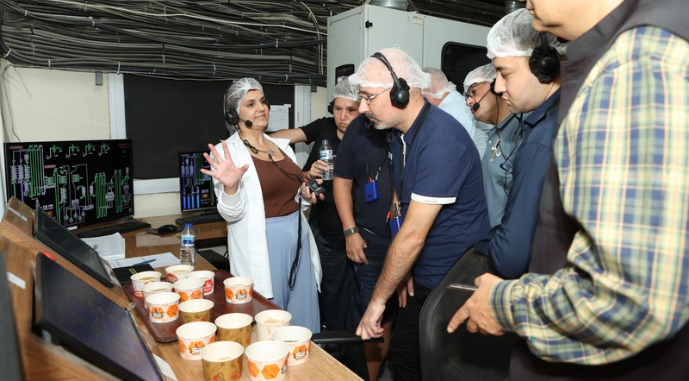
Chickpea and Lentil Paste: How One of the World's Largest Legume Processing Plants Operates
 02 October 2026, 07:201409
Shifting Trade Flows: What Opportunities Are Available to Ukrainian Producers?
 18 September 2026, 07:201632
CraftUP Ukraine: Finalists Presented Their Business Projects and Received Grants
- 16 October 2026, 08:42 854
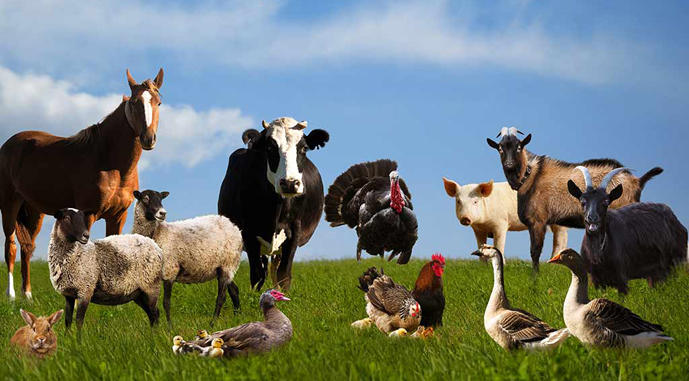 Market and Security Factors Are Changing the Structure of Ukraine’s Livestock Sector
Ukraine’s livestock sector continues to undergo structural transformation under the influence of market and security challenges.
- 15 October 2026, 06:08 806
 EuroTier: Livestock Innovations Focus Not Only on Automation and Productivity, but Also on Improving Animal Welfare and Health
In one month, Germany will host EuroTier, the world’s largest exhibition bringing together leading solutions for all sectors of livestock farming. This year, the event is being held under the main theme «Intelligence in Animal Farming» and focuses on the implementation of intelligent technologies, automation, artificial intelligence and robotic systems to achieve maximum efficiency, sustainability and high standards of animal welfare.