A Spicy Business in a New Format: Why Package Adjika in Sticks
20% Reduction in Production Costs: How Beekeepers Plan to Make Production Cheaper
25 August 2026, 05:48 1505
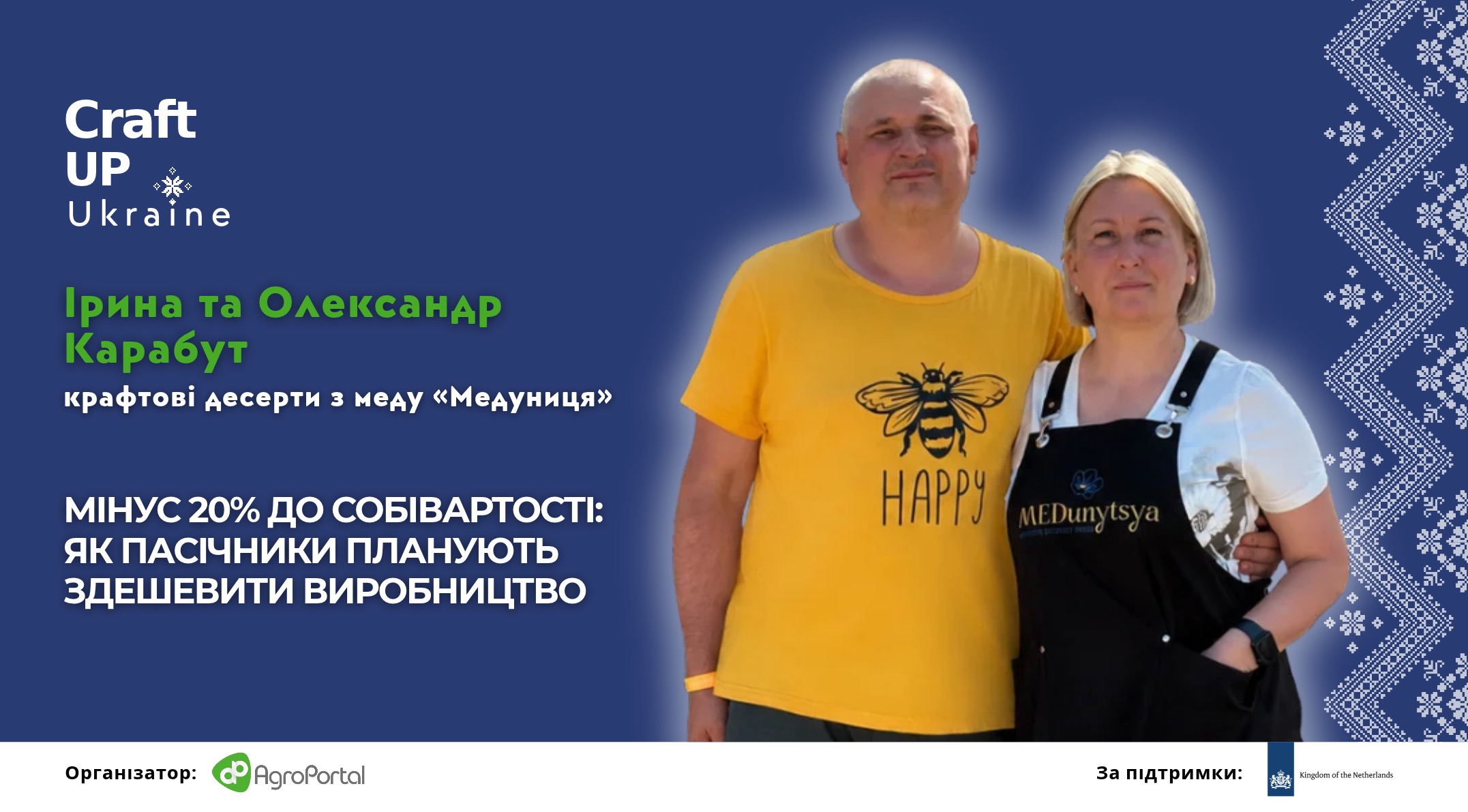
Five years ago, energy professionals Iryna and Oleksandr Karabut could hardly have imagined that beekeeping would become their business. Having started with 10 beehives at their summer cottage, today they run an apiary near Kryvyi Rih with more than a hundred bee colonies and process all the honey they harvest.
It all began in 2021 after Oleksandr visited a friend’s apiary.
«My husband became so fascinated with it that he suggested setting up at least two or three beehives. But I like to calculate the risks: one colony might get sick, another might swarm and leave. So we decided that ten would be a reasonable number,» recalls Iryna Karabut, a finalist of the CraftUP Ukraine educational and grant project.
The first season proved successful for Medunytsia: the honey harvest was good, while the creamed honey they presented at a local fair was something new for customers — the couple were the first in the region to produce creamed honey.
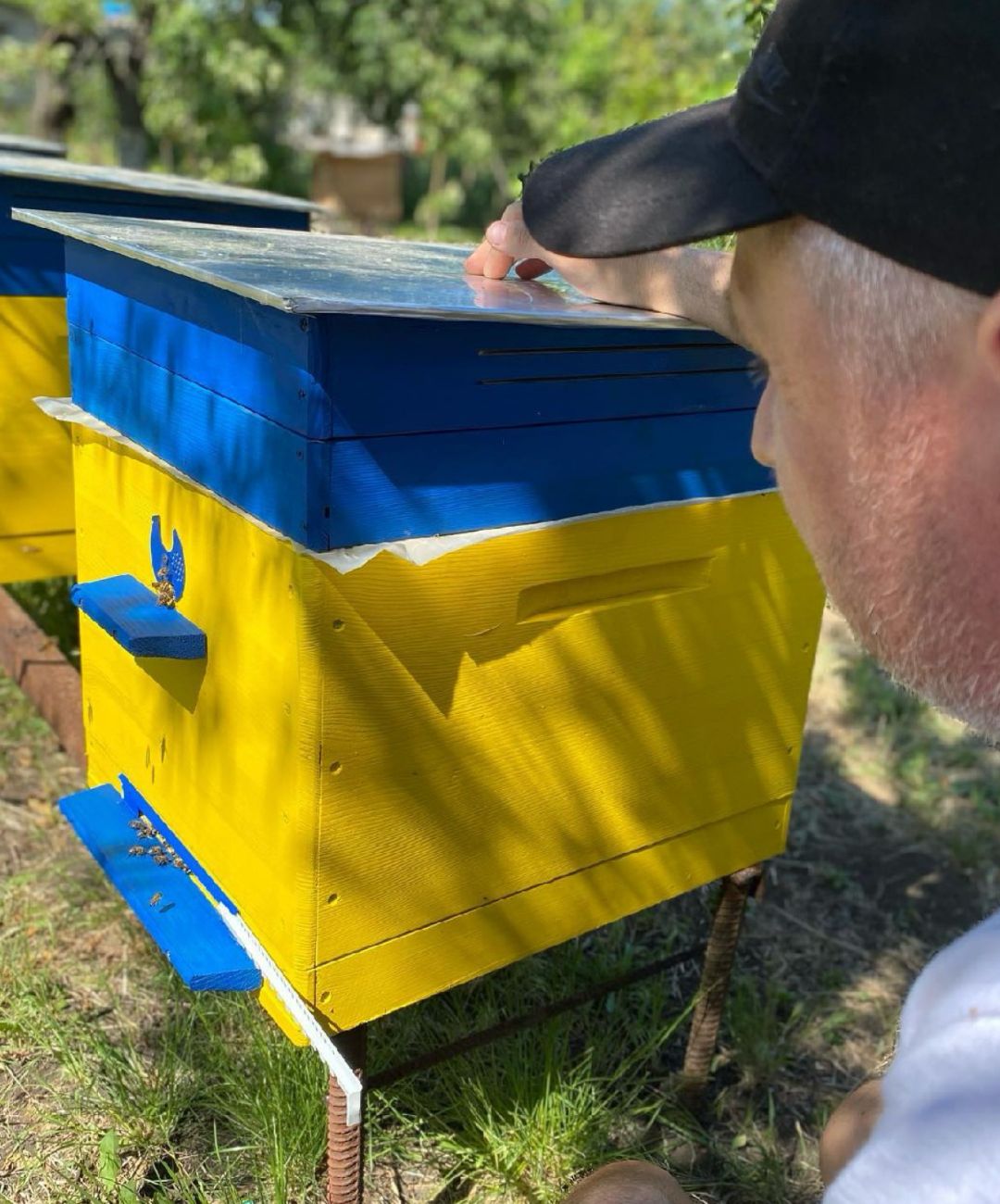
Medunytsia Apiary
Over time, 10 beehives became 20, then 30, and the apiary eventually grew to more than a hundred bee colonies. When there were too many bees for the summer cottage, the apiary was moved to a separate location.
Today, the husband is responsible for the bees and honey harvesting, while the wife handles processing and product development.
A new stage for the family business began with a UAH 250,000 state grant received in 2023. The funds were used to purchase equipment, including a 200 kg creaming machine, rent separate premises that became a production facility, warehouse and shop, and hire two employees.
«Our Zelenodolsk community supports us greatly. After many local residents left because of the threat of occupation, they continued ordering our products — our honey became a kind of reminder of their home region,» Iryna says.
Last year, the business produced 1.2 tonnes of honey, while this year’s harvest amounts to around 2 tonnes.
One of the most unusual varieties in the range is coriander honey. The apiary was moved to coriander fields for the first time last year.
«We have a community of beekeepers who cooperate with one another and travel to fields together, because doing it individually is very expensive. Last year, we went to coriander fields for the first time. We did not get much honey because we did not know how many beehives to take or what the honey would be like. But people liked it, and we sold out quickly,» the entrepreneur recalls.
This season, they managed to produce around 100 kg of coriander honey.
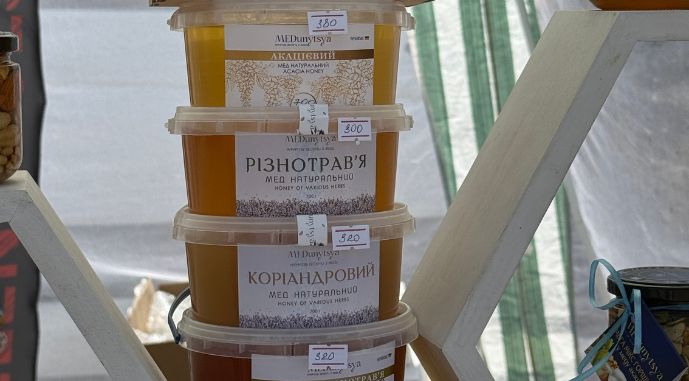
Overall, sunflower honey accounts for half of this year’s harvest, acacia honey for around a quarter, and the rest consists of other varieties (wildflower, forest wildflower, coriander and linden honey). The main focus, however, is on acacia honey: it is used for nuts, spreads, dried fruits and berries in honey.
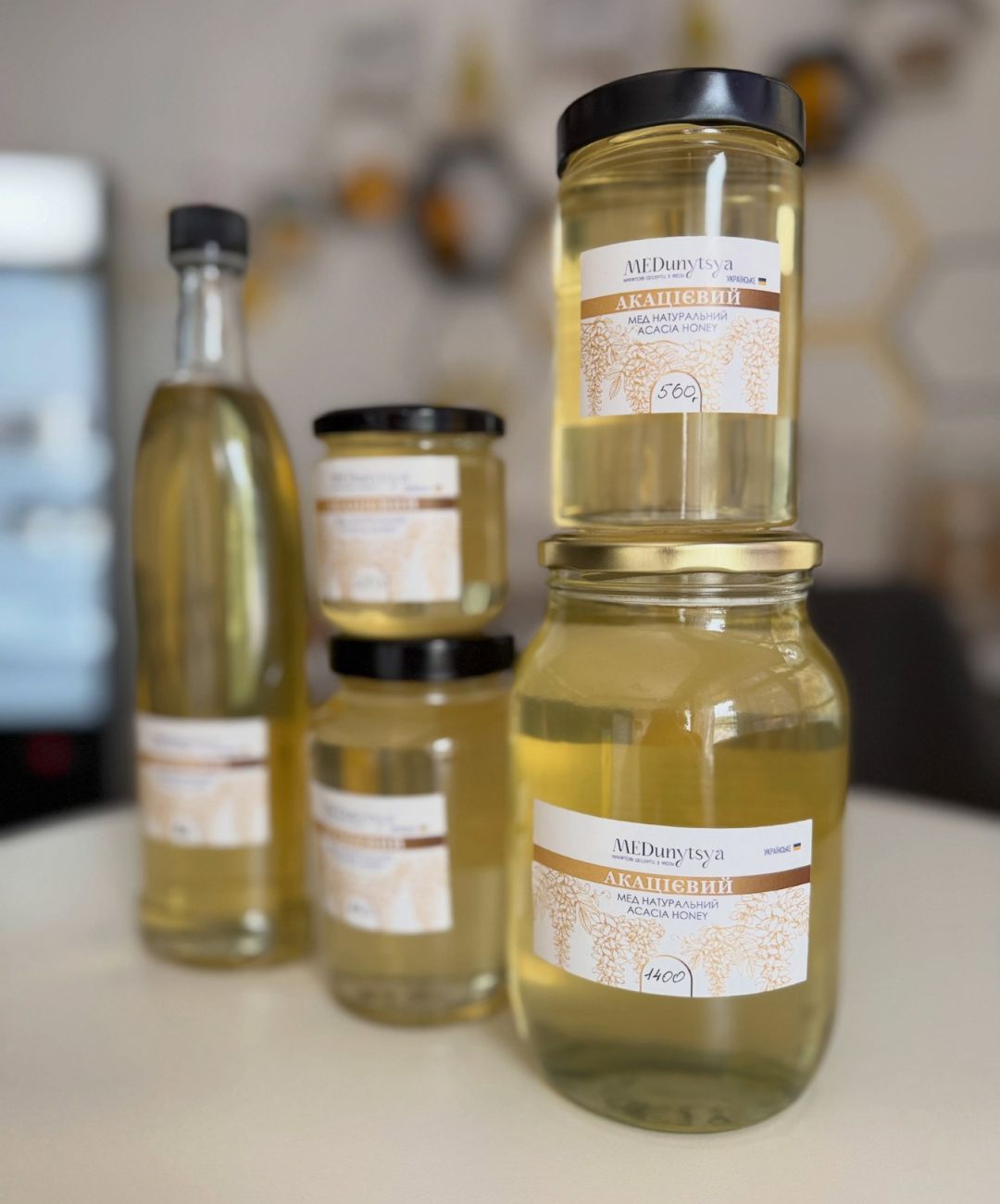
Acacia Honey
Acacia honey is the most expensive of all varieties because acacia blossoms for only 6–12 days a year. Bees have only a few days to collect the nectar. If it rains or strong winds occur during the flowering period, the bees cannot fly out, and there will simply be no harvest. 100% acacia honey is scarce. There is usually less of it than other varieties, while demand is always extremely high.
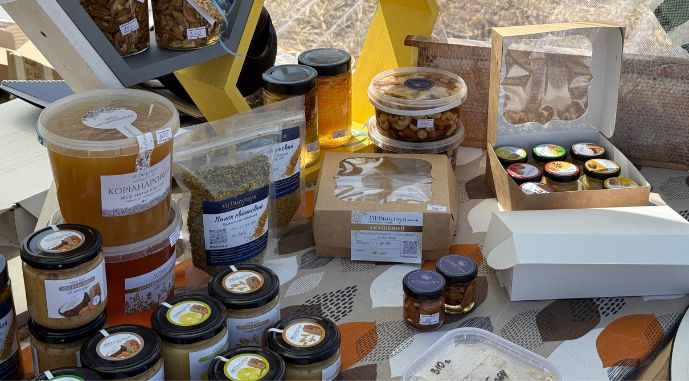
Creamed honey is a separate product line. There are currently around 10 flavours, and each new recipe is tested for approximately a month. Local customers’ favourites include lime and mint, as it is associated with the city of Zelenodolsk, and blueberry, because blueberries do not grow in the region. The craft producer is currently experimenting with lavender.
«We still do not have a culture of consuming different varieties of honey. People often think: why pay more if all honey is the same? But then they taste it and realise just how different it can be. We even use separate frames for each variety so that the honeys do not mix. We are very committed to preserving the uniqueness of each variety,» Iryna explains.
In addition to honey and creamed honey, the product range includes nuts with honey, pollen, pollen with honey, apple cookies, fruit leather, fruit crisps and other products. Honey is also packaged in stick packs.
«Our honey is slightly more expensive because I submit every batch for laboratory analysis. Today, we compete primarily on quality. At the same time, my goal is to reduce production costs, so we plan to freeze-dry berries ourselves. A lot of berries are grown in our region, and I see this as a good opportunity for development. Having our own freeze-drying capacity will allow us to scale up production and reduce production costs by approximately 20%,» the entrepreneur says.
This season, Medunytsia raised its prices by UAH 50, and a litre of sunflower honey now costs UAH 400, while a litre of acacia honey costs UAH 750.
Among the immediate priorities is the purchase of their own truck, which will allow them to become more mobile and participate in fairs and various events not only within the region but also in other regions of Ukraine.
Ivanna Panasiuk, AgroPortal.ua