
The Agricultural Sector on the Path to the EU: Practical Steps for Adaptation in Livestock Farming
Olha Trofimtseva: Ukraine Needs the European Union No Less Than the EU Needs Ukraine
25 September 2026, 06:37 792
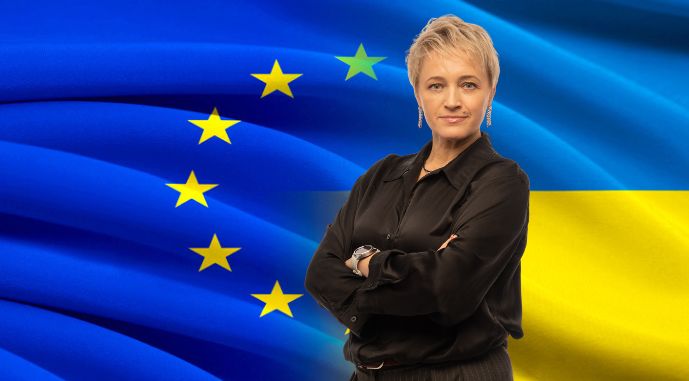
At the beginning of the year, Olha Trofimtseva took over as head of the APD Ukraine project, which focuses, among other things, on supporting Ukraine’s alignment with European Union policies. What the German-Ukrainian Agricultural Policy Dialogue has already managed to implement and what is still planned — in our conversation.
The German-Ukrainian Agricultural Policy Dialogue (APD Ukraine) has been operating in Ukraine since 2006 with funding from the German Federal Ministry of Food and Agriculture. What are the specifics of the project’s work today, amid both European integration processes and wartime challenges?
Olha Trofimtseva: The first component of our work lies in the policy sphere, particularly in assisting the Ministry of Agrarian Policy and Food with issues where the ministry especially needs support in terms of European integration — that is, bringing Ukraine’s agri-food sector closer to the EU. And this is not only about the legislative framework. The essence of our work is actually embedded in the name of the project — «dialogue». It is about building a systematic, sustainable, meaningful, evidence-based and science-based dialogue between Ukraine, Germany and the European Union.
What are the main topics at the moment?
Olha Trofimtseva: The number one topic is the Common Agricultural Policy, particularly how we should build the necessary infrastructure. I am not talking about infrastructure in the sense of railways or transport infrastructure in general, but about the infrastructure of policy-making and executive institutions that we need in order to become part of the European Union and participate in the implementation of the CAP. This includes the functioning of the Paying Agency and other instruments and mechanisms that operate in the EU and that we need to implement in Ukraine.
The second topic is the competitiveness of Ukraine’s agricultural sector. On the one hand, how our accession to the EU will affect the competitiveness of Ukraine’s agricultural sector, and on the other, how our accession will affect the EU’s internal markets.
The third area that APD Ukraine is actively working on includes specific aspects of interaction with the EU market. For example, we are currently looking at bioethanol and biofuels — practical cases that allow us to calculate and assess what is happening in this market, whether the country can actually offer something to the European Union, whether there is demand there, how trade policy works in general, what regulatory framework currently exists, how it affects what we can offer, what needs to be improved, and so on. Another issue is the regulation of plant protection products. This is a sensitive topic both for Ukraine and for the European Union. However, it cannot be ignored, and we are working on it as well.
You said that the first component of the project lies in the policy sphere. What are the other components?
Olha Trofimtseva: The second component of our project is rural development itself and everything related to it. Again, this is about creating institutional elements and, more broadly, about how to support rural development so that small craft production or non-agricultural activities, among other things, can develop there.
Could you give an example of your work in this area?
Olha Trofimtseva: The project provided expert support to the Ministry on building CAP infrastructure, specifically on such a specialised issue as the establishment and functioning of the Managing Authority. The report and recommendations prepared by the project experts will be available on the website. The project experts also assessed, from the perspective of European integration processes and practices for developing this type of document, the draft national programme for implementing the 2030 Strategy prepared by the Ministry. We also submitted our recommendations to the Ministry.
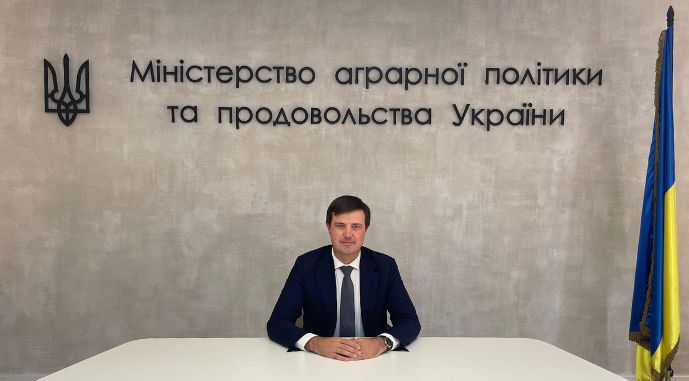
Our publication has implemented more than one project aimed at supporting rural development. Now, following the full-scale invasion, we have noticed in the regions that these issues are being pushed into the background, with more urgent security-related decisions taking priority. How do you, for your part, encourage rural development?
Olha Trofimtseva: Yes, the processes are slowing down. However, objectively speaking, we are now at a point of survival, and our EU accession process is an integral part of that survival strategy, because first and foremost it is a civilisational choice which, in my view, has no alternative for us from the perspective of economic, political, geopolitical or any other activity.
On the other hand, rural development is an integral part of the EU’s CAP. Therefore, for Ukraine as a candidate country, studying and introducing European practices for supporting rural development, stimulating entrepreneurship in rural areas, developing strategic documents for the development of communities and territories, introducing approaches to supporting local initiatives — local action groups — and bringing rural development support programmes closer to those existing in the EU is a logical direction of development. Rural development is precisely one of the areas where EU practices and approaches are highly desirable for Ukraine to introduce.
So, when we talk about communities, those that want to do this and understand the importance of this strategic vision are working very actively. There is also a pragmatic aspect here, because the closer we move towards the European Union, or even once we become an EU member, at some stage certain funds will be allocated, including for rural areas and our communities. But they will also need to be ready to receive these funds and use them wisely for the benefit of their communities. And that will be a challenge.
What is the mood among Europeans regarding Ukraine’s place in the European community?
Olha Trofimtseva: Germany, for example, is one of the countries that is strongly advancing Ukrainian issues. In Germany, we have a very strong partner whose support we can count on.
And Poland — where does it stand? More in favour, or still against?
Olha Trofimtseva: I am cautious about generalisations, because in Poland there are supporters of our accession to the EU as well as highly pragmatic representatives of the agricultural sector. However, the political mainstream is difficult at the moment, but that does not mean the situation will not change after some time.
Europeans are beginning to understand the importance of Ukraine within the EU and that not all of the negative consequences being portrayed will actually materialise. It is important to find such allies, communicate with them and, through partnerships, expand our ability to convey the necessary information and counter myths. This is also something we are doing at our level within APD Ukraine.
Is 2032 a realistic timeframe for Ukraine’s accession to the European Union?
Olha Trofimtseva: I have always been a Euro-optimist and remain one, so I believe that yes, it is entirely possible and absolutely realistic. Despite different political trends in EU countries, there is a growing pragmatic understanding that Ukraine needs the European Union no less than the European Union needs Ukraine.
I have always tried to convey this message: look at how much stronger you become, in terms of your economic power and your geoeconomic strength in the world, if you bring Ukraine into the European Union, and how much you strengthen your position in terms of food security.
What «homework» is already becoming urgent? What does Ukraine need to do immediately?
Olha Trofimtseva: We have already partly discussed this — it is about building the infrastructure needed to implement the CAP. Ukraine has actually already done a great deal, and one of the issues our project is also addressing is whether producers are implementing in practice what has been enshrined in legislation and the relevant secondary legislation.
And this is an important part of the homework — reaching every producer so that they understand why these changes are being made, what they need to prepare for, what benefits they will receive from them, and so that they begin implementing the standards that will be required upon accession to the EU.
For example, together with a delegation of producers, we visited Germany to communicate directly with local farmers, who explained and demonstrated how everything works, how they adapt, what is good about it, what is bad, and what should be taken into account. And this, by the way, is the third component of our project — promoting economic and trade cooperation directly between sector participants, agricultural producers, sectoral associations and organisations.
It is not the first time I have become convinced that this kind of direct dialogue greatly helps remove certain blinders, dispel negative myths and look at European integration as it actually works in practice.
To sum up, the agri-food sector has undergone significant transformations since the beginning of the year alone in response to the challenges it faces. Where will the agricultural sector move next, and how?
Olha Trofimtseva: Farmers are working. Some are changing their crop structure, but they are still sowing, and that gives positive hope. Over 35 years of independence, the agri-food sector has undergone an extraordinary evolution. Sceptics say there is not much to be proud of, and I absolutely disagree. There is a lot to be proud of. In the last pre-war year alone, the agricultural sector was a serious and efficient machine within the economy. It generated substantial foreign exchange revenues and drove a great deal in terms of efficiency and technology. It is a dynamic sector. The implementation of European approaches will also be beneficial to our farmers in many respects.
Our country is undergoing a process of transformation and restructuring, and we should not be rushing to bury ourselves. Although the war has become yet another forced and serious factor compelling the sector to change, the sector is finding the strength to remain resilient and often to make effective changes. Even small producers take into account the balance between efficiency, cost-effectiveness and profitability; they have become flexible. The war has intensified the need to change.
It is entirely possible that the structure of production, the structure of producers, logistics routes and the balance between raw material production and processing will change. However, once again, this may become another stage of evolution that economists and historians will later write about in books.
Thank you for the conversation.
Alla Stryzheus, AgroPortal.ua
