

Ukraine detects a number of Russian ships carrying stolen grain to Egypt
Ukraine Can Identify Grain Stolen from Occupied Territories with Nearly 100% Accuracy
30 May 2026, 08:39 2601

Ukraine is capable of identifying grain originating from temporarily occupied territories with a very high degree of accuracy.
This was stated in an interview with DW by Taras Vysotskyi, Deputy Minister of Economy, Environment and Agriculture of Ukraine.
«We jointly developed this project in partnership with the United Kingdom, which owns the technology, and Lithuania, and launched the first pilot projects in 2024. The essence of the system is that we have grain samples collected from Ukrainian territories that are currently temporarily occupied. These samples are stored at a state enterprise — essentially a seed bank,» he explained.
According to Vysotskyi, each sample contains unique markers related to climate, weather conditions, soil composition, and other characteristics of the area where the grain was grown. Based on these markers, a database has been created that allows authorities to determine, with a probability close to 100%, whether grain originates from specific occupied territories.
He noted that identifying the origin becomes more complicated if the grain is mixed with grain from other regions.
«The technology is highly accurate. If grain is mixed 50/50, it will definitely detect the origin. If only 5% comes from occupied territories and 95% from elsewhere, the probability decreases. However, there is no real economic benefit in such mixing because it is too labor-intensive. Practice shows that if the share of grain from occupied territories exceeds 10%, the technology detects it. Avoiding detection through mixing while maintaining economic efficiency is very difficult. Still, a sample must be taken for testing,» he added.
Vysotskyi also explained that different parties can initiate such testing, including governments or independent arbitration and certification bodies at the request of embassies in various countries. Several dozen analyses have already been conducted since the system was introduced.
«Over the past year, there have been significantly fewer cases. It appears they continue stealing grain but act more cautiously now. During the first years of the full-scale invasion, exports were carried out more openly, but at that time we did not yet have the laboratory capabilities to provide factual confirmation,» Vysotskyi concluded.

 23 October 2026, 07:20424
Ukraine Showcases Food Exports at SIAL Paris 2026
 14 October 2026, 07:201567
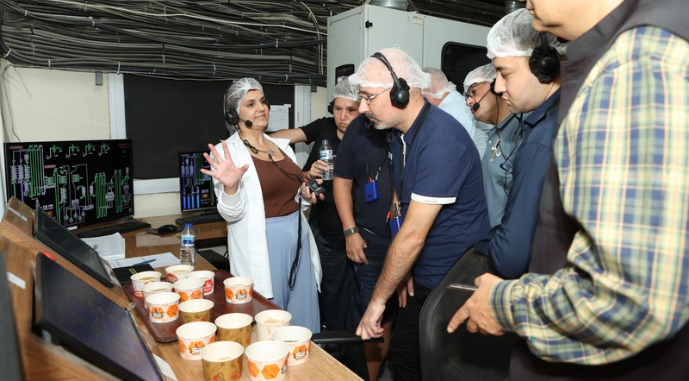
Chickpea and Lentil Paste: How One of the World's Largest Legume Processing Plants Operates
 02 October 2026, 07:201623
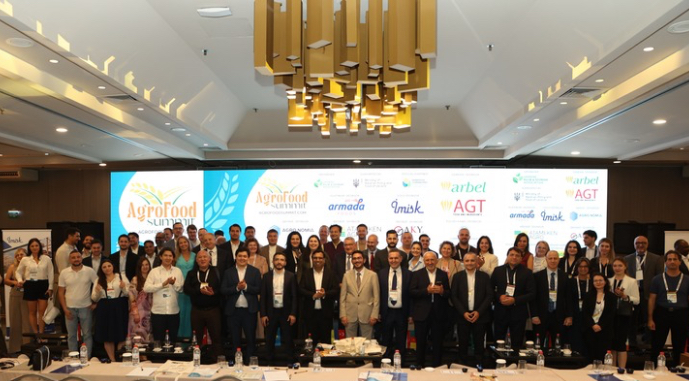
Shifting Trade Flows: What Opportunities Are Available to Ukrainian Producers?