
Production of Ukraine’s Only Ice Cream Made from Fresh Milk Increased by 20%. What Makes It Special?
Bitter Apples for Cider, Sweet Ones for Juice: How Apple Orchards Are Made Profitable in Zakarpattia
16 August 2026, 06:28 2609
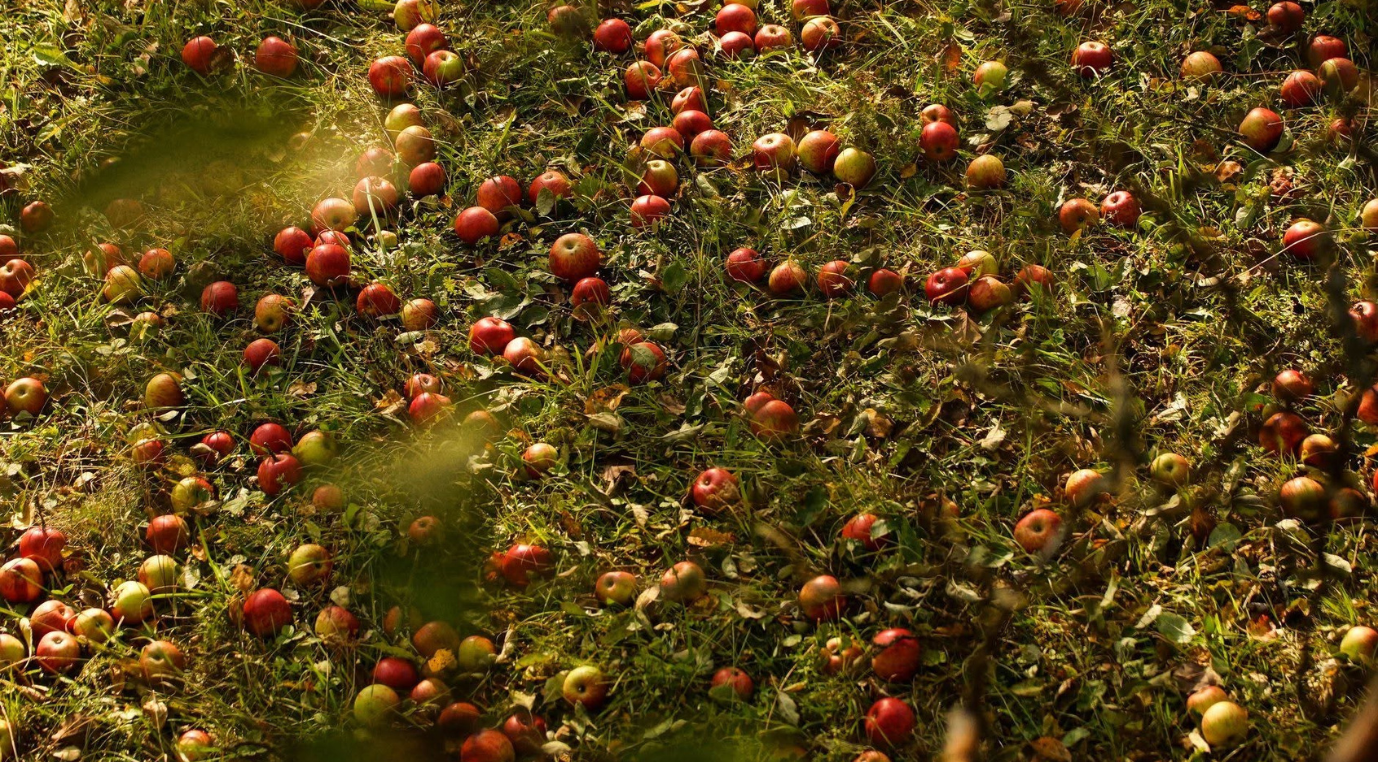
In autumn, there are plenty of apples in Zakarpattia. Sometimes, too many. They fall into the grass and lie beneath old trees. Until the 2000s, these apples could usually be sold for fairly good money. However, 15–20 years ago, people did not know what to do with their harvest. Old orchards began to decline, and local residents saw no point in taking care of the trees because they had stopped generating income. The work invested in them was no longer worthwhile, either financially or emotionally.
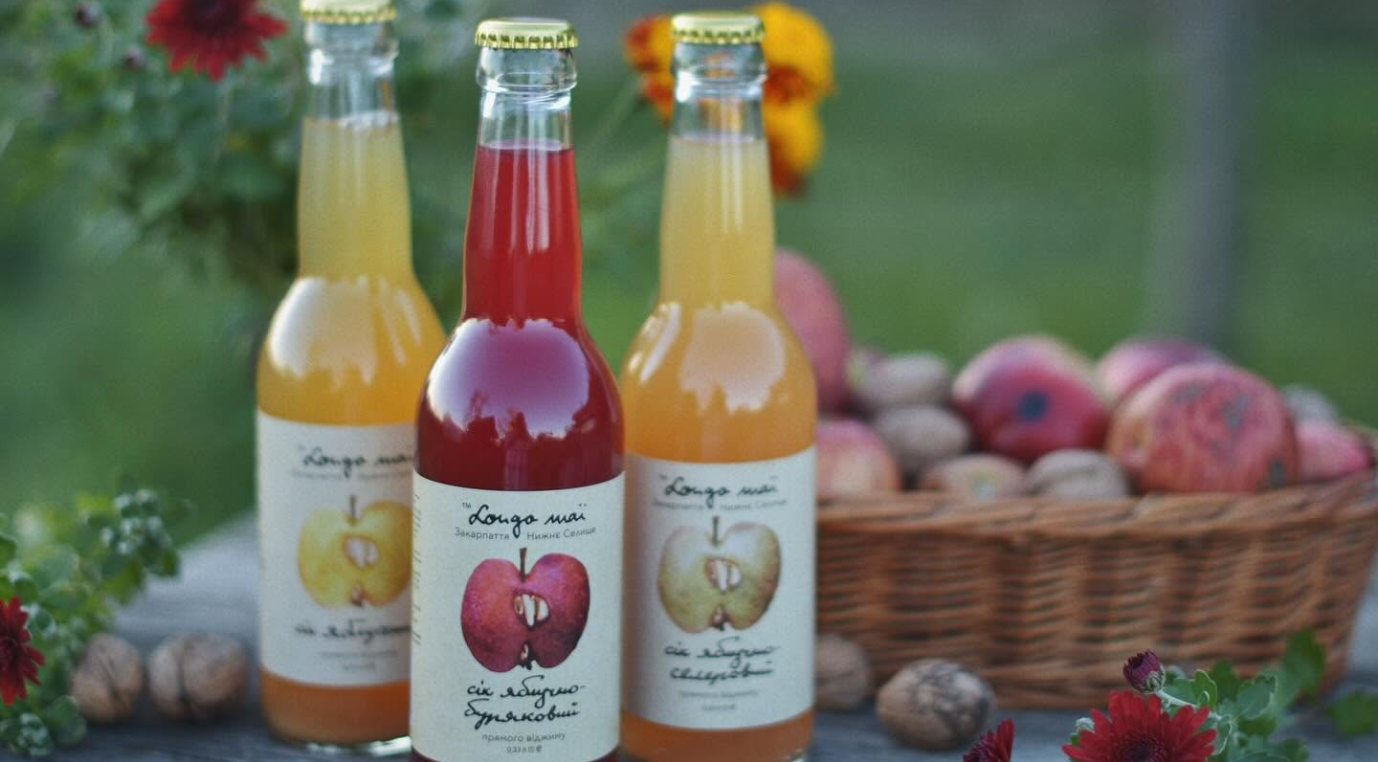
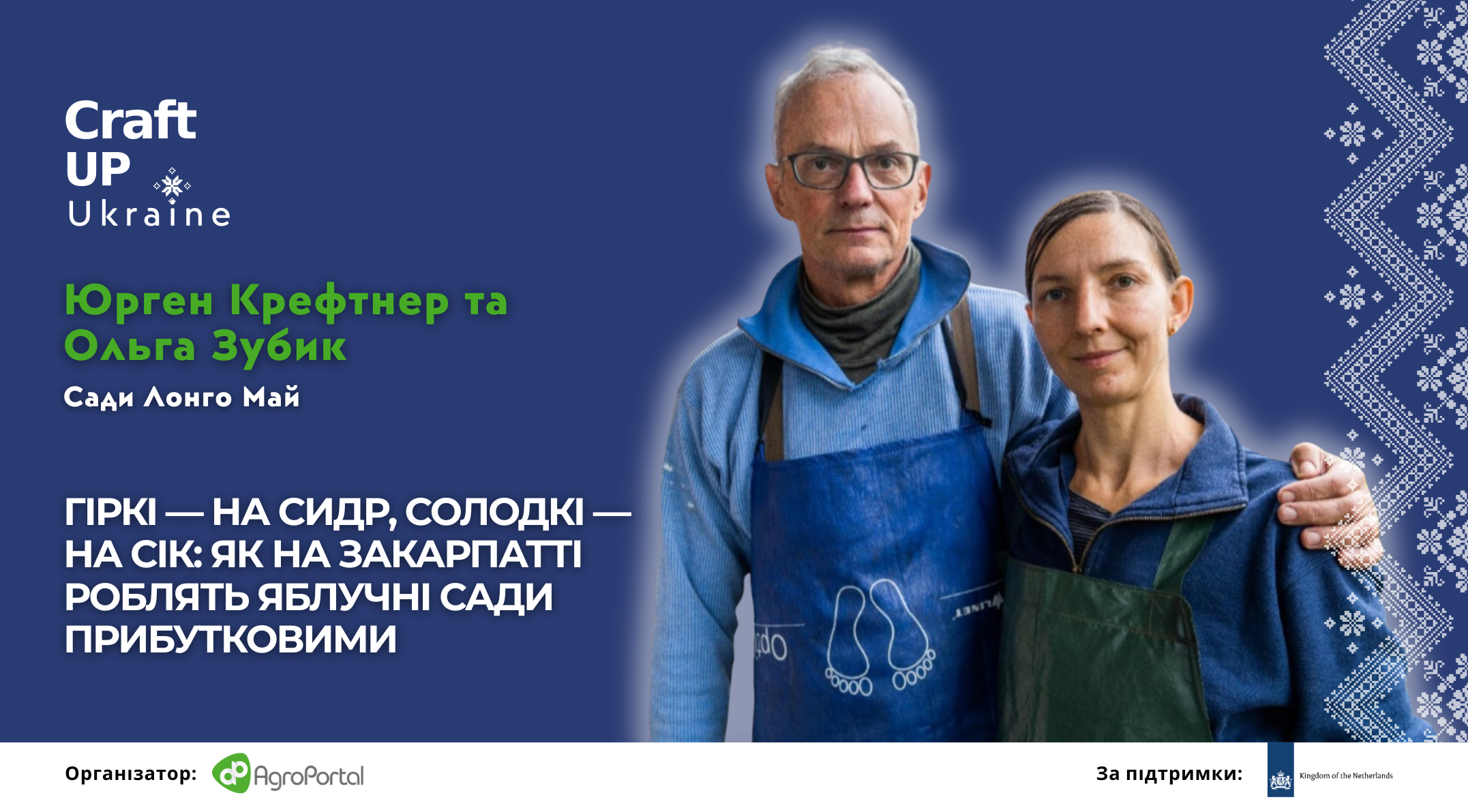
It was then that Olha Zubyk and her Austrian husband, Jürgen Kreftner, came up with the idea of producing high-quality apple juice from local raw materials. This is how the story of Sady Longo Mai began in Nyzhnie Selyshche, Zakarpattia. Under this brand, they produce direct-pressed juices, cider and apple cider vinegar.
«It was important for us to show people that apples can be put to good use. That they have value. We wanted people to once again see a reason to take care of their orchards,» Olha Zubyk told AgroPortal.ua.
The couple belongs to the European Longo Maï network of cooperatives, which brings together communities in different European countries. People there live and work together, doing what is close to them. This is usually farming — growing vegetables, tending orchards and caring for animals — as well as social and political activities. Longo Maï has been operating in Ukraine since 1993. At one time, the cooperative also contributed to the establishment of the now well-known Selyska Cheese Dairy.
Juice as a Way to Preserve Orchards
«An acquaintance from Germany helped us with the technology. We immediately decided to make not just apple juice, but blends with beetroot and celery, and to use glass packaging exclusively. Because our commune is about environmental responsibility, respect for nature and caring for future generations,» the craft producer notes.
They bought apples from local residents, but later began visiting orchards themselves and selecting the fruit they needed. Volunteers also take part in the harvesting — friends and acquaintances who come to work and spend a few days in Zakarpattia.
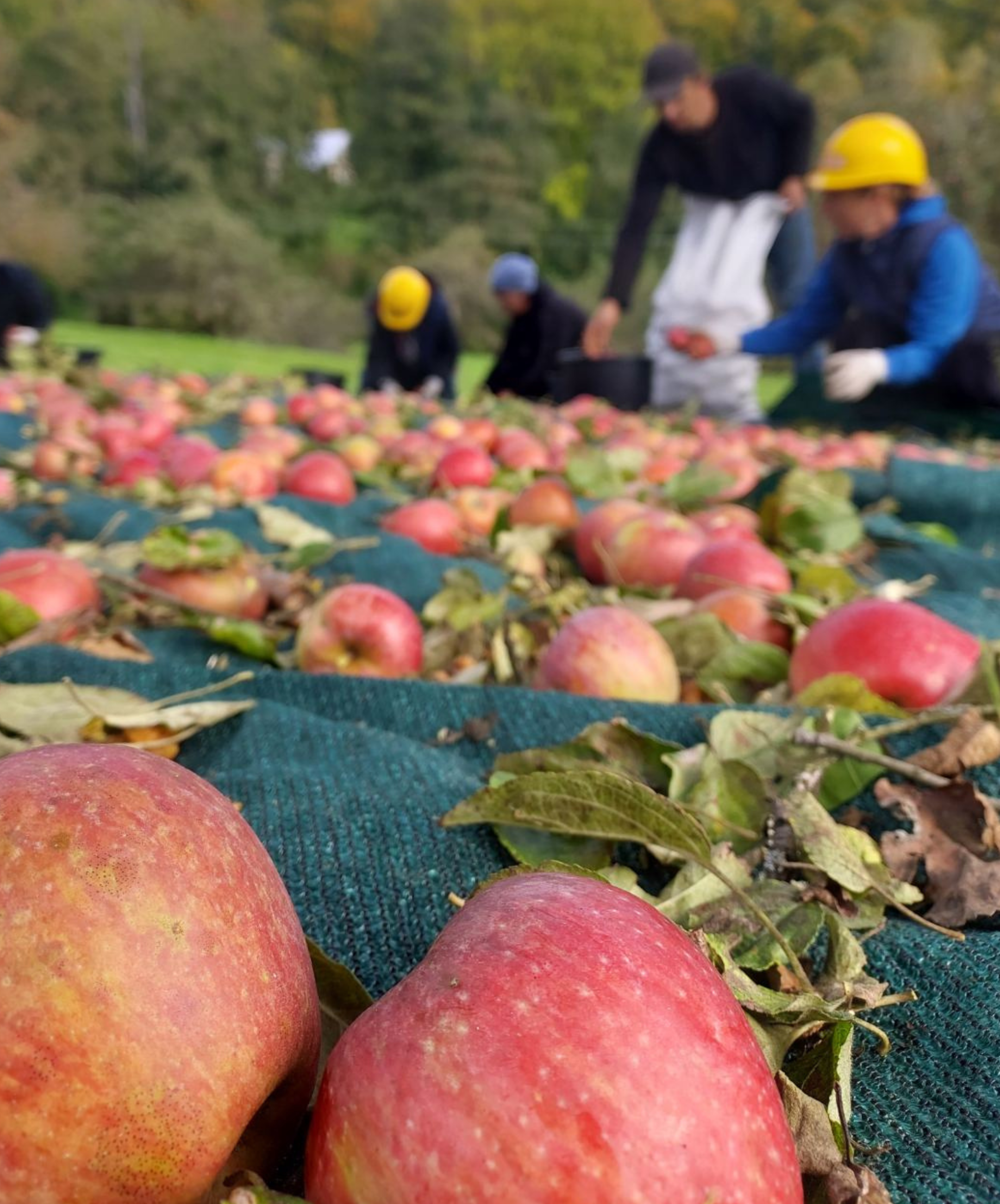
Apple picking
They harvest the local Ferkovnia or Pepin Saffron variety.This apple variety is rich in polyphenols and pectins.
This distinguishes it from table fruit varieties sold in supermarkets today, which have no taste and contain practically no beneficial substances for the human body.It is a late, juicy apple with an ideal balance of sweet and sour flavours.
Its natural acidity, combined with pasteurisation, makes it possible to avoid preservatives while obtaining a product that stores well.
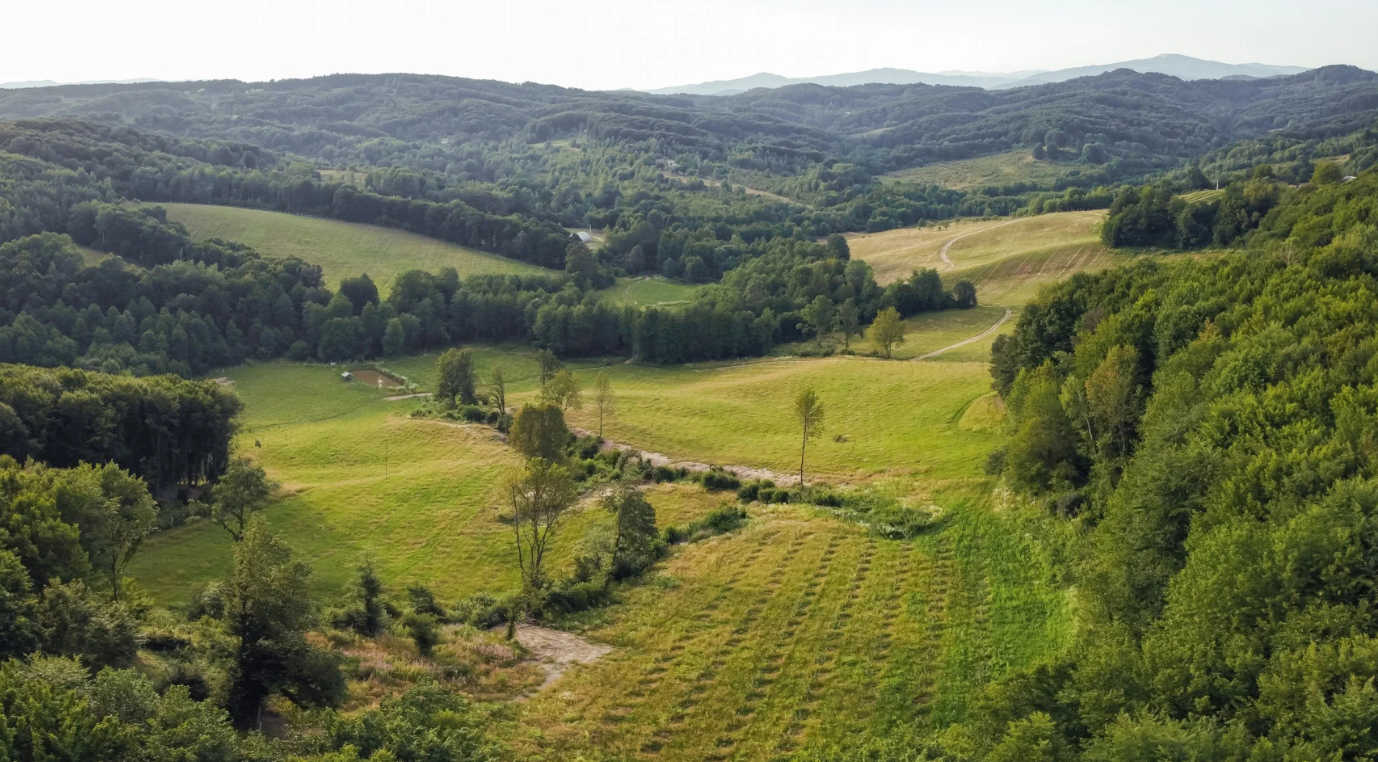
Their Own 14-Hectare Orchard
However, relying solely on old village orchards was becoming increasingly difficult.
«When the season begins, an orchard owner wants one thing: to harvest the apples as quickly as possible. The rains begin. The fruit falls from the trees. Not everyone is willing to wait for the right degree of ripeness or sort the fruit. That was when we realised that if we wanted to work seriously with apples, we needed our own orchard,» says Olha Zubyk.
Together with the Selyskyi Maietok agricultural service cooperative, they leased 14 hectares of land. The first trees were planted in December 2020, and the next plot was planted at the end of 2021. They expect to harvest only the first few kilograms of fruit this season. Therefore, they continue to buy apples from local residents. After all, the original idea has not disappeared: to give the old orchards around Nyzhnie Selyshche an economic reason to remain orchards.
They managed to establish juice production. Last season, the farm produced approximately 4.5 thousand litres of juice. Selling it, however, proved more difficult.«Juices are great. But it is a niche product. Not everyone is willing to pay what direct-pressed juice is actually worth,» the farmer explains.Therefore, the team donates part of its products to the military in the east, children’s camps and charitable causes. In addition, they sell juice at tourist locations in Zakarpattia, as well as at Good Wine.
Bitter Apples for Cider
Jürgen suggested developing another area — cider. For this purpose, special bitter and bittersweet apple varieties were planted in the orchard. While the trees are still growing, they use local wild and semi-wild apples. This is where the cider gets its name — «Dychka.»
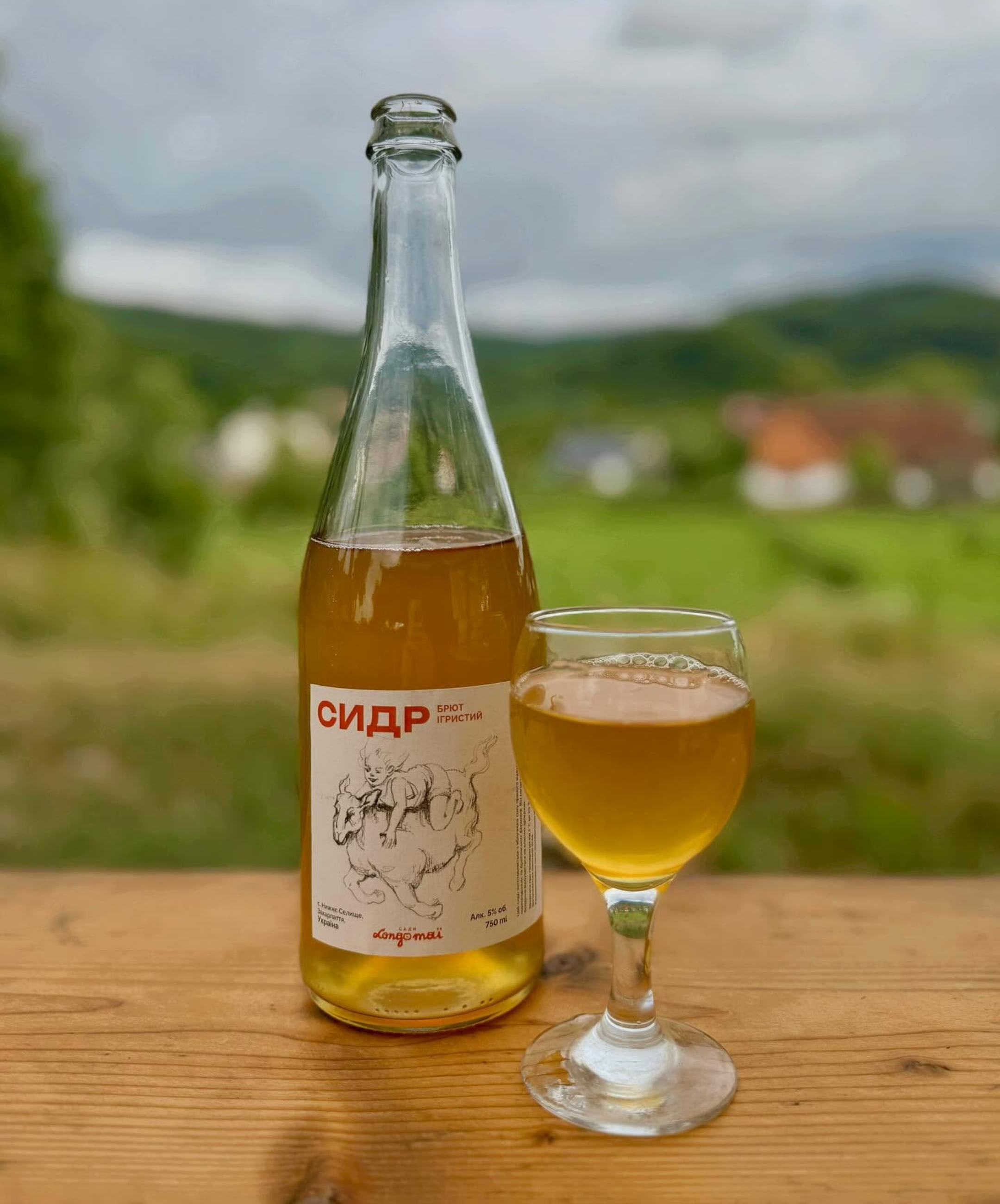
«Sadi Longo Mai» cider
Her husband went to France to study cider making. Olha has visited cider production facilities twice. But at home, they divided the responsibilities: Jürgen is the cider technologist, while Olha is responsible for juice and vinegar.
They are quite demanding when it comes to their own cider. The drink already tastes good, the craft producer notes, but it is still not exactly what they want it to be.
Last year, they produced around 800 bottles. Everything was sold within two months. This season, the volumes are completely different — around 5,000 bottles of cider.
In addition to apple trees, they also planted pears, so there will also be perry (pear cider).
Austrian Processing Line
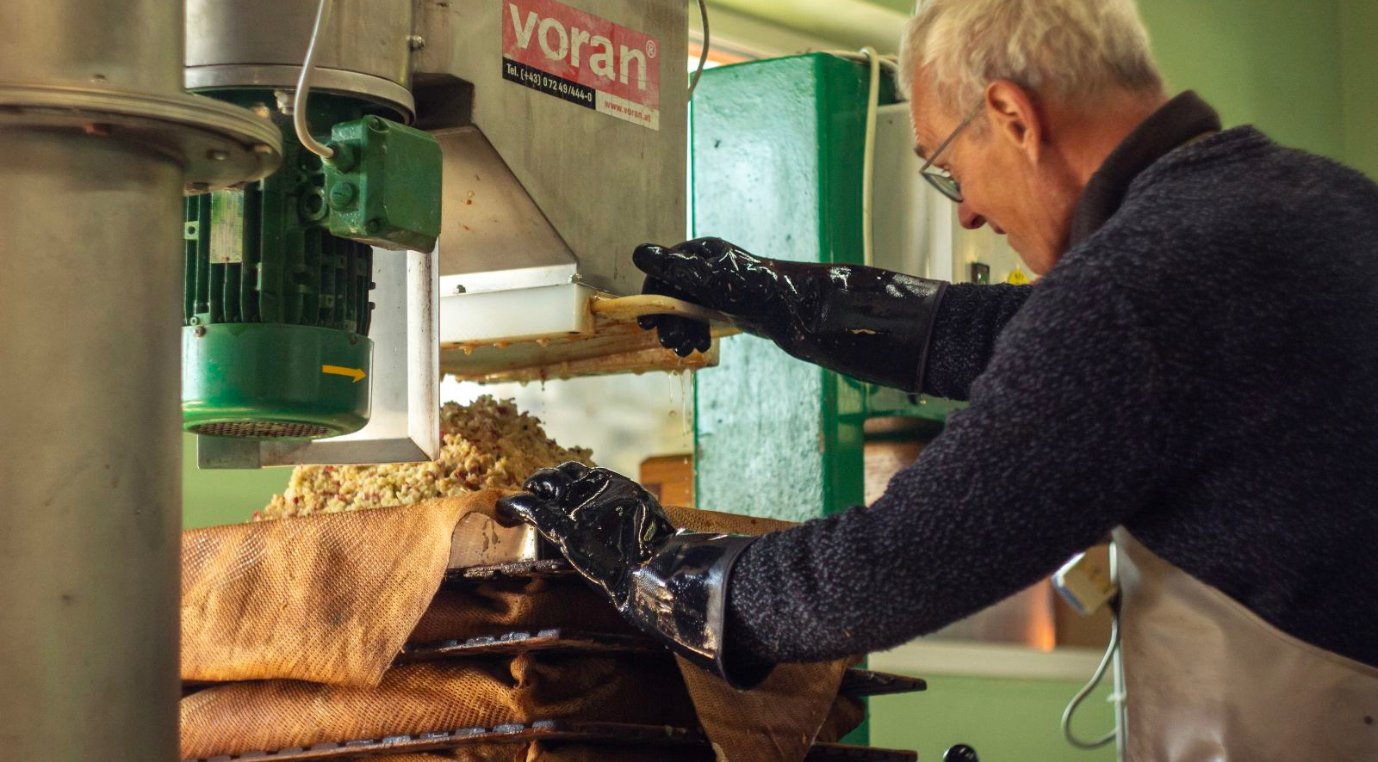
The processing facility was equipped with a second-hand Austrian line. First, the apples are washed. Then they go into a crusher and subsequently into a press. For juice, the next stage is the pasteuriser. The freshly pressed juice is heated to approximately 75°C. It is then bottled and sealed. The shelf life of such juice is up to two years.
Alongside apple juice — unpasteurised, of course — another product emerged: apple cider vinegar.
The technology for cider is different: the apples are also washed, crushed and pressed, but this is followed by a fermentation process lasting several months, which is carefully monitored and adjusted when necessary. This process must take place slowly, as the future cider needs time to fully develop its aroma. If the apples were underripe, overripe or dirty, they will not produce high-quality cider. The temperature during the first fermentation must also be optimal — ideally between 6°C and 8°C — while taking into account that fermentation causes the temperature inside large barrels to rise.
That is why Olha and Jürgen want to invest in a large refrigeration unit this year. Due to climate change, the harvest is shifting to early autumn, while temperatures remain too high. Support from CraftUP Ukraine will be directed specifically towards the purchase of this equipment.
Sheep, Cheese and Sausage as Well
In addition to the orchard, the couple keeps Lacaune dairy sheep. Olha took cheesemaking courses, and a specialist from Austria helped them establish the process. They already have a separate facility for cheese production.
«I also do not want to create competition for the cheese dairies that already exist. So we are thinking of making products that others do not yet produce, for example, a product that is rare on the Ukrainian market — Camembert made from unpasteurised sheep’s milk,» the farmer notes.
Separately, the cooperative is developing a meat production line — making dry-cured sausage. But while the cheese and meat projects are still in the process of being implemented, the couple is ready to scale up their work with apples. Olha sees the farm as a diversified project where horticulture, processing and livestock farming complement one another. At the same time, it is a place that brings people together.
For reference: CraftUP Ukraine is an educational and grant project for craft food producers organised by the online publication AgroPortal.ua with the support of the Government of the Kingdom of the Netherlands in Ukraine. The project consists of several stages. The first was a study of the Ukrainian craft production market, based on the results of which a training programme was developed. Its participants included 40 craft producers from different regions of Ukraine.
Following the educational stage, 10 finalists were selected and are now preparing for the final presentation of their business projects. In September, they will present them to the Expert Council. At the same time, the CraftUP Ukraine team is introducing the audience to the stories of all the finalists, while the participants themselves are taking part in individual mentoring sessions with industry experts.
Information about the project on the page of the Embassy of the Kingdom of the Netherlands in Ukraine
Ivanna Panasiuk, AgroPortal.ua

 18 September 2026, 07:201123
CraftUP Ukraine: Finalists Presented Their Business Projects and Received Grants
 03 August 2026, 07:201653
UCAB Agrotechnologies 2026. West: All Winning Solutions in One Field
 03 July 2026, 07:202309
Sustainable Farming: Implementing Modern Sustainable Technologies Without Unnecessary Mistakes and Losses
- 17 September 2026, 05:48 2385
 Together Means More: How a Community Can Open New Opportunities for Craft Producers
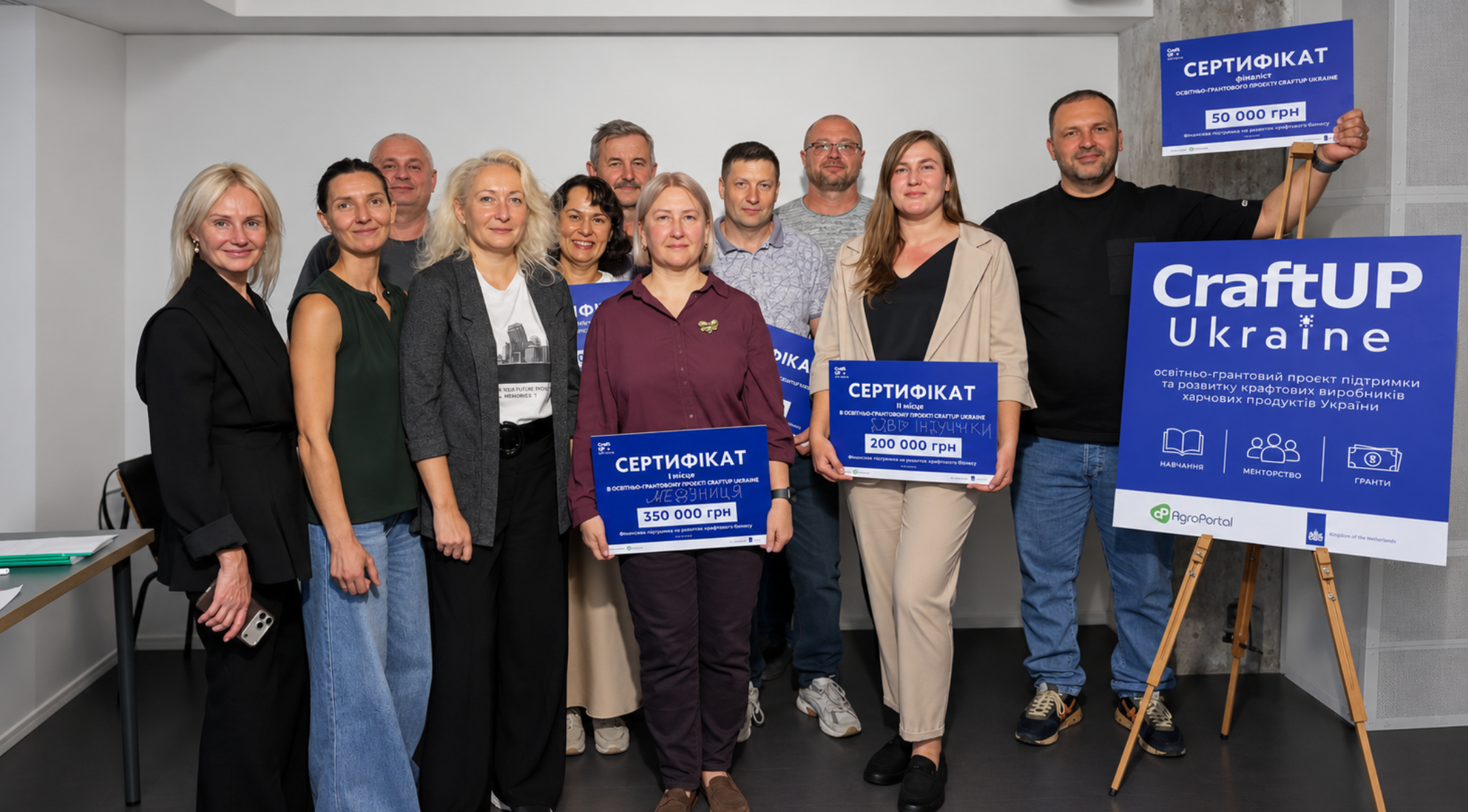
On September 15, the finalists of the CraftUP Ukraine educational and grant project presented their business projects in Kyiv. Craft producers from different regions of Ukraine came to the capital to present ideas whose implementation will help them develop and scale up their production.
- 02 September 2026, 15:25 1593
 Apple Prices Decline in Ukraine
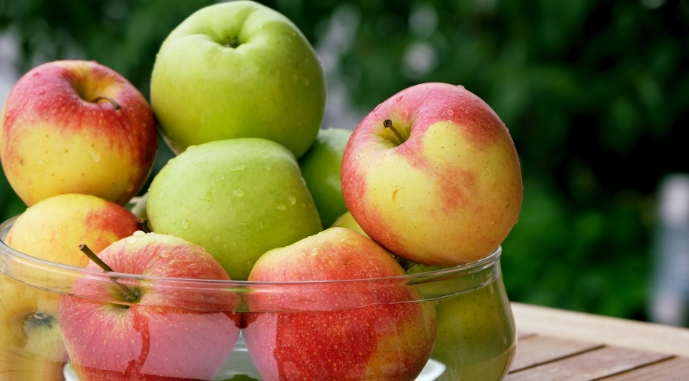
In Ukraine, growers are lowering their selling prices for apples due to restrained demand and an increase in the supply of autumn varieties.