
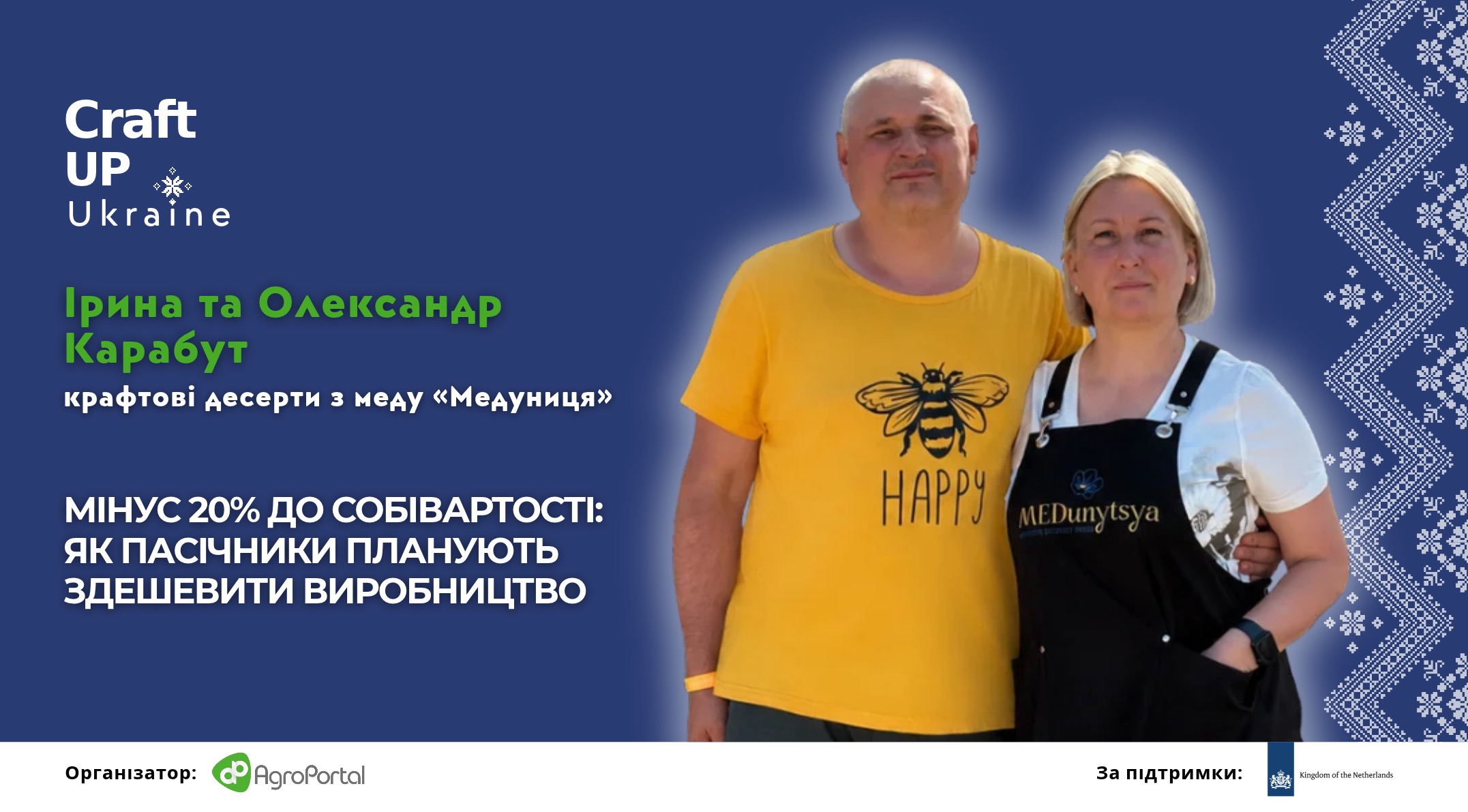
20% Reduction in Production Costs: How Beekeepers Plan to Make Production Cheaper
Together We're Stronger: How a Community Can Open Up New Opportunities for Crafters
17 September 2026, 05:48 471
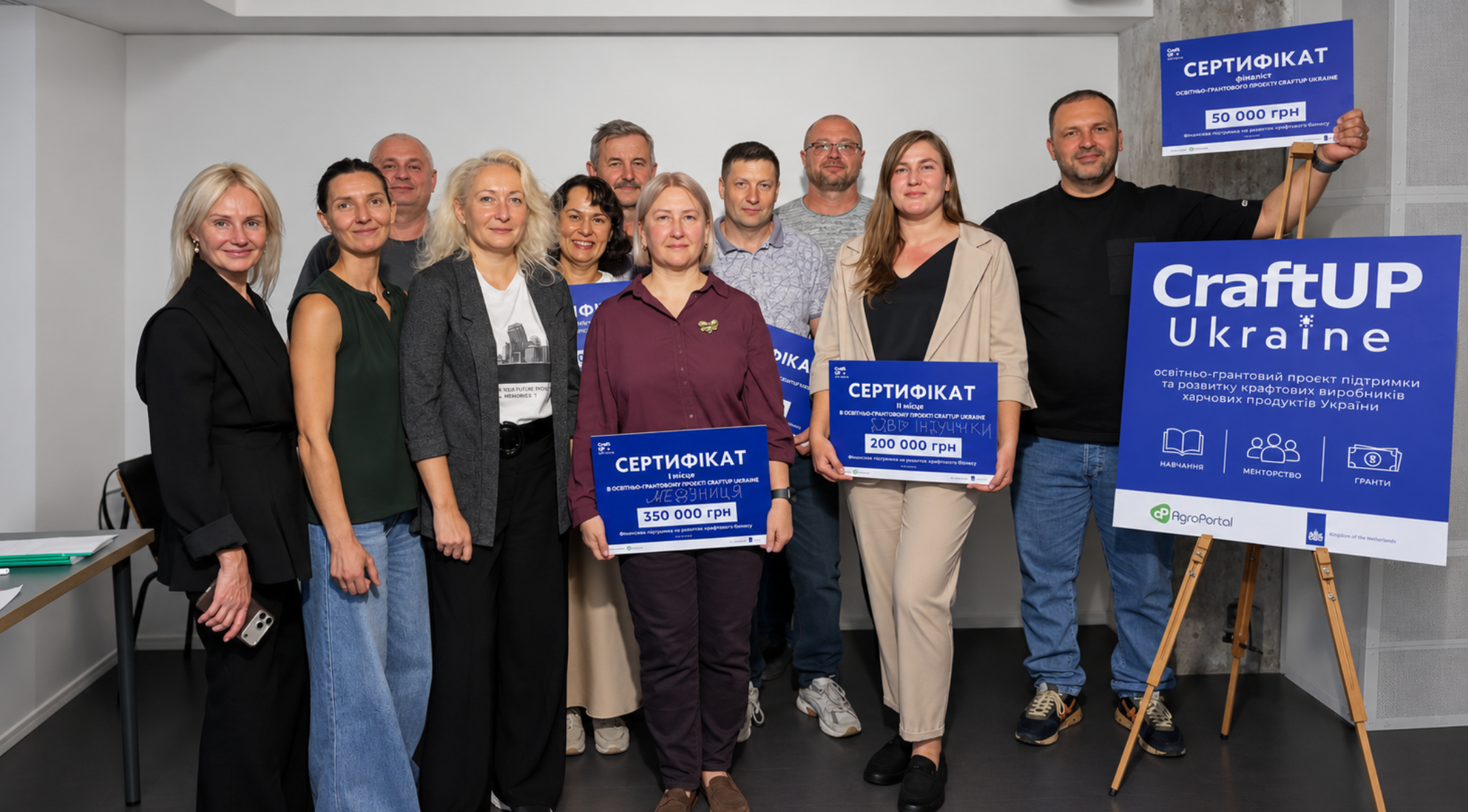
On September 15, the finalists of the CraftUP Ukraine educational grant program presented their business projects in Kyiv. Artisan producers from various regions of Ukraine traveled to the capital to present ideas that, once implemented, will help them develop and scale up their production.
The participants prepared for the final pitch in advance. As part of the CraftUP Ukraine training program, they underwent specialized training in presentation preparation and also had the opportunity to work on their public speaking skills.
The members of the Expert Council highly praised the participants’ level of preparation. Thus, based on the voting results, the three finalists are as follows:
1st place — Iryna Karabut, co-owner of the family-run “Medunytsia” apiary in the Dnipropetrovsk region — 350,000 UAH
The funds will be used to purchase commercial vehicles, which will allow the apiary to scale up and expand its sales territory.
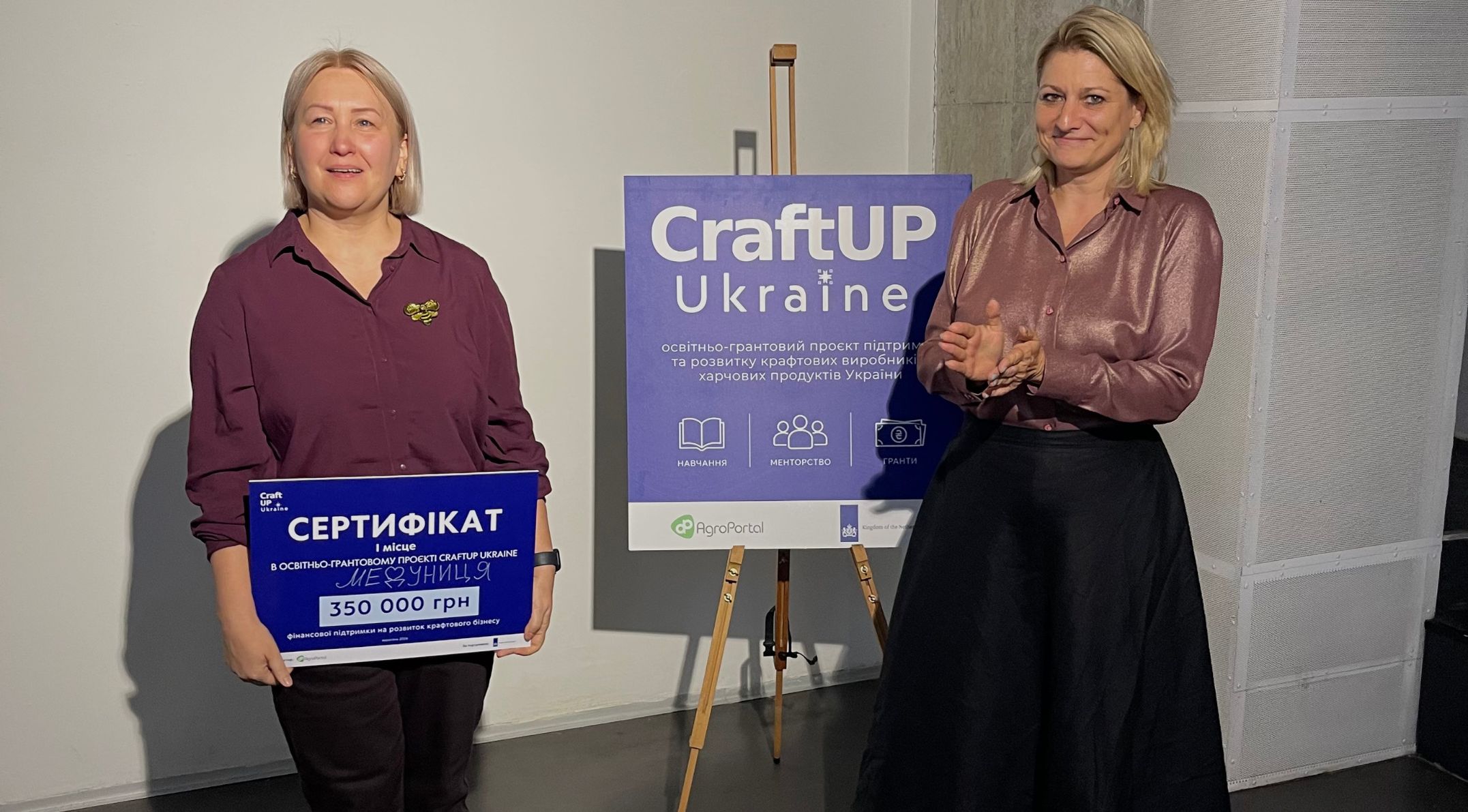
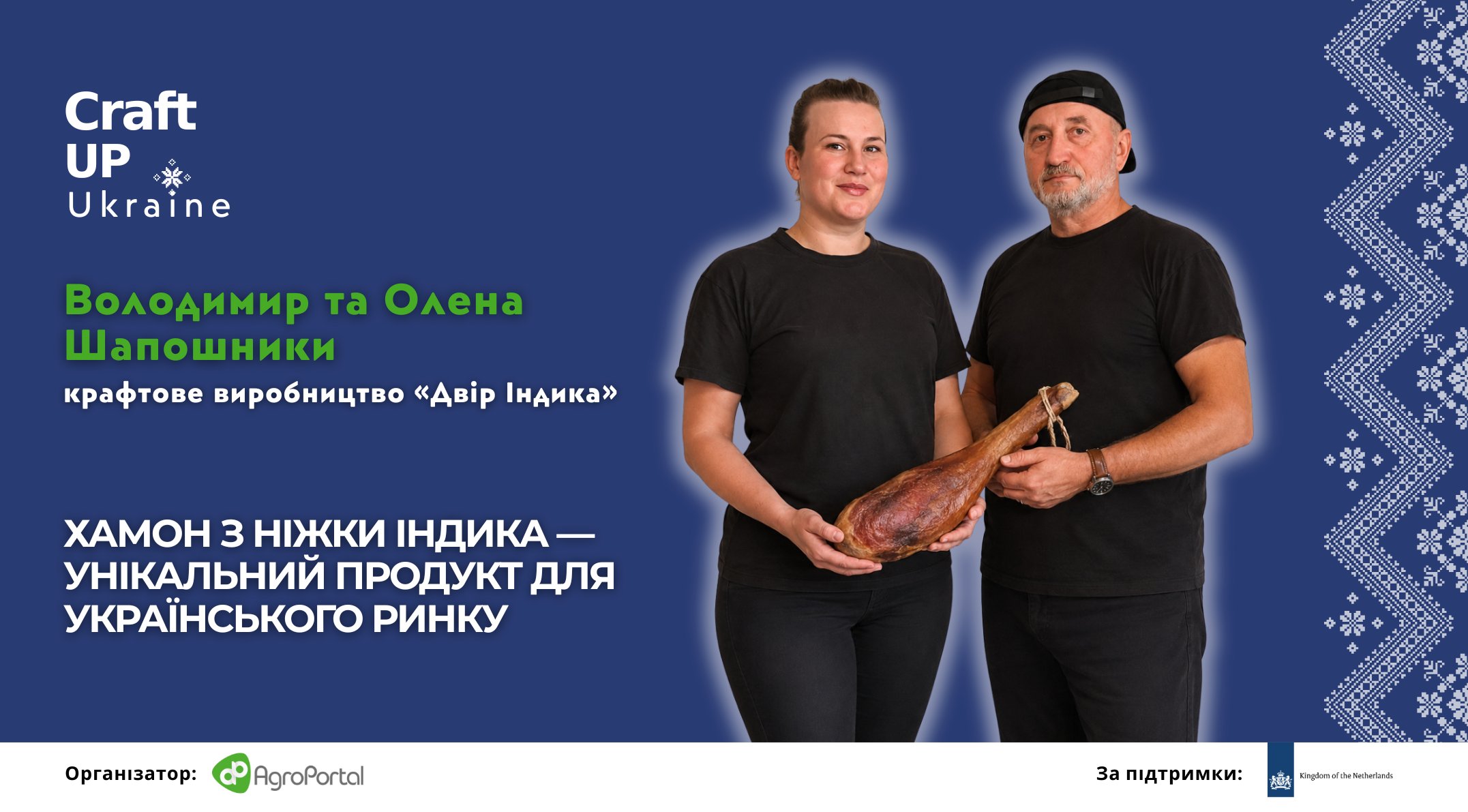
2nd place — Olena Shaposhnik, co-owner of the “Dvir Indychky” farm in Poltava Oblast — 200,000 UAH
The grant will help the business transition to large-scale production: purchase the necessary equipment (a food processor, a climate-controlled chamber, a meat grinder, an autoclave, a refrigerator, and an air conditioner) and set up the production facility in accordance with food safety standards.
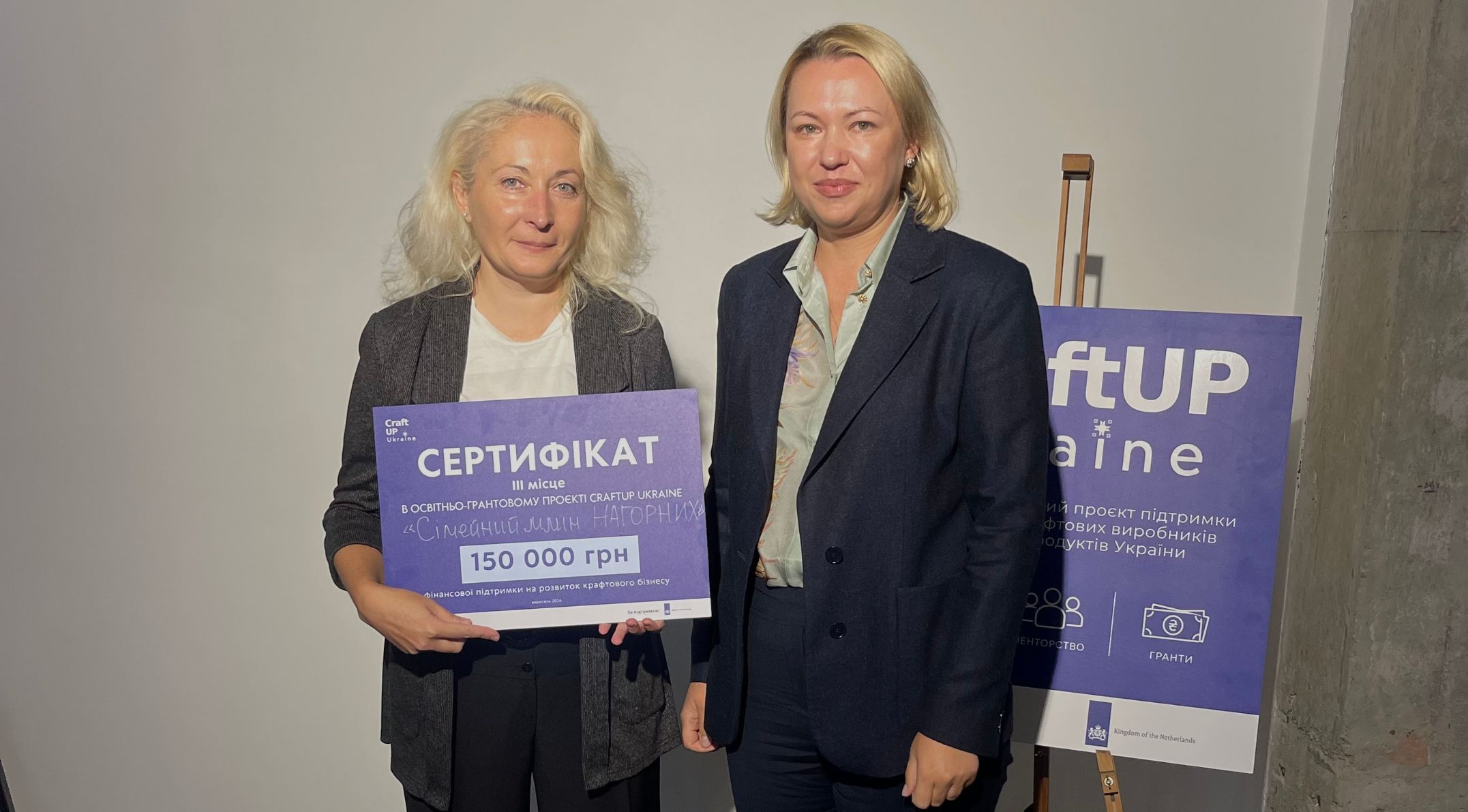
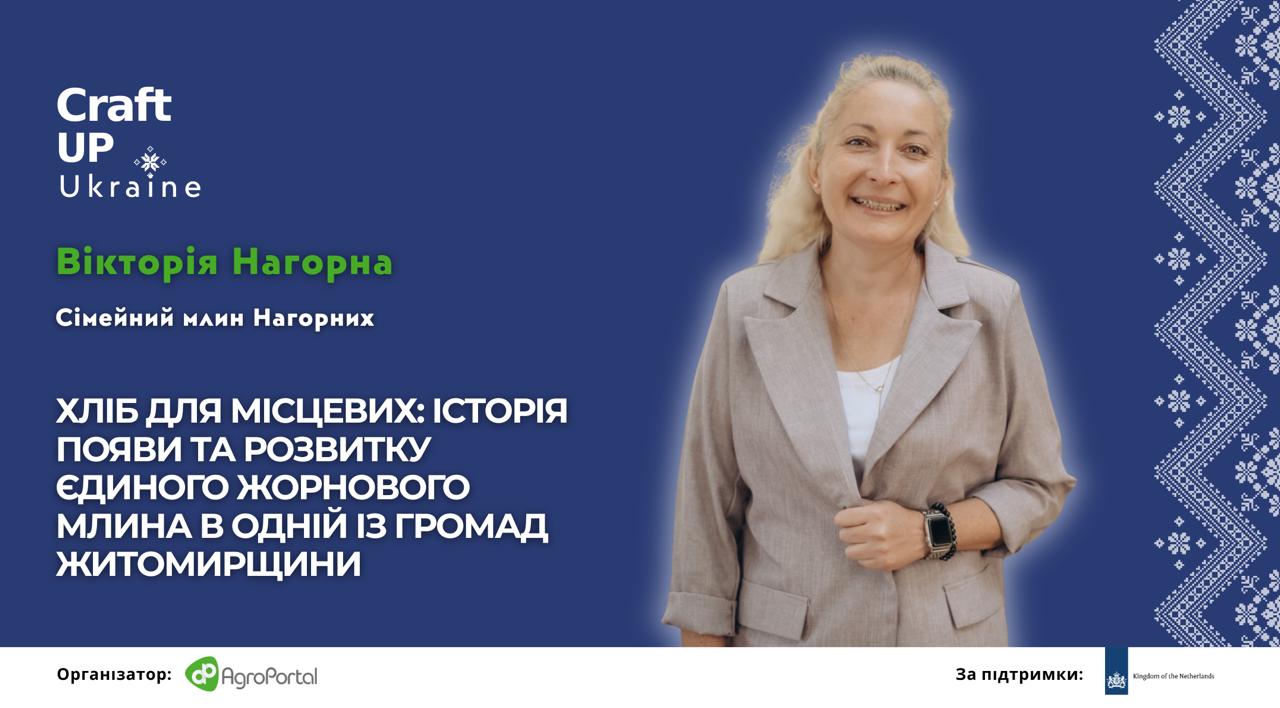
Third place — Viktoria Nagorna, co-owner of the “Nagorna Family Mill” in the Zhytomyr region — 150,000 UAH
The funds will be used to purchase a tractor for growing our own produce.
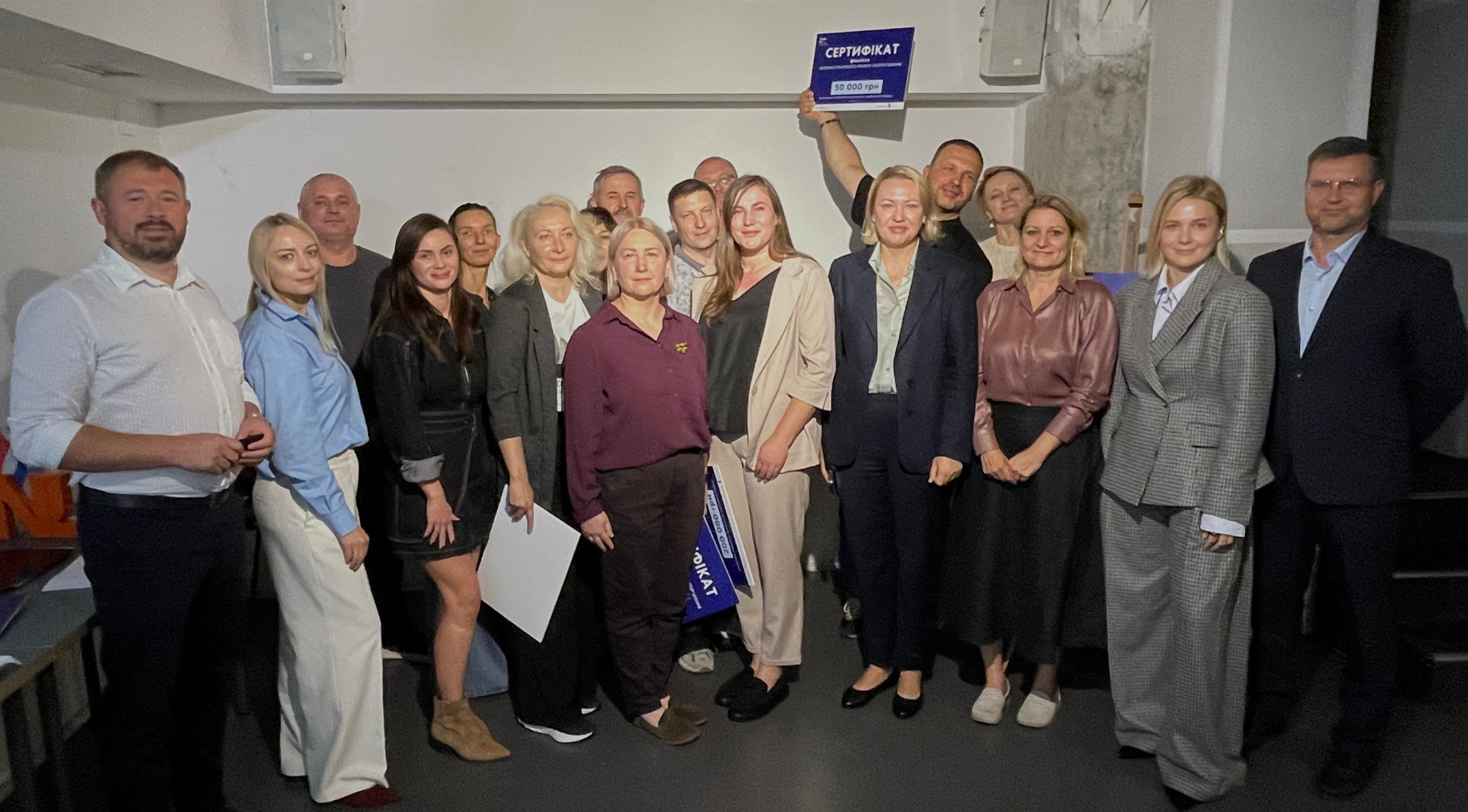
The remaining 7 finalists each received 50,000 UAH to grow their own businesses
In congratulating the winner, Caroline Spaans, Counselor to the Ambassador of the Kingdom of the Netherlands in Ukraine, mentioned her favorite book—Andriy Kurkov’s *The Gray Bees*. The book’s main character, a beekeeper from the Donetsk region, sets out with his hives in search of a safer place due to the war. Addressing Iryna, Caroline expressed her hope that the car she plans to purchase with the grant funds would never have to be used to evacuate bees. Instead, may it help her deliver honey throughout Ukraine.
This meeting was not just an opportunity to select the winners. Producers from different regions—working with different products, operating businesses of varying scales, and possessing different levels of experience—but facing the same challenges all gathered in one place.
And this, once again, highlighted the need for unity. On their own, craft producers remain small players who find it harder to defend their interests, find the necessary expertise, enter new markets, or make their voices heard at the national level.
Members of the CraftUP Ukraine Expert Council shared their thoughts on what form such a coalition might take and how it would be beneficial.

Caroline Spaans, Agricultural Advisor at the Embassy of the Kingdom of the Netherlands in Ukraine
When we first began supporting this project, our primary focus was on food security and the development of rural areas. Today, we see that large producers are under constant attack and are suffering losses. In these circumstances, small and medium-sized producers are stepping up to safeguard food security by supplying food to people locally. This is also important for the economy: businesses need to grow, jobs need to be created, and regions need to keep thriving.

Olga Trofimtseva, Project Manager of the “German-Ukrainian Agricultural Policy Dialogue”
Small-scale farmers are our best asset at a time when negotiations with the EU are underway and we’re being accused of having only large agricultural holdings in Ukraine. In reality, we have a multitude of small producers who, on the one hand, can ensure food security at the regional level, and on the other, contribute to the social development of rural communities.
Right now, we all face the same challenge—the war, which affects everything. And while European integration may seem like a distant prospect, it’s actually a huge opportunity. It’s not just about the opportunity to export products, but also about access to financial resources, tools for rural development, greater predictability in agricultural policy, and participation in scientific projects. It opens far more doors.

Denis Gonchar, Director of Econtrol, LLC
The association can provide significant assistance to producers regarding food safety and the implementation of HACCP. Even though craft producers make completely different products, many of the challenges they face are similar. Within the community, they can exchange their own experiences, suggest practical solutions to one another, and share contacts for trusted consultants, auditors, and other food safety specialists. Some have already walked this path and know where difficulties arise and who is best to turn to for help. And that is of great value.
Properly implementing the safety requirements of a management system based on HACCP principles is always a challenge, and most participants will still need to overcome it. Every craft brewer must clearly understand that the key to their product’s success is quality and safety, which must always be the top priority. This means strict compliance with legal requirements, which are also subject to government oversight.

Natalia Tabinska, founder and director of the “Farmer’s Country” agricultural advisory center, co-founder and board member of the “Farmer’s Family” agricultural cooperative, and farmer at the “Field of Happiness” family farm
The interests of craftspeople are probably the least represented at the national level today. We lack an organization that could advocate for and defend the legislative initiatives the sector needs. But to do that, we need to understand who we are and what we look like. We’re not talking about a specific form right now—a cooperative, a cluster, or an association. For now, we’ll call it a community, and the community itself will have to decide what it wants to be.
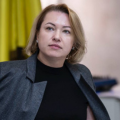
Oksana Osmachko, Advisor to the Head of the State Service of Ukraine for Food Safety and Consumer Protection
A tremendous amount of work has gone into each of the projects presented. I think that even the preparation for the pitching session gave the producers an opportunity to take another look at their own businesses, identify their strengths, and reflect on how to move forward. It’s especially gratifying to see that craft producers are paying more and more attention to marketing, thinking about exporting, and seeking opportunities for growth despite all the challenges of today. And it’s precisely within the community that it’s important to continue this exchange of experiences.
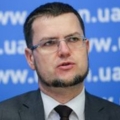
Mykola Moroz, Deputy Director of the Department of Rural Development—Head of the Rural Development Division at the Ministry of Agrarian Policy and Food of Ukraine
We talk a lot about how to ensure that small businesses, small-scale producers, and craft producers have a voice and can make their views heard. One such mechanism could be clustering. This provides an opportunity not only to communicate with one another but also to jointly represent their interests and convey them to policymakers.
Such associations take on particular importance in the context of European integration, alongside access to financing, information, and other support tools. A draft law on associations of agricultural producers is expected to be submitted to the Verkhovna Rada in the near future.
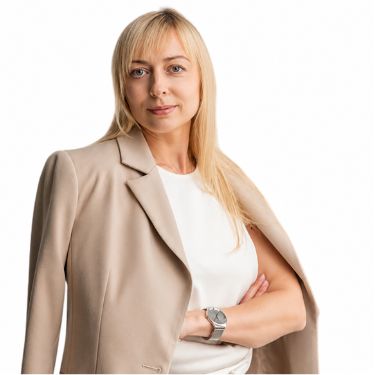
Iryna Vasylenko, Acting Deputy Director for Export Promotion at the “Office for Entrepreneurship and Export Development”
When dozens of small manufacturers enter the international market individually, that is one possible scenario. But when they come together as a community, the opportunities become significantly greater. The development, support, and scaling of such associations can become an important tool for strengthening the export potential of Ukrainian businesses.
For reference: CraftUP Ukraine is an educational and grant-based project for artisanal food producers, organized by the online publication AgroPortal.ua with the support of the Government of the Kingdom of the Netherlands in Ukraine. The project consists of several stages. The first stage was a study of the Ukrainian craft food production market, based on the results of which a training program was developed. Forty craft food producers from various regions of Ukraine participated in the program. Based on the results of the training phase, 10 finalists were selected to present their business projects.
Ivanna Panasyuk, AgroPortal.ua

 03 August 2026, 07:201492
UCAB Agrotechnologies 2026. West: All Winning Solutions in One Field
 03 July 2026, 07:202233
Sustainable Farming: Implementing Modern Sustainable Technologies Without Unnecessary Mistakes and Losses
 26 June 2026, 07:202027
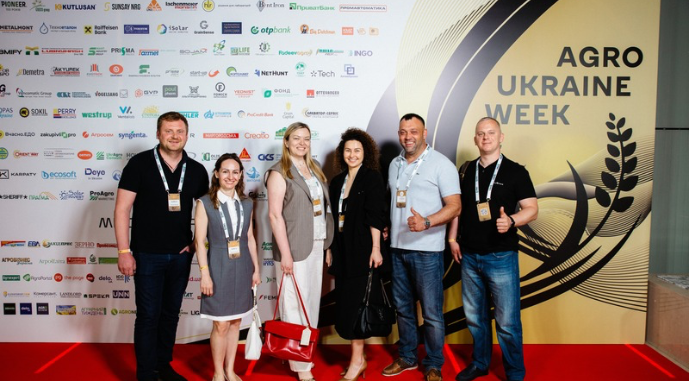
Agro Ukraine Week 2026: How Ukraine’s First Three-Day Agricultural Forum Took Place
- 12 September 2026, 06:18 3538
 Cold-Pressed Oil and Macerates: How Processing Changes the Economics of a Walnut Orchard
Walnuts are an almost zero-waste crop. And income can be generated not only from selling the kernels. Oil is pressed from them, macerates are produced, while the press cake left after pressing is processed into flour and other food products. Even green walnuts, partitions, shells and leaves can be put to use. Thus, a single harvest can provide a producer with several value-added products at once.
- 09 September 2026, 05:48 2022
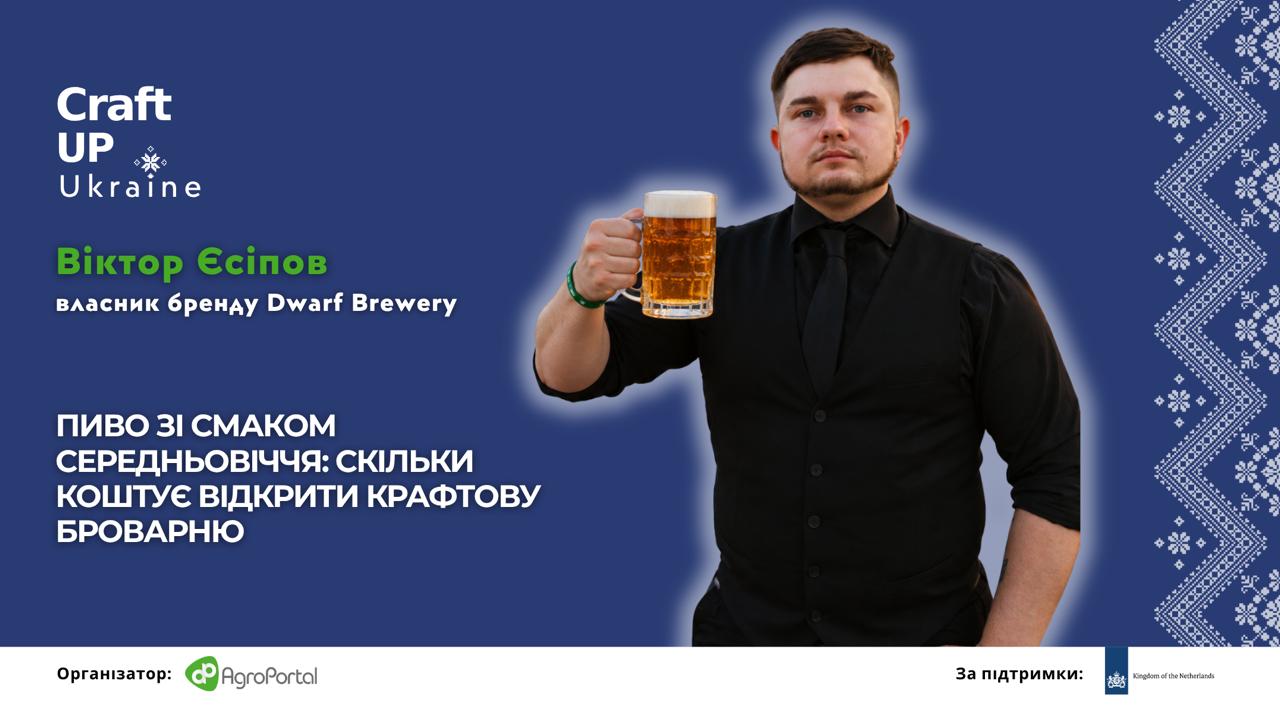 Beer with a Taste of the Middle Ages: How Much Does It Cost to Open a Craft Brewery?
Historian and serviceman from Kharkiv Region Viktor Yesipov had been searching for original beer flavours and dreaming of his own brewery since his student years — one that would stand out from conventional breweries through its authenticity. Comparing mass-market beer with beer served in pubs, he realised that he wanted to try brewing a drink according to his own recipes, but he was not able to bring the idea to life immediately.
- 05 September 2026, 06:18 2111
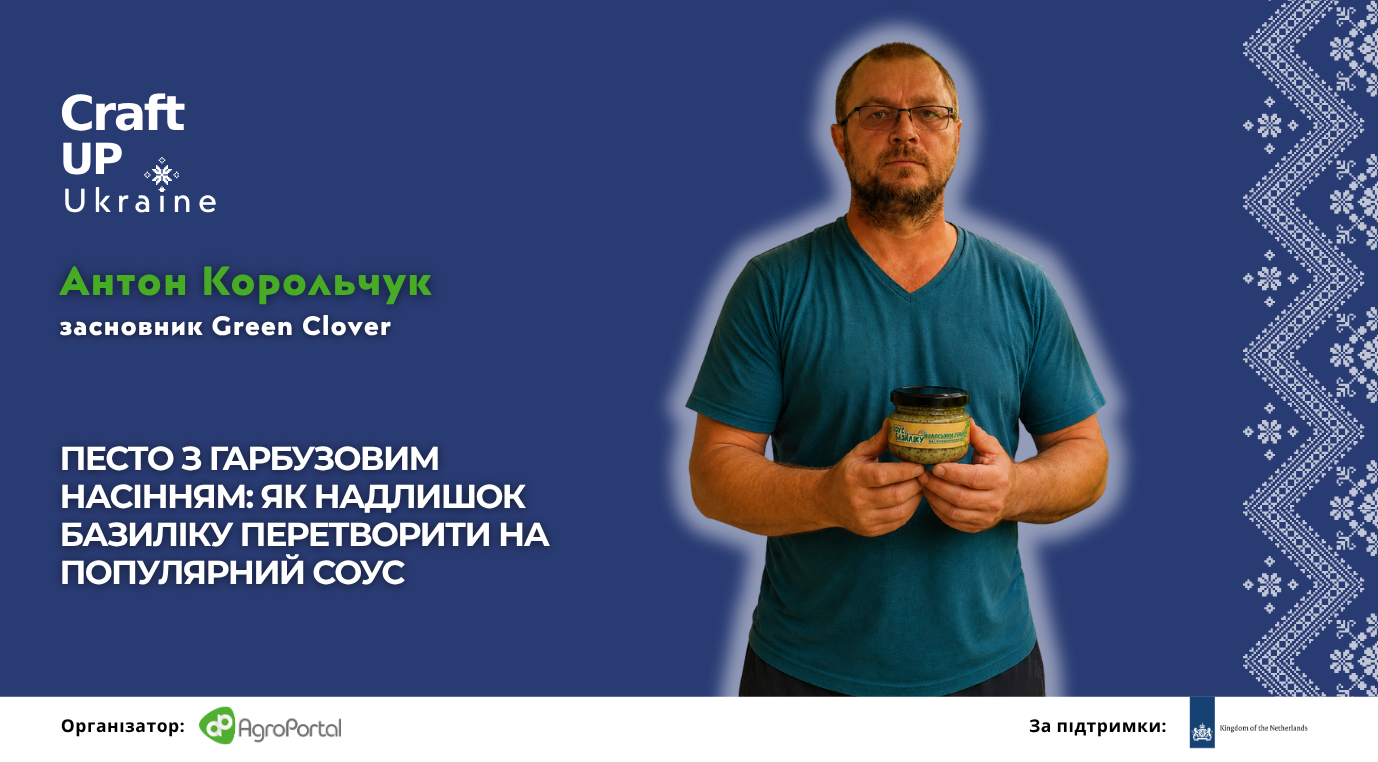 Pesto with Pumpkin Seeds: How to Turn Surplus Basil into a Popular Sauce
Green Clover is a hydroponic farm in Khmelnytskyi Region that grows basil. Today, its capacity allows it to produce up to 40 kg of fresh herbs per week. But the farm did not stop at growing: some of the basil is dried and processed into powder, while surplus fresh herbs are used to make Ukrainian pesto. The farm is also experimenting with other products — it recently produced a test batch of dried tomatoes with basil.