

All the main news of the agricultural market on
📲 Telegram channel

Total milk production in Ukraine is declining in 2026. This is primarily due to a reduction in milk yields among household farms, while commercial agricultural enterprises are increasing their production volumes and accounting for the majority of milk supplies.
This was reported by the Ukrainian Agribusiness Club (UCAB).
In January–September this year, farms of all categories produced 4.61 million tonnes of milk, compared with 5.31 million tonnes during the same period last year, representing a decrease of 13.2%.
During this period, agricultural enterprises increased milk production by 3.9% compared with the same period last year, reaching 2.48 million tonnes. Meanwhile, production among household farms declined by 27%, from 2.93 million tonnes to 2.13 million tonnes. As a result, the industrial sector’s share of total milk production increased from 45% last year to 54% this year.
At the same time, UCAB notes that from January to August, agricultural enterprises produced more milk each month than in the corresponding months of last year. However, in September, their production amounted to 266.4 thousand tonnes, which was 4.4% less than in September 2025 (278.8 thousand tonnes). As the number of cows at agricultural enterprises is currently higher than last year, this decline is attributed to lower milk yields.
Household farms produced 243.0 thousand tonnes of milk in September, compared with 334.0 thousand tonnes a year earlier (-27.2%). Overall, Ukraine produced 509.4 thousand tonnes of milk in September, representing a decrease of 16.9% compared with last year.
«The main reason for the decline in milk supply from household farms is the reduction in the number of cows. As of 1 October 2026, Ukraine had 915.4 thousand cows, compared with 1,121.7 thousand head during the corresponding period in 2025, representing a decrease of 18.4%. The main losses occurred among household farms, where the number of cows fell from 738.1 thousand to 526.9 thousand head (-28.6%). Moreover, the decline since the beginning of 2026 alone amounts to 17%,» the association clarified.
The number of cows on household farms is declining most rapidly in the western regions. In Ternopil Region, their number decreased by 63% over the year to 19.3 thousand head; in Zakarpattia Region, by 55% to 24.9 thousand head; and in Zhytomyr Region, by 40% to 27.6 thousand head.
At agricultural enterprises, the number of cows increased by 1.3% compared with last year, reaching 388.5 thousand head. The commercial dairy herd is expanding primarily in western Ukraine: in Rivne Region, by 29% to 10.7 thousand head; in Lviv Region, by 20% to 7.3 thousand head; and in Ternopil Region, by 12% to 22.3 thousand head.
Meanwhile, agricultural enterprises in the north-eastern and eastern regions are reducing their herds: in Dnipropetrovsk Region, by 16% to 7.0 thousand head; in Sumy Region, by 12% to 16.7 thousand head; and in Kharkiv Region, by 4% to 19.4 thousand head.
The most stable total cow populations, with the smallest range of changes, are maintained in Kyiv Region (-1.3% to 46.3 thousand head), Cherkasy Region (-1.7% to 56.3 thousand head) and Chernihiv Region (-3.4% to 61.6 thousand head). In these regions, agricultural enterprises account for the majority of the herd, meaning that reductions among household farms have little impact on the overall situation, UCAB concludes.

Ukraine Showcases Food Exports at SIAL Paris 2026
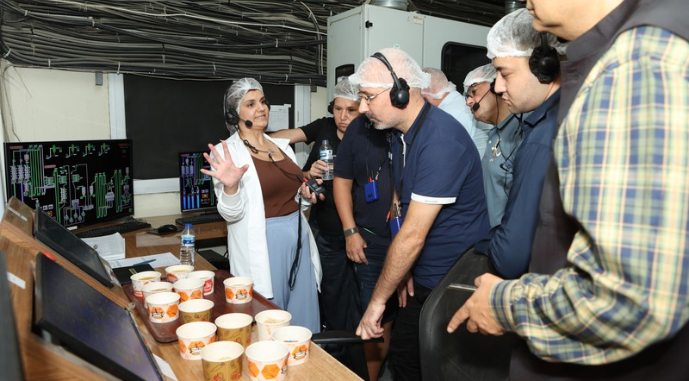
Chickpea and Lentil Paste: How One of the World's Largest Legume Processing Plants Operates
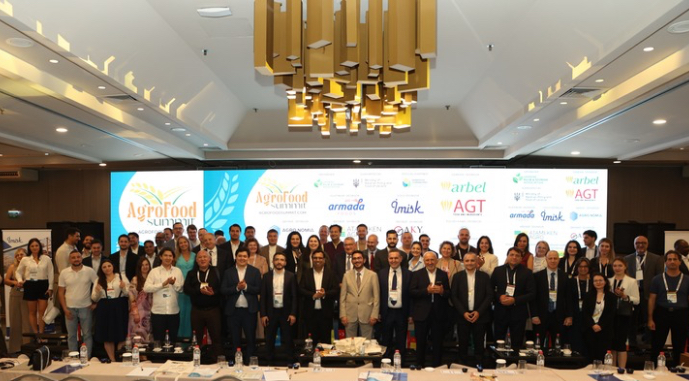
Shifting Trade Flows: What Opportunities Are Available to Ukrainian Producers?

As of 27 October 2026, Ukraine’s winter crop sowing campaign is effectively entering its final stage, with 5.35 million hectares sown, representing 84.7% of the forecast area.

Hryhorii Tkachenko, Director of the Naporivske farm (Chernihiv Region), has decided to completely discontinue beef cattle farming in order to repay loans and pay taxes.
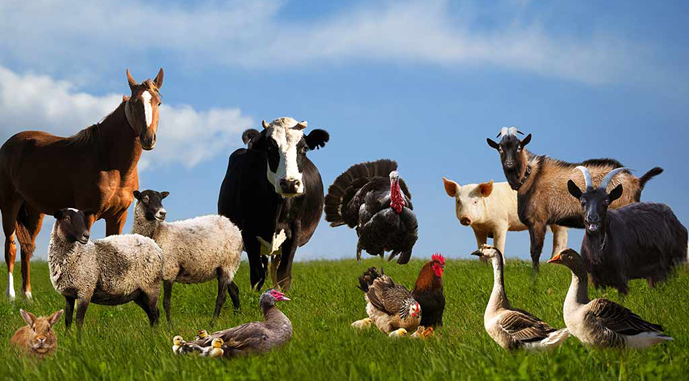
Ukraine’s livestock sector continues to undergo structural transformation under the influence of market and security challenges.