
On the Verge of Survival: Greenhouse Growers Are Operating at a Loss Amid the Energy Crisis
22 June 2026, 06:01 3474
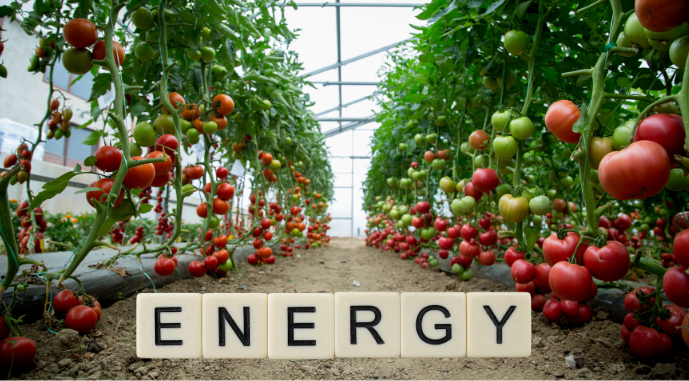
The war and the energy shock have transformed Ukraine’s greenhouse business, but it remains a strategically important sector. Western regions are gradually forming new greenhouse hubs. Those who focus on the latest technologies are the ones surviving. With energy costs rising to 60–70%, domestically grown greenhouse vegetables and herbs are becoming uncompetitive. In such conditions, it is cheaper to import produce.
Energy blow
The key constraints for Ukraine’s greenhouse sector are the growing energy intensity of production, staff shortages, higher logistics costs and imports from Türkiye. These findings come from a survey of greenhouse farms commissioned by RVO, the Dutch government organization that supports business development.
«The energy crisis began long before the war and probably destroyed more greenhouses than the hostilities themselves. Transport and logistics costs have increased, while exports have fallen fourfold compared with 2021. Population migration and mobilization are also taking place. As a result, the greenhouse sector is experiencing a shortage of agronomists and engineers,» said Kateryna Volianska, an independent RVO consultant on protected cultivation, during the presentation of the Dutch study.
Another limiting factor for Ukraine’s greenhouse sector is the import of Turkish products, mainly cucumbers and tomatoes, which have been putting downward pressure on prices. Restrictions on imports from Türkiye are currently expected for a period of five years, which would create opportunities for the growth and development of the Ukrainian sector.
Another problem is access to training and technological knowledge in the industry.
Shift to the west
Since the beginning of the full-scale war, the sector has undergone a major regional transformation. The greenhouse sector has shifted from the east and south to the central and western regions. Chernivtsi, Kyiv, Ternopil, Zakarpattia and Vinnytsia regions are becoming dominant.
«Ukraine’s protected cultivation sector has shrunk under the impact of the war and energy pressure, but it remains strategically important,» the consultant added.
Energy costs in winter greenhouse production have risen to 60–75%, which is critically high as a share of production costs. Therefore, restoring the sector requires not only the reconstruction of destroyed facilities, but also a structural rethinking of energy use and resilience.
Kateryna Volianska, independent RVO consultant on protected cultivation
The price of greenhouse products is also affected by the volatility of the hryvnia exchange rate against the euro or the dollar, as greenhouse growers usually purchase growing materials in foreign currency but sell their products in Ukraine.
Two models within one sector
It is also important to take into account that Ukraine’s protected cultivation sector operates under two different development models.
- The first model is industrial greenhouses, which are mostly high-tech facilities. The study covered 20–25 such enterprises with a total area of 270–290 hectares.
- The second model consists of small and medium-sized producers with a total area of around 4,000–7,000 hectares. The wide difference in area is explained by the fact that not all producers are properly registered. These are mostly low-tech or mid-tech greenhouses, whose development is often supported by grant programmes. They are highly price-sensitive and require comprehensive support, especially in technology and training.
The future development of the greenhouse sector will mainly take place through the modernization and renewal of existing facilities.
Kateryna Volianska, independent RVO consultant on protected cultivation
At the same time, facilities of up to one hectare are currently developing actively. Film-covered and tunnel greenhouses are relevant, as they require lower investment and are easier for people to understand and operate.
European integration and organic production
The greenhouse sector is the most prepared for European integration. Many greenhouse growers have already obtained GAP certification and are able to export their products.
As for organic products, they will not be a key focus for hi-tech greenhouses, as these mostly use hydroponics.
«A dual segmented market will operate, with high-tech facilities growing fairly high-quality produce, as well as a mid-tech and low-tech market where organic production is possible,» the expert explained.
Shortage of seedling departments
According to the authors of the study, Ukrainian greenhouses primarily need modernization and technological upgrading: energy equipment, climate control systems, post-harvest handling equipment and packaging lines, as packaging is currently mostly done manually.
There is a very strong need for seedling departments at greenhouses or within seedling department hubs.
Under current conditions in Ukraine, demonstration projects are also needed, as they can help reduce investment risks. With their help, farmers can see how a particular technology is used and easily adapt it to their own enterprises.
Demonstration greenhouses that will be able to receive up to 100 visitors at a time are currently being built in Lviv and Khmelnytskyi.
Oleh Demchuk, co-founder of the SmartHarvest Greenhouse Innovation Hub
A single voice and legislative barriers
Among other things, the sector lacks a strong producers’ association.
«This sector appears to be functioning, but it has no single voice. Producers should be consolidated. This would help exchange knowledge, coordinate training, represent the interests of the sector and cooperate with suppliers and government institutions,» Kateryna Volianska noted.
A significant obstacle to business development is the absence of a legal definition of a modular greenhouse, which is a temporary structure and, in practice, does not require construction permits. In Zakarpattia, there are villages with thousands of hectares of such modular greenhouses. The requirement to obtain a construction permit could wipe out this business.
Edible flowers and other promising products
Cucumbers and tomatoes remain the most promising greenhouse products, as domestic market needs have not yet been fully met.
Ukrainian greenhouse growers currently harvest 20–30 kg/m² of cucumbers, although the basic yield indicators are 40–60 kg/m². Dutch technologies make it possible to obtain up to 100 kg/m². To achieve more than 60 kg/m², a well-coordinated team, high technologies and an uninterrupted electricity supply are required.
At the Zdorovo-Smachno farm in Sumy region, cucumber yields reach 37 kg/m².
Inna Pashchenko, Head of the Zdorovo-Smachno farm
Growers should also consider herbs and salads for greenhouse production, while radishes may be a profitable option for tunnel greenhouses. Berries, fruit and grapes are also profitable.
«Berries, vegetables, mushrooms and flowers are popular groups. When we talk about flower greenhouses, we mean not only annual and perennial plants. The market for so-called edible flowers is also developing very rapidly. This is a niche trend in the United States and Canada. Flowers must not only be grown properly — producers also need to learn how to work with them,» Oleh Demchuk noted.
Svitlana Tsybulska, AgroPortal.ua
 18 September 2026, 07:20808
CraftUP Ukraine: Finalists Presented Their Business Projects and Received Grants
 03 August 2026, 07:201561
UCAB Agrotechnologies 2026. West: All Winning Solutions in One Field
 03 July 2026, 07:202264
Sustainable Farming: Implementing Modern Sustainable Technologies Without Unnecessary Mistakes and Losses
- 22 September 2026, 15:25 9013
 Walnut Prices Double
The price of walnuts in Ukraine has doubled — from UAH 200 to UAH 400/kg. Among the reasons are a smaller harvest last season and losses caused by this year’s frosts.
- 15 September 2026, 09:52 1267
 Top 10 Agricultural Companies by Revenue
The ten most successful agricultural companies in Ukraine generated a combined UAH 159.4 billion in revenue in the first half of 2026.