
More Than a Million Hectares: Five-Year Results of Land Reform
Skeptical expectations regarding land reform have not materialized: Ukrainian soil is not being hauled away by the traincarload, and the oligarchs have not bought up all the fields. Instead, land prices are rising, and leasing has become more transparent, generating additional revenue for local communities. However, it is still difficult to use land shares as collateral.
As of June 1, a total of 1,150,000 hectares of agricultural land had been bought or sold, with a total value of over 51 billion hryvnia. The lease market is developing through “Prozorro.Sales”. In total, more than 237,000 hectares have already been leased, from which communities can receive up to 2.7 billion hryvnias annually. These figures were released by the KSE Institute’s “Center for Food and Land Use Research.”
According to Denys Bashlyk, Ukraine’s Deputy Minister of Economy, Environment, and Agriculture, the reform has lived up to expectations even amid the war.
«Land prices have nearly doubled in some regions. Moreover, this is promoting the development of processing; land around strategic facilities is being purchased, and production capacity is growing. A new segment of non-agricultural investors has even emerged, accounting for about 30%. People have shifted from renting apartments to leasing land,» the official noted.
Purchase and sale of agricultural land:
- 1 million 154 thousand hectares — total area of transactions;
- 512,8 thousand hectares — number of purchase and sale transactions concluded;
- 51.4 billion UAH — total value of purchase and sale transactions.
Leasing of agricultural land through “Prozorro.Sales”:
- 237 thousand hectares — total area of leased land;
- 21 thousand hectares — successful lease auctions;
- 2.7 billion UAH/year — total value of lease agreements concluded.

A Five-Year History
«After the moratorium was lifted in July 2021, there was a rush, and prices were somewhat inflated in the first few months, but overall, around the fourth quarter of 2021, we reached a sort of benchmark in terms of the maximum amount of land bought or sold in a quarter, — about 68,000 hectares,» said Ivan Kolodyazhny, a senior researcher at the KSE Institute’s Center for Food and Land Use Research, during a presentation of the study.
This was followed by the war-induced shock and a recovery that lasted until January 1, 2024, when legal entities entered the market.
«The second period was rather weak but at the same time demonstrated the capacity for recovery. In the second quarter of 2022, we saw the lowest figure in terms of land sales—approximately 2,000 hectares,» the expert added.
By the end of 2023, the market had recovered to approximately 50,000–55,000 hectares of land sales per quarter. With the opening of the market to legal entities, the KSE Institute did not observe any surge in activity (either in terms of volume or pricing).
In the last quarter of 2025, a record number of agricultural land purchase and sale transactions was recorded, specifically 76,000 hectares of land purchased.

Pricing — The ceiling has not been reached
Given that prices in late 2021 and early 2022 ranged from 35,000 to 38,000 UAH per hectare, the average price has risen to approximately 88,500 UAH per hectare during the land reform period. According to KSE calculations, the weighted average price has risen to nearly 66 thousand UAH.
“If we set aside all inflationary risks and shocks associated with the full-scale invasion, and fix nominal prices as of July 2021, the price rose from approximately 30,000 to 37,500 UAH. This indicates the stability of the market and its institutions. Over the past five years, the weighted average price has risen by nearly 120%,” added Ivan Kolodyazhny.
However, experts noted that land prices in Ukraine are significantly lower than in the EU.
Average and weighted average purchase and sale prices for agricultural land:
- 88.5 thousand UAH/ha — average price as of May 2026;
- 65.8 thousand UAH/ha — weighted average price as of May 2026;
- 37.4 thousand UAH/ha — real price in 2021 prices;
- +119% over 5 years — nominal growth of the weighted average price over 5 years; in real terms, the price increased by 25%.
Regional Overview
In most regions, the weighted average price is significantly lower than the arithmetic mean. The largest deviations are in Lviv (-41%), Zakarpattia (-41%), and Kyiv (-40%) regions due to the prevalence of small plots with a higher unit cost.
«Western and central Ukraine dominate with high prices per hectare, but the plots in these regions are quite small. Therefore, the average price differs from the weighted average: for example, in Ivano-Frankivsk Oblast, the difference is nearly 50,000 UAH per hectare,» said Ivan Kolodyazhny.
In contrast, the Chernihiv, Poltava, and Kirovohrad regions—which are leaders in Ukraine’s agricultural sector—show a minimal gap between these metrics. Land prices in these regions vary almost not at all between the arithmetic mean and the weighted average. This also indicates a homogeneous structure, where plots of similar size are being sold.
Regional prices for agricultural land:
Average price, thousand UAH/ha
- Ivano-Frankivsk — 139 thousand UAH/ha;
- Lviv — 123 thousand UAH/ha;
- Kyiv — 107 thousand UAH/ha;
- Zakarpattia — 95 thousand UAH/ha;
- Zaporizhzhia — 37 thousand UAH/ha;
- Donetsk — 37,000 UAH/ha;
- Kherson Oblast — 31,000 UAH/ha;
- Luhansk — 25,000 UAH/ha.
Weighted average price, in thousand UAH/ha:
- Ivano-Frankivsk — 89,000 UAH/ha;
- Lviv — 73,000 UAH/ha;
- Kyiv — 64,000 UAH/ha;
- Zakarpattia — 56,000 UAH/ha;
- Zaporizhzhia — 30 thousand UAH/ha;
- Donetsk — 32,000 UAH/ha;
- Kherson Oblast — 27,000 UAH/ha;
- Luhansk — 27,000 UAH/ha.

Land Lease Market
From the last quarter of 2021 through the last quarter of 2025, the number of land lease transactions has increased more than sixfold. The average lease rate is approximately 12,300 UAH/ha. The average increase in lease prices relative to the starting price over the entire period of the reform is about 385%, which, according to researchers, means that such open auctions allow communities to generate significantly higher revenues.
The share of successful auctions in Ukraine stands at 49%, which is generally a good indicator. Lots ranging from 25 to 100 hectares in size command the highest prices and attract the most competition. They generate an average price per hectare of about 16,000 UAH. At the same time, the average number of bids per lot is 6.1, which is nearly three times higher than for small plots of up to one hectare, where the average number of bids is 2.1. Thus, it is the large, consolidated plots that are in the highest demand.
The land lease market will be a determining factor for the development of agribusiness for many years to come, which is why the land market in Ukraine is a seller’s market, emphasized Andriy Martyn, deputy chairman of the board of the “Land Union of Ukraine” association.
«The more transparent and competitive the auction is, the higher the rent you can get. So far, auctions haven’t been very well protected from unscrupulous participants. You can show up, mess around, and derail an auction without signing a contract—this is quite normal in Ukraine, and the penalties are minor. Increasing penalties for those who disrupt auctions would improve the success rate of auctions,» he explained.
Another problem is that local communities do not hold auctions very actively, often due to a lack of funds to prepare the lots. So for now, land is “traded” informally, since many deals are made at the minimum price.
The leaders in terms of the area of land transferred for lease are:
- Odesa Oblast — 31,000 hectares;
- Mykolaiv Oblast — 23,600 hectares;
- Kharkiv Oblast — 21.9 thousand hectares.
Despite this, the share of successful auctions among these leaders is lower than the national average:
- Kharkiv — 26.8%;
- Mykolaiv — 48.4%.
According to KSE experts, the land market in Ukraine has fully established itself as an economic institution and has demonstrated resilience even during a full-scale war. It remains predictable and manageable, and land prices continue to rise even when adjusted for inflation, which may indicate a gradual increase in the economic value of land assets in Ukraine.
According to Klaus Deininger, a senior economist with the World Bank’s Development Research Group, transparency was a key element of the reform, and statistics show that competition among landowners has improved. This has led to higher prices, particularly for plots purchased by legal entities.
However, despite the successful implementation of the reform, land shares are still not being used very effectively as collateral, noted Mykhailo Sokolov, deputy chairman of the All-Ukrainian Agrarian Council. Nevertheless, bank representatives claim they are prepared to finance small producers even without collateral.
European Prospects
The next stage of Ukraine’s land reform involves granting access to foreign buyers, particularly those from EU member states. The most important challenges at this stage will be monitoring land concentration and keeping track of beneficiaries. And although Ukraine has built one of the most highly digitized land control systems, it currently serves only its own citizens.
«Using the land cadastre, it is much easier to manage land information than in Germany, where business registries are scattered across courts, and where the registration of real estate rights in each federal state operates as a separate entity. The Ukrainian land market was designed to be liberal for Ukrainian citizens. If European legal entities are given the opportunity to purchase our land, we will not be able to apply our national control system,» noted Andriy Martyn.
In light of European integration, the issue of controlling land use is also becoming more pressing. As a result, so-called “unpopular lands” may emerge in Ukraine: plots that were previously forested, or those subject to environmental protection obligations under the Water Framework Directive or the Nitrates Framework Directive.
«We’ll need to know who is growing what and where, as well as report all the data. And, accordingly, all farmers will face an additional level of responsibility,» noted Andriy Martyn.
That is precisely why land auctions or sales should be conducted primarily among those who live in the community, according to Viktor Sheremeta, first deputy president of the Association of Farmers and Private Landowners of Ukraine: «This would promote the development of communities and small businesses. A local farmer will look out for the environment because he lives in this community with his family, and he is accountable to the residents because they know him here.»
Svitlana Tsybulskaya, AgroPortal.ua


 18 September 2026, 07:201114
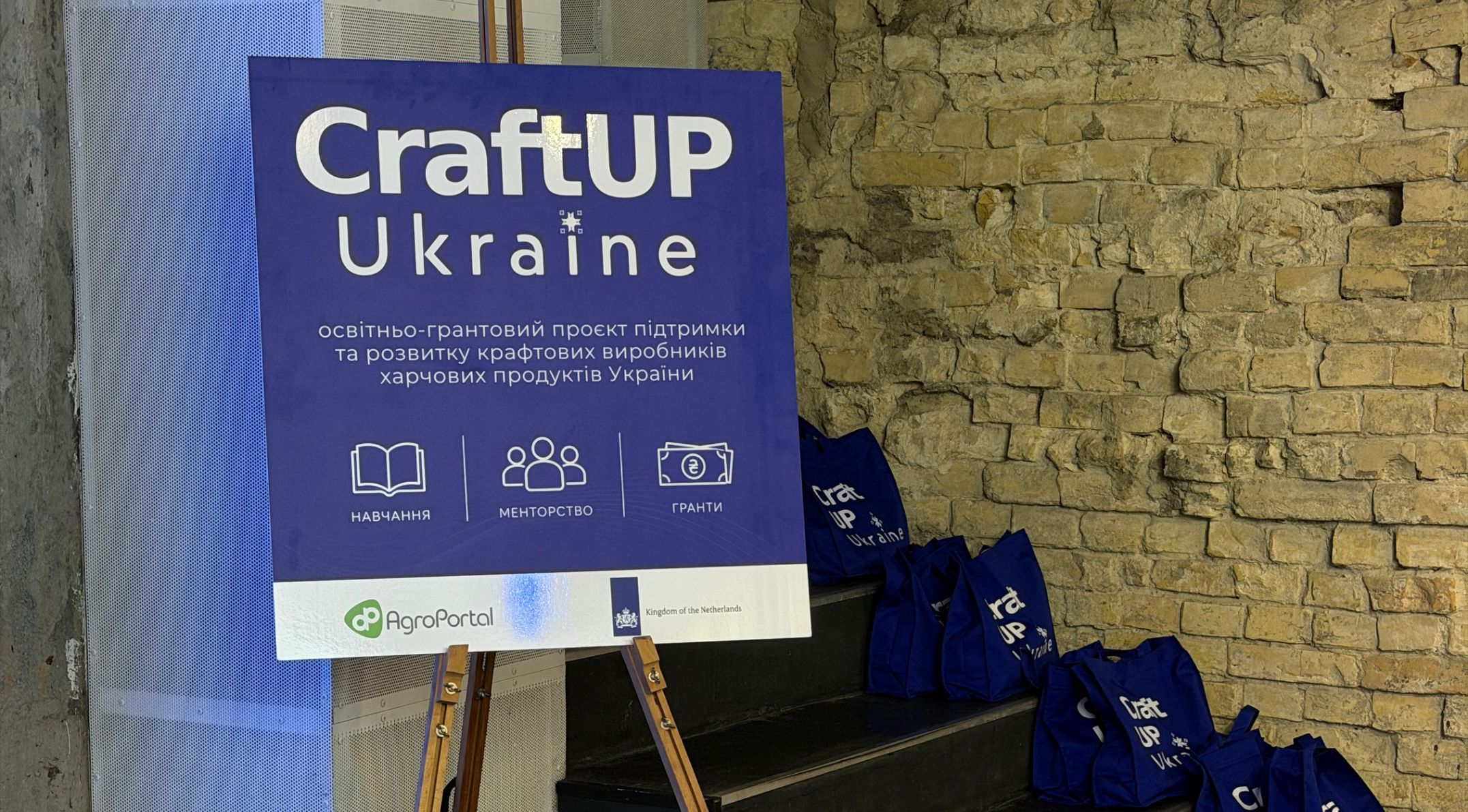
CraftUP Ukraine: Finalists Presented Their Business Projects and Received Grants
 03 August 2026, 07:201648
UCAB Agrotechnologies 2026. West: All Winning Solutions in One Field
 03 July 2026, 07:202302
Sustainable Farming: Implementing Modern Sustainable Technologies Without Unnecessary Mistakes and Losses
- 08 July 2026, 08:00 2195
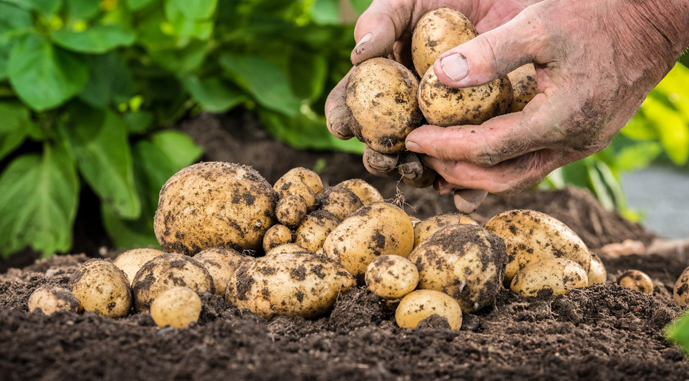 More Than 12 Million Ukrainians Grow Potatoes for Their Own Consumption
An estimated 12.4 million Ukrainians, including minors, grow potatoes for their own household consumption.