
Unique Handmade Cheeses: How a Swedish Artisan Cheesery Combines Economic and Environmental Sustainability
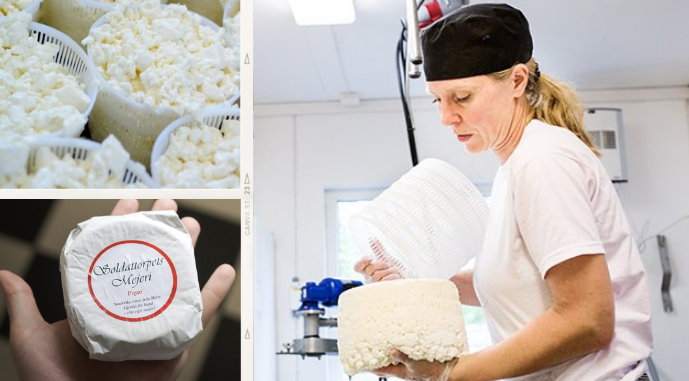
A passion for natural food and deep respect for raw ingredients are the guiding principles behind Soldattorpets Mejeri, an artisan cheesery in Sweden. The farm operates according to the principles of sustainable production. According to its owners, this approach successfully combines economic and environmental sustainability: the business must remain financially viable while working in harmony with nature.
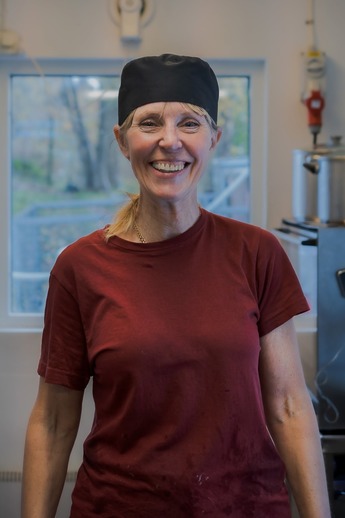
This approach results in exceptional raw milk and, consequently, cheeses with genuine character and remarkable depth of flavour. Their distinctive taste is shaped by the region’s soils, pastures and microclimate, creating a product whose uniqueness cannot be replicated outside its local environment.
«For us, the greatest value of cheesemaking lies in creating products with a truly distinctive flavour through traditional craftsmanship. It is the combination of quality, expertise and meticulous attention to detail that makes our cheeses unique,» says Maria Tuvesson-Lindgren, owner of Soldattorpets Mejeri.
The farm’s cheeses have received numerous awards, including silver and gold medals at Swedish, Nordic and international competitions. Among its most notable achievements is a gold medal for a blue cheese at an international competition in Switzerland, where more than 5,200 cheeses from 46 countries competed.
History and Philosophy of the Farm
After studying and completing practical training in Jämtland, Sweden, as well as working alongside French cheesemaking specialists, Maria founded her own cheesery in the spring of 2010 in Hyby, approximately 20 kilometres east of Malmö.
Maria and her husband began building their business 17 years ago. She recalls that when establishing the company in 2009, obtaining a bank loan proved difficult because artisan cheesemaking was still an unfamiliar business model in Sweden. As a result, they initially operated from temporary premises and secured 20% of the project’s funding from the European Union. Their most significant early investments were the cheesemaking facility itself and the production equipment.
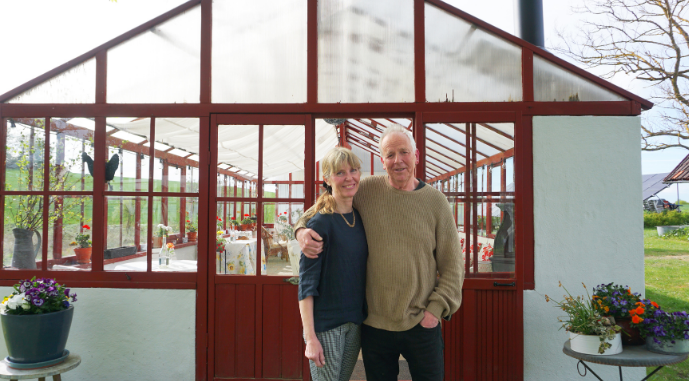
Together with her husband, Carlos, Maria gradually expanded both production and the brand. Over the years, their work has earned the cheesery a strong reputation among partners, customers and the professional cheesemaking community, as well as numerous awards. Production facilities have already expanded from 15 m² to 50 m², with further expansion planned.
Initially, the farm operated its own shop and café, but these were later closed because of the heavy workload. Today, Soldattorpets Mejeri sells its products through distributors, the ICA supermarket chain, farm shops and restaurants. According to Maria, retail chains and food retailers are the farm’s most important customers, as larger orders save considerable time and resources in logistics and sales.
Sales traditionally peak during late summer and autumn. Although profitability remains relatively modest due to the high cost of premium-quality ingredients, the business provides what Maria describes as «a normal living.»
In addition to cheesemaking, Soldattorpets Mejeri has developed a strong educational focus by hosting study visits, cheese and wine tastings, and gastronomic events.
Maria Tuvesson-Lindgren has also earned a sommelier diploma, allowing her to integrate artisan cheesemaking into the broader context of gastronomic culture.
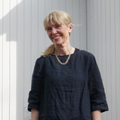
The greatest challenge for small artisan cheeseries in Sweden is surviving the first ten years of business. Achieving this requires financial resilience, perseverance and a willingness to keep learning and developing.
Traditional Cheeses and the Swedish Cheesecake Ostkaka
Each year, the cheesery processes approximately 40 tonnes of milk purchased from neighbouring farms, producing around 5 tonnes of soft cheeses.
Its range includes soft cheeses resembling Brie, blue cheeses such as Hibi Blå, which matures for five months, and hard cheeses aged for up to ten months, comparable in style to Parmesan.
The milk is pasteurised using a low-temperature, long-time (LTLT) method—63°C for 30 minutes—which is gentler than standard industrial pasteurisation and helps preserve more of the milk’s natural characteristics. Cheesemaking from raw (unpasteurised) milk is also permitted.
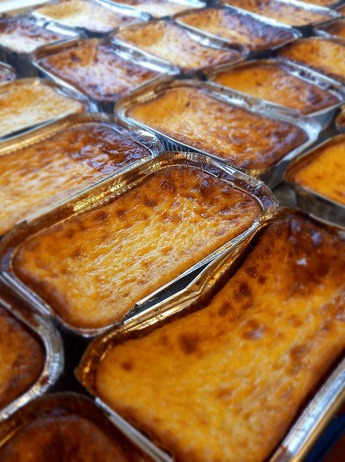
The cheesery also produces the traditional Swedish cheesecake Ostkaka, a regional speciality originating from Småland in southern Sweden. It is traditionally served with sour cream and strawberry jam. The recipe includes fresh cheese, almonds, eggs, sugar, sour cream and flour, with a gluten-free version also available. Producing 60 kilograms of Ostkaka requires approximately 210 eggs.
This traditional cheesecake is especially popular at weddings, and the farm is capable of producing large-format cakes for such occasions.
Technological Features of Cheesemaking
At Soldattorpets Mejeri, cheesemaking is built on meticulous control at every stage of production, from milk processing to the maturation of the finished cheeses. The dairy uses production vats of different capacities, including 100-litre and 500-litre vessels.
The milk is heated through a hot-water circulation system surrounding the vat. The water never comes into direct contact with the milk; instead, heat is transferred gently through the walls of the vessel. Additional heating elements are installed at the bottom of the vat. This system allows precise temperature control and helps ensure consistent product quality.
Once the milk has been heated, it undergoes a cooling stage, which is an essential part of the cheesemaking process.
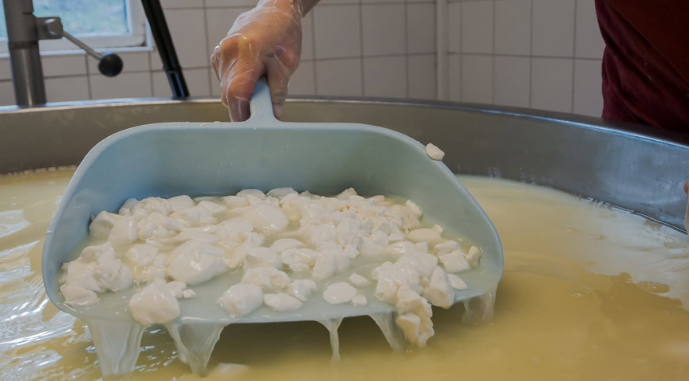
The dairy produces both soft and hard cheeses. Separate equipment is used to mould the curd for soft cheeses before they are shaped and transferred to the next stages of production.
Particular attention is given to cheeses with white mould. Special plastic separators are used to prevent different mould cultures from coming into unwanted contact with one another. Since several mould cultures are handled at the dairy, careful control of the maturation environment is one of the key elements of the production process.
White-mould cheeses mature in dedicated refrigeration chambers at a temperature of approximately 8°C. The complete maturation cycle takes around two weeks.
In addition to soft cheeses, Soldattorpets Mejeri also produces aged hard cheeses. During maturation, the cheeses are turned regularly to ensure even development of both texture and flavour.
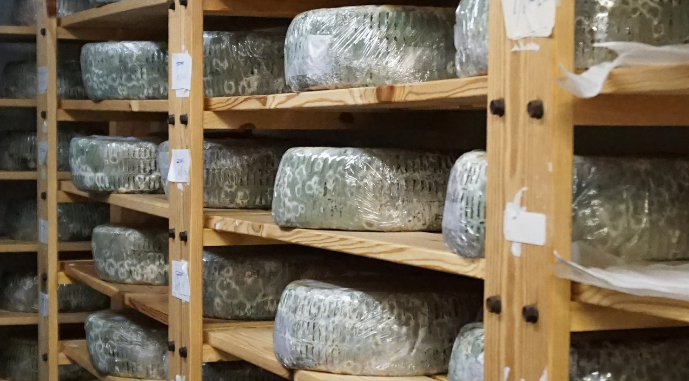
Some cheeses mature for many months. Long-aged varieties are stored in separate refrigerated rooms maintained at approximately 4°C, providing the stable conditions required for slow maturation.
At every stage of production, great attention is paid to hygiene and carefully controlled storage conditions. Different cheese varieties are kept in separate maturation rooms with temperature regimes tailored to their specific characteristics and stage of ripening.
The example of Soldattorpets Mejeri reflects an approach shared by many small Swedish artisan producers: combining traditional craftsmanship with modern process control. Rather than focusing on scale, the dairy prioritises product quality, attention to detail, careful control of maturation conditions, and a willingness to invest time in producing cheeses that require long ageing periods.
The Farm as Part of the Ecosystem
In Sweden, pasture-based livestock farming plays an important role in maintaining natural ecosystems. Grazing cattle help preserve semi-natural grasslands, which are among Europe’s most biodiverse habitats. Without grazing animals, these landscapes gradually disappear.These grasslands provide habitats for pollinators, rare plant species and meadow birds. Farms like Soldattorpets Mejeri therefore contribute directly to biodiversity, as grazing creates and maintains grassland structures that cannot be replicated through mechanical land management alone.
The diversity of grasses and plants growing in our pastures has a direct influence on the flavour of our cheeses. I can clearly notice the difference in both the taste and the quality of the milk. During the summer, the milk contains a greater variety of fatty acids than in winter, giving the cheese a richer and more complex flavour profile.
Soldattorpets Mejeri follows an extensive livestock farming model, characterised by lower stocking densities, a predominance of natural feed such as grass and hay, and minimal reliance on imported feed.
Although not always explicitly stated, sustainability is embedded throughout the farm’s business model through local production, short supply chains, and close cooperation with local consumers and restaurants.
«Above all, we see ourselves as producers of local food. We work within our local ecosystem and create products that reflect the unique characteristics of this region,» Maria explains.
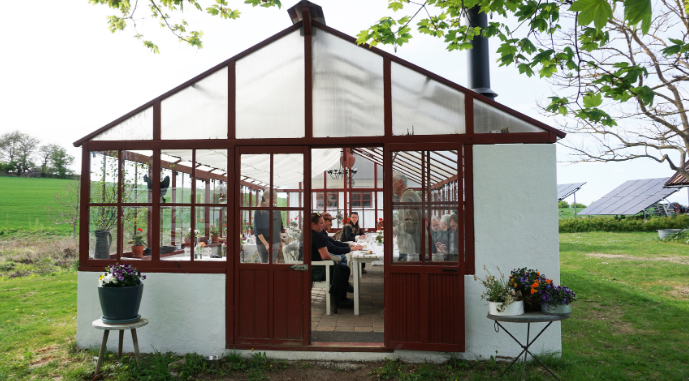
Looking ahead, the owners plan to continue expanding their cheese production and, if regulations permit, resume their popular cheese and wine tastings. Due to Sweden’s strict alcohol legislation, this depends on the regulatory framework. The tastings would take place in a dedicated venue capable of accommodating up to 25 visitors.
Maria also advises aspiring cheesemakers to plan sufficient production space from the very beginning.
«My first cheesery occupied just 30 square metres. We later expanded it to 50 square metres, yet even that is insufficient for producing five tonnes of cheese per year. If I were starting this business today, I would build a larger dairy from the outset. At the beginning, however, that simply wasn’t possible because the banks didn’t believe cheesemaking and cheese sales could provide a sustainable income. That’s why we had to start on a much smaller scale.»
Svitlana Yatsenko, AgroPortal.ua. This material was prepared within the framework of the FarmForce project with the support of the Swedish Institute

 03 August 2026, 07:201468
UCAB Agrotechnologies 2026. West: All Winning Solutions in One Field
 03 July 2026, 07:202216
Sustainable Farming: Implementing Modern Sustainable Technologies Without Unnecessary Mistakes and Losses
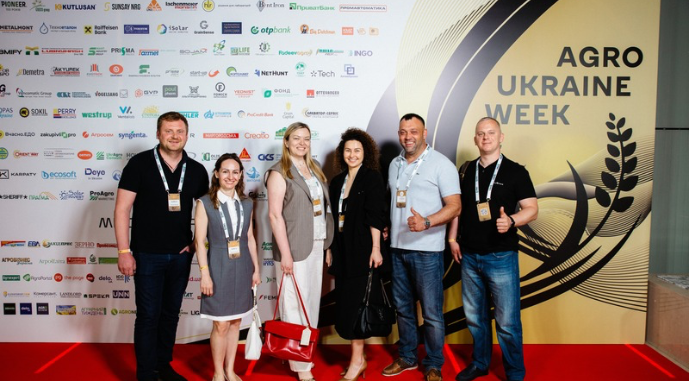 26 June 2026, 07:202019
Agro Ukraine Week 2026: How Ukraine’s First Three-Day Agricultural Forum Took Place
- 12 September 2026, 06:18 3473
 Cold-Pressed Oil and Macerates: How Processing Changes the Economics of a Walnut Orchard
Walnuts are an almost zero-waste crop. And income can be generated not only from selling the kernels. Oil is pressed from them, macerates are produced, while the press cake left after pressing is processed into flour and other food products. Even green walnuts, partitions, shells and leaves can be put to use. Thus, a single harvest can provide a producer with several value-added products at once.
- 27 August 2026, 06:11 2514
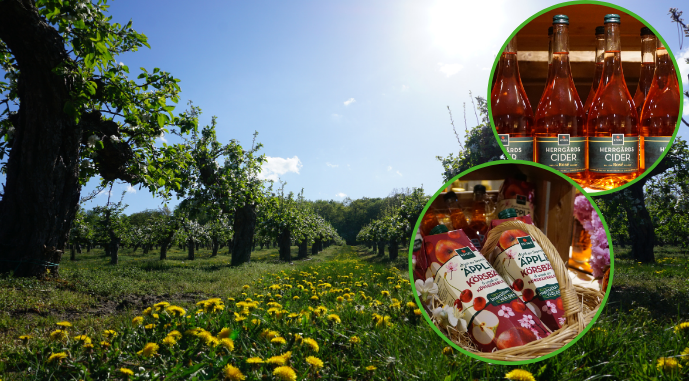 Kiviks Musteri: How a Family Apple Orchard Became One of Sweden’s Best-Known Brands
The Swedish family-owned company Kiviks Musteri, spanning five generations, is located in one of the most picturesque and environmentally valuable regions of southern Sweden — Österlen. Its grounds are literally immersed in a landscape shaped by nature, with Hanö Bay, Stenshuvud National Park and the company’s own apple orchards nearby.