
Agricultural sector on the path to the EU: practical steps for Ukrainian farmers to adapt
Agricultural Sector on the Path to the EU: Practical Steps for Adaptation in the Food Industry
15 July 2026, 06:07 3587
In June, Ukraine officially opened negotiations with the European Union under the first negotiating cluster, Fundamentals. There are hopes that all negotiating clusters will be opened by the end of the summer, including the one covering the agricultural sector — Cluster 5, which encompasses agricultural policy, food safety, and fisheries.
Ukraine must secure the unanimous approval of all 27 EU Member States across every negotiating cluster without exception. At the same time, it is important to understand that the agricultural sector is one of the most extensively and comprehensively regulated sectors in the European Union, meaning that a significant number of changes will need to be made to Ukrainian legislation.
According to Taras Vysotskyi, Deputy Minister of Economy, Environment and Agriculture of Ukraine, following the screening of agricultural legislation in September 2025, Ukraine received 16 benchmarks for opening negotiations in the agricultural area. Some draft laws have already been registered, and by the end of 2026, the government plans to prepare a complete package of key legislative initiatives for the further implementation of European standards.
At the same time, it is important to understand that legislative harmonization is not a mechanical process of copying EU rules, but rather a profound modernization of the entire system — from production and traceability to official controls and food safety.
Harmonization of National Food Legislation with EU Law
Negotiating Chapter 12, «Food Safety, Veterinary and Phytosanitary Policy» (the SPS area), is one of the most complex and extensive chapters in the negotiation process and requires alignment with more than 3,500 acts of EU law. This work is expected to enter its final stage by the end of 2028.
According to Dmytro Bohach, Head of the Food Safety Division at the Department of State Policy on Sanitary and Phytosanitary Measures and Food Security of the Ministry of Economy, the formal screening of the implementation of legislation, administrative structures, official controls, monitoring systems, statistical data, and practical measures within each thematic block was successfully completed. The European Commission positively assessed the materials presented and noted the systematic and sustainable nature of reforms in this area. This opens the way for Ukraine to accelerate its accession negotiations with the EU.
Ukraine has already prepared a National Adaptation Programme, which also covers food safety. The main objective in this area is to ensure food safety, protect consumer health, and harmonize Ukrainian legislation with EU standards.
Key EU Acts Already Implemented in Ukrainian Food Legislation
- The fundamental EU act establishing the general principles and requirements of food law is Regulation (EC) No 178/2002, which is reflected in five Ukrainian laws.
- Regulation (EC) No 853/2004 lays down specific hygiene rules for food of animal origin.
- Regulation (EU) No 1169/2011 concerns the provision of food information to consumers.
- Regulation (EC) No 1935/2004 concerns materials and articles intended to come into contact with food.
- Regulation (EU) 2017/625 concerns official controls and other official activities performed to ensure the application of food and feed law, rules on animal health and welfare, plant health, and plant protection products.
The Department of State Policy on Sanitary and Phytosanitary Measures of the Ministry of Economy of Ukraine notes
Ukrainian producers are already implementing and applying the principles of the HACCP system. Requirements have also been established to ensure the traceability of food products and animals intended for food production at all stages. Requirements for the provision of food information have changed. Official controls have also undergone changes, with a transition to a risk-based inspection system. Responsibility for food safety now rests with the food business operator. Two terms have also been introduced into Ukrainian law — «small establishment» and ‘artisanal food product’ — reducing the burden on producers, as they are exempt from the obligation to obtain an operating permit.
The regulatory burden on small producers has also been eased: under Order No 3498 of the Ministry of Agrarian Policy, they are not required to comply with the hygiene requirements of Regulation (EC) No 853/2004.
As Dmytro Bohach noted, one of the main recent developments in Ukrainian food legislation concerns the rules governing materials and articles intended to come into contact with food. Law No 2718 entered into force on November 19, 2025, following a three-year transition period before becoming applicable. To make the law operational, more than 10 pieces of secondary legislation aligned with EU law were adopted — three orders by the Ministry of Economy and eight by the Ministry of Health. Everything related to packaging in Ukraine is now governed by European standards and applicable EU rules.
As regards food products, by January 1, 2029, Ukrainian producers — specifically food business operators in the milk and dairy sector — must fully comply with the requirements of Regulation (EC) No 853/2004 concerning permissible criteria for raw milk and transition to the production of extra-grade milk.
Another new development for the Ukrainian market will be the introduction of the terms «adulterated food or adulterated feed» and «fraudulent practices,» along with liability for food business operators engaging in such practices.
Official Controls: What Will Inspectors Check?
Many producers are interested in one question: what exactly will an inspector check during an inspection? Dmytro Bohach advises food processors to refer to Order No 1503 of the Ministry of Agrarian Policy, which contains a list of issues subject to inspection. The act includes 30 annexes covering each area, allowing producers to prepare their facilities for compliance with the listed requirements.
Mykola Bilous, Deputy Director of the Department and Head of the Directorate for Official Control and Registration of Market Operators at the Department of Food Safety and Veterinary Medicine of the State Service of Ukraine on Food Safety and Consumer Protection, notes that businesses will be inspected according to their assigned risk category. There are five such categories, and the frequency of inspections will depend on the relevant risk level. Inspections will be conducted without prior notice.
Mykola Bilous, Deputy Director of the Department and Head of the Directorate for Official Control and Registration of Market Operators at the State Service of Ukraine on Food Safety and Consumer Protection
The fundamental principle of official control is unpredictability — an inspector comes to a production facility, assesses it under normal operating conditions, and draws up the relevant inspection report. For the time being, inspections are prohibited.
Compliance with European Requirements Opens Up Significant Opportunities
Viktoriia Lobun, Adviser to the Deputy Prime Minister for European and Euro-Atlantic Integration of Ukraine, notes that farmers and processors undoubtedly face challenges related to the European integration process. At the same time, these developments should also be assessed from the perspective of future prospects and opportunities.

Viktoriia Lobun, Adviser to the Deputy Prime Minister for European and Euro-Atlantic Integration of Ukraine
At the very least, we are entering a huge market of 500 million consumers. Once the European integration process is completed, we will be part of the EU single market, and Ukraine will gain access to all third-country markets with which the EU has trade agreements. These are significant opportunities for the Ukrainian market and Ukrainian businesses.When it comes to the quality of Ukrainian products, it is already high, as some of our producers export their products to the EU, meaning that they already comply with European rules and standards. However, it is important to understand that once Ukraine becomes an EU Member State, these rules will apply not only to exports but also to the domestic market.
According to Mykola Bilous, smaller producers that comply with all European standards may find it easier to begin exporting than large enterprises. The EU also takes production capacity into account, including the extent to which a new market participant may affect the European market. Compliance with EU requirements also facilitates access to other markets. For example, African countries recognize European standards and may grant export authorization without conducting inspections.
However, for Ukrainian processors to integrate gradually and smoothly into the European market, transition periods and investment in the agricultural sector and food industry will be required. If additional EU standards are introduced too quickly, Ukrainian businesses may not have enough time to adapt. If the process is gradual and businesses have an opportunity to adapt at a manageable pace, major challenges can be avoided.

Oleksandra Avramenko, Head of the European Integration Committee at UCAB
Given limited financial resources and limited institutional capacity, sector representatives — Ukraine’s leading agricultural associations — believe that a 10-year period following accession is necessary. This would be the most optimal, appropriate, gradual, and balanced approach to avoid harming Ukraine’s agricultural sector.The transition could be faster, but financial support would then be required. Will such support come from the European Union, as it did in 2002 when Poland was preparing to join and had multibillion-euro support programmes? We would very much like that. Will this be possible in our case, given how much the European Union is already investing in Ukraine’s defence capabilities and supporting us during the war? Whether additional funds will be available to support the agricultural sector as well remains a major question.
According to Oleksandra Avramenko, attracting investment into the development of Ukraine’s food processing industry is currently quite challenging. However, as Ukraine becomes more deeply integrated into the European Union’s value chains, attracting investment and expanding domestic processing should become easier.
Oleksandra Avramenko, Head of the European Integration Committee at UCAB
When Ukraine joins the EU, the Ukrainian agricultural sector will gain access to support under the Common Agricultural Policy, while also having the opportunity to develop domestic support programmes. In reality, much will depend on how agricultural policy is structured.The EU provides subsidies, including support for keeping dairy cows. It is therefore entirely possible that Ukrainian farmers will receive similar support in the future. This would be very significant assistance for the dairy sector. Our products would become more competitive.We cannot say that Ukraine will join the EU and Ukrainian dairy products will disappear. They will not. What the sector needs is an appropriate policy to strengthen it.
Today, more than 40,000 people are employed in Ukraine’s dairy processing sector. According to Vadym Chaharovskyi, Head of the Union of Dairy Enterprises, the industry association has been actively working for three years on how to integrate Ukraine’s dairy sector into the EU. A European Integration Roadmap and a Sector Development Strategy through 2035 have already been developed.
The dairy sector sees its main prospects in supplying the domestic market, maintaining and expanding exports, and shifting toward the production of higher value-added products. For Ukraine to become a major dairy hub in the future, €9 billion needs to be invested in the raw milk production base, including increasing the cattle population by 750,000 cows and building around 700 industrial dairy farms. A further €6 billion is needed to modernize and expand processing capacity.

Vadym Chaharovskyi, Head of the Union of Dairy Enterprises
The main challenges facing the dairy industry on the path to the EU include the gap between existing standards — today, 60% of Ukrainian standards do not comply with EU requirements. We need to harmonize our legislation with EU Regulation 2026/135 and Regulation 445/2007. These regulations must apply in Ukraine from January 1, 2029, meaning that we have two and a half years to make the necessary changes.We need to adapt terminology and classification and introduce a new category of fragmented products. Under Regulation 445/2027, this is a term for spreadable fats, and the biggest issue concerns the definition of butter. In the European Union, butter contains more than 80% milk fat. Ukraine currently has three types of butter, and we will try to preserve these standards. As for milk production, producers will definitely transition to EU standards.
Experts emphasize that for Ukraine’s agri-food sector to become an important part of the European food market, collaboration is needed. The government must ensure the swift implementation of regulations and regulatory policies, while businesses should view European standards and innovations not as restrictions, but as an investment in their own development.
Lyudmyla Lebid, AgroPortal.ua

 14 October 2026, 07:20369
Chickpea and Lentil Paste: How One of the World's Largest Legume Processing Plants Operates
 02 October 2026, 07:201331
Shifting Trade Flows: What Opportunities Are Available to Ukrainian Producers?
 18 September 2026, 07:201562
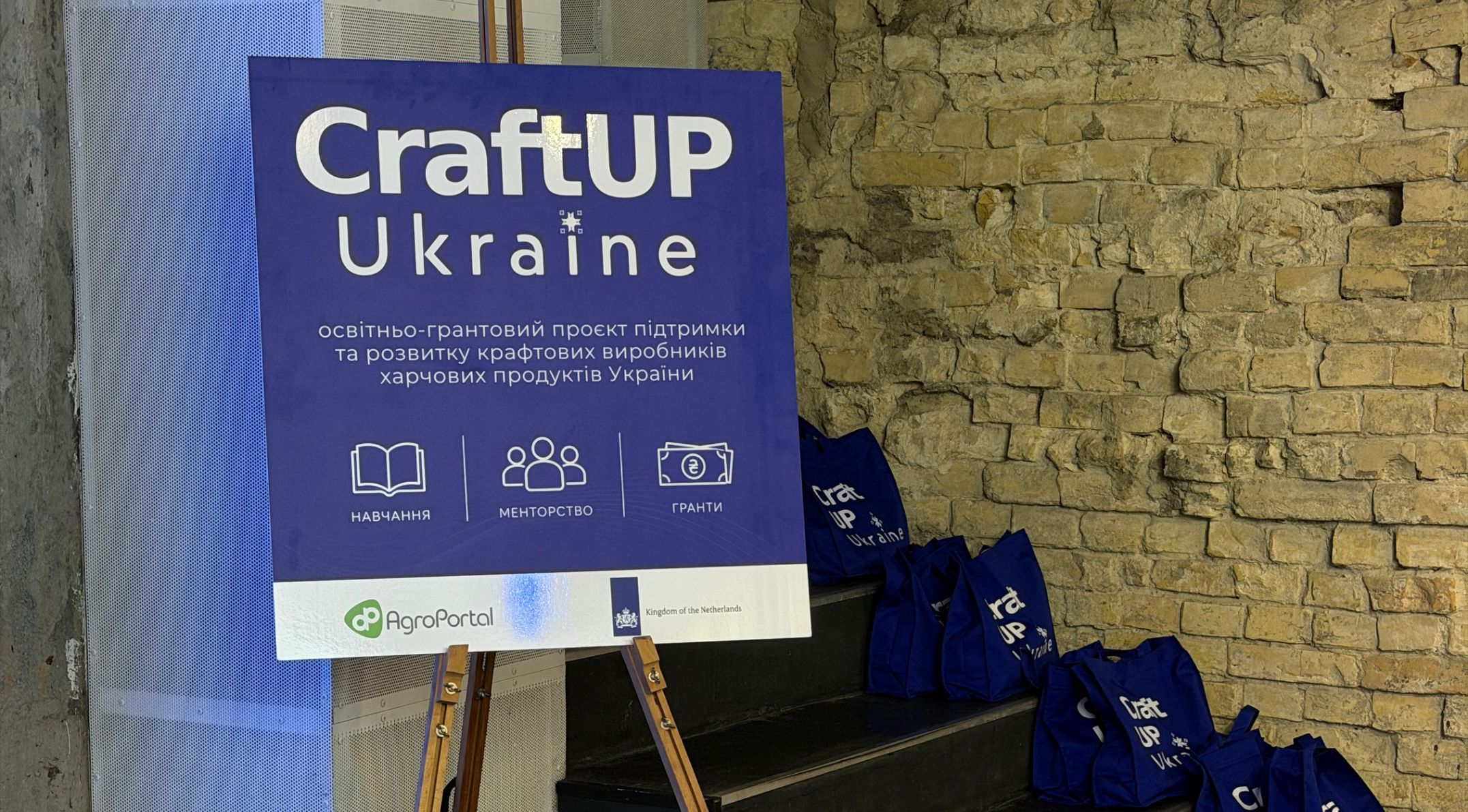
CraftUP Ukraine: Finalists Presented Their Business Projects and Received Grants