
Війна на Близькому Сході може заблокувати ціни на зерно
Domino effect: how the Middle East crisis will affect the global grain market
29 April 2026, 05:59 8176
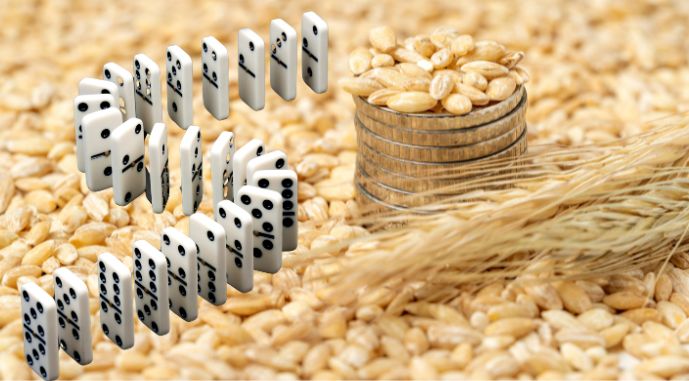
When forecasting grain prices, market participants now take into account not only weather conditions and the balance of supply and demand, but also the geopolitical situation. The military conflict in the Middle East and the threat of a blockade of the Strait of Hormuz may have long-term consequences for the global grain market.
Rising Prices and Demand
The Persian Gulf region accounts for 20% of global export flows of ammonia and urea, and a blockade of the Strait of Hormuz would inevitably affect the 2026/27 harvest. Fertilizer prices have already increased, while higher oil prices are negatively affecting freight rates and insurance costs.
Egypt is one of the major players in the grain market, with annual purchases ranging from 28 to 30 million tonnes. Since the start of the war, prices have already risen by $9–11/t, said Hesham Soliman, President of Mediterranean Star For Trading Co. Ltd. in Egypt, during the LinkedIn Live discussion «Grain Market Outlook and Logistics Risks.»
«Everyone is now trying to secure demand in their own country first, regardless of prices, because the situation is unpredictable. Saudi Arabia has announced a tender for almost 800,000 tonnes, while Jordan and Nigeria continue to buy grain,» he explained.
Prices in Egypt are rising, and there are supply issues. Demand is already present.
»We started the season, for example, with wheat and corn at $220–230/t, and now we are talking about $250–260/t. My expectation is $270 for wheat and $265 for corn because of what is happening. Prices may return to normal if this war stops, but no one can say when,» Soliman added.
In Search of Alternative Routes
Maintaining logistics is becoming increasingly difficult, said Vivian Iroanya, Senior Price Reporter for Agriculture and Food at S&P Global Commodity Insights — Platts.
According to her, some corn shipments from Ukraine, as well as other commodities such as sugar, have been redirected to Mediterranean and Red Sea ports instead of the Persian Gulf.
Black Sea prices reached levels similar to their August highs after the outbreak of the war involving Israel, Iran and the United States. The key question for the market is whether prices will recover and whether demand will remain. CIF Marmara prices also reached their highest levels since December 2023, mainly due to rising freight and fuel costs.
«Prices for Ukrainian-origin grain are now at their highest levels since the beginning of this season, around September–October. Traders are pointing to a very strong upward trend in this market,» Iroanya explained.
The wheat market is facing intense global competition, with large carryover stocks expected. Buyers may choose a wait-and-see approach, especially given current market conditions and local harvests in other countries, including Türkiye.

Dependence on News
There is no structural deficit in the current market, especially in grains. However, the market does not feel comfortable because of logistics challenges and the war in the Middle East, said Serhiy Doskach, Managing Director of Vimeksim.
«Trade flows are no longer optimized; they are reactive — longer routes, sudden surges in trade, temporary dislocations between regions with different prices and different supply levels. This creates inefficiencies in direct pricing. For traders, this is actually a game changer,» he said.
In the new environment, speed and flexibility are more important than forecasting. The market is no longer trading on fundamentals; it is trading on news.
«Every time there is news that something is happening in the Strait of Hormuz, freight rates react immediately. Therefore, it is impossible to predict how competitive the price will be at final destinations,» the speaker explained.
Today, the market is driven not only by supply but also by headlines — whether geopolitical or political — and this affects sellers, who shift their offers from cautious to aggressive. At the same time, buyers remain active but continue to monitor positions and the current market situation.
«We are now in a very volatile and very dynamic market, and we need to adapt,» Doskach added.

The Market Is Being Stretched
Analysts at Barva Invest, a trading and analytical company, also expect prices to rise due to disruptions in supply chains. This is the beginning of a domino effect: grain prices have increased, but this growth has been «eaten up» by expensive logistics and significantly less available freight.
«Importers, the main consumption markets, and exporters, markets with excess supply or export surpluses, are being stretched. Destination markets are trying to hold out until their own harvest, if we are talking about wheat,» explained Bohdan Kostetskyi, Operating Partner at Barva Invest.
Corn and Rapeseed in Ukraine
The Ukrainian corn market is expected to enter the next season with 3–4 million tonnes of carryover stocks. This year’s export potential stands at 26.5 million tonnes of corn. However, if Ukraine manages to sell 23 million tonnes, that will already be a good result, the analyst believes.
Forward corn prices are currently in line with last season’s average — $215/t delivered to port. However, actual sales remain weak: farmers are in no hurry to contract, and this applies to all crops.
Taking into account the indexation of fuel and fertilizer prices, production costs per hectare have already increased by 20–25%. As a result, farmers are not initiating sales in order to avoid losses.
A significant amount of rapeseed was lost due to winterkill. Forecasts have been reduced from 3.5 million tonnes to 3.1 million tonnes. Farmers are trying to catch market spikes when oil, which correlates with rapeseed prices, continues to rise, approaching $108–110 per barrel for Brent.
«According to key exporters, forward purchases are now three to five times lower than at the same time last year. This clearly illustrates farmers’ attitude: they are holding back the harvest and hoping that this falling-domino chain will eventually lead not only to compensation for more expensive freight and rising prices at destination, but also to the profitability they had expected,» Kostetskyi explained.
To achieve this, agricultural producers need grain prices to improve by tens of dollars per tonne and, possibly, oilseed prices by $50/t. However, this scenario may not materialize.
«Large producers say, as cynical as it may sound, that it would be better for the crisis in Hormuz to continue, as this would ensure that all the dominoes fall faster. Then the inflationary boomerang would return faster and be reflected in raw material prices,» the expert noted.

Inflationary Boomerang
Logistics is «now eating up» everything, heating up the supply chain and causing a domino effect.
«We will have an inflationary boomerang flying back. Inevitably. I would not place much hope on the Strait of Hormuz opening and crude oil falling to $70 per barrel, while it is currently around $100,» Kostetskyi added.
Even if the Strait of Hormuz does open, recovery will take months. Therefore, the real shock for market participants still lies ahead, although some Asian countries are already beginning to feel it. The situation resembles a question of who will blink first — the importer or the exporter — but most likely they will have to meet somewhere in the middle.
Svitlana Tsybulska, AgroPortal.ua


 02 October 2026, 07:201258
Shifting Trade Flows: What Opportunities Are Available to Ukrainian Producers?
 18 September 2026, 07:201500
CraftUP Ukraine: Finalists Presented Their Business Projects and Received Grants
 03 August 2026, 07:201746
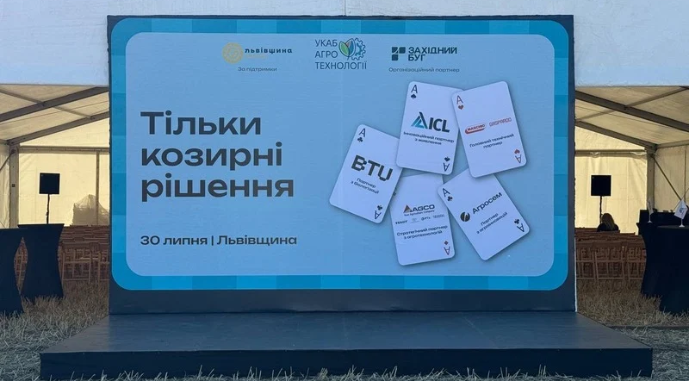
UCAB Agrotechnologies 2026. West: All Winning Solutions in One Field
- 05 October 2026, 13:23 1025
 Ukraine’s Share of EU Rapeseed Oil Imports Exceeds 75%
At the beginning of the season, Ukraine reduced rapeseed exports to the European Union but significantly increased supplies of rapeseed oil.
- 02 October 2026, 07:20 1258Shifting Trade Flows: What Opportunities Are Available to Ukrainian Producers?
At the end of September, the Ukrainian Pulses and Soybean Association (UPSA) brought together representatives of agribusiness and international trade from 30 countries at AgroFoodSummit 2026 in Mersin, Türkiye.