
This has been facilitated by the expansion of export opportunities thanks to the stable quality and safety of Ukrainian honey, as well as rising export prices. If in April 2024 the export price of honey to Germany was $1,850 per tonne, in 2025 it was $2,280, and in 2026 it has already reached $3,700.
Beekeeping During the War: How the Industry Withstood the Challenges and Is Integrating into the EU
26 May 2026, 05:49 6287
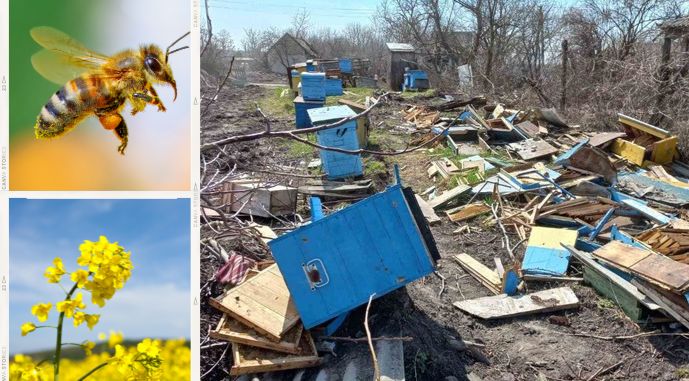
The full-scale war has dealt a serious blow to Ukrainian beekeeping, causing both the direct death of millions of insects due to shelling and fires, and the destruction of thousands of farms in occupied and frontline territories.
Constant explosions and vibrations also negatively affect bee behavior and their ability to overwinter normally, explains Olena Yatsenko, co-owner of the Yourbee Honey apiary.
In addition, disrupted logistics chains, the forced migration of beekeepers, and the inability to provide timely veterinary care have led to the uncontrolled spread of diseases, in particular the Varroa mite, which weakens bees’ immunity. The forage base has also shrunk due to reduced crop areas and changes in the structure of agricultural production, while the migration of apiaries itself has become more complicated.
Nevertheless, the industry, although operating in much more difficult conditions, has withstood the challenges. According to the Ministry of Economy, Environment and Agriculture, the bee population in Ukraine is gradually increasing: as of January 1, 2022, there were 2,028,585 bee colonies, while as of January 1, 2026, their number had reached 2,201,485.

Taras Vysotskyi, Deputy Minister of Economy, Environment and Agriculture of Ukraine
The official is convinced that after the war ends, apiaries will recover more actively, while the main threat to beekeeping will be — and already is — the climate crisis. In particular, abnormal temperature fluctuations disrupt the natural flowering cycles of honey plants and reduce their diversity. There is also an anthropogenic factor — a decline in nectar productivity and the quality of nectar from cultivated honey plants due to the development of self-pollinating, early-maturing and drought-resistant varieties.

Serhii Papka, owner of the Papkyna Pasika brand
Compared with previous years, the number of bee colonies that have died for various reasons is increasing: in 2023, 1,048 colonies died; in 2024, 1,111; and in 2025, the death of 1,308 bee colonies was documented.
According to the State Service of Ukraine on Food Safety and Consumer Protection, last year, based on appeals from apiary owners, 99 samples were taken. Of these, poisoning caused by the use of plant protection products was confirmed by 10 expert examinations. In 2023, there were 8 such cases, and in 2024 — 3.
The causes of bee poisoning are always the same: violations of the regulations for the use of plant protection products and insufficient communication between users of land plots where such products are applied and beekeepers.
Risks often also arise at the level of private households, when people treat gardens, vegetable plots or ornamental plants with products toxic to bees without taking into account the time when bees are flying. This is not only a matter of control, but also of the culture of using plant protection products and awareness of the role of bees in the ecosystem, emphasizes Olena Yatsenko, co-owner of Yourbee Honey.
A significant number of owners also do not register their apiaries, thereby exposing bees to danger.

Olena Yatsenko, co-owner of Yourbee Honey
Serhii Papka also confirms that without official apiary registration, a beekeeper is effectively unprotected. Therefore, if an apiary is not only «for personal use», registration is mandatory.
The Ukrainian Agribusiness Club association adds that many are held back by conservatism or simply by the habit of working «in the shadows». A significant number of apiaries still function as a home hobby, so their owners often do not see the point of registration until they face real market challenges.
Agricultural producers, in turn, use various communication channels, including direct communication, to inform beekeepers about the date and time of treatments, provide a list of crops, the names of products with active substances, application rates and contact details.
An important factor, states Anatolii Bereza, Deputy Director of the Agro-Industrial Department of AGROTRADE Group, is the use by farmers of approved and registered products during crop flowering that are safe for bees.
The company actively involves beekeepers to improve pollination of sunflower seed crops, as it is engaged in seed production, including the cultivation of hybridization plots for this crop.

Anatolii Bereza, Deputy Director of the Agro-Industrial Department of AGROTRADE Group
The use of bees makes it possible to obtain higher-quality seed material and increase yields. For this purpose, we agree in advance, on a paid basis, with beekeepers on the placement of apiaries near seed crops during the required period. The approximate calculation is 3 bee colonies per 1 ha. In seed production, this practice is mandatory, as it provides around a 20% increase in yield.
Anna Burka, FAO expert on the development of value chains in beekeeping, provided additional statistics during the international expert discussion «Pollinators as the Basis for Ecosystem Restoration in Ukraine»:
- three-quarters of the world’s most productive agricultural crops depend, at least partially, on pollinators;
- 35% of global crop production depends on bees, birds, bats and other pollinators;
- 200,000 animal species perform the role of pollinators, including 25,000 bee species.
As of early May 2026, 1,087 apiaries were registered in the State Agrarian Register. The Ministry of Economy emphasizes the need to register in the State Agrarian Register. Registration is free of charge.
UCAB sees great potential in the digitalization of the industry. In particular, the launch of the eBeekeeping service has become a significant breakthrough for the sector, as it has moved the interaction between beekeepers and the state from paperwork into the digital space.

Hanna Kashyrina, Coordinator of the Plant Protection and Seeds Committee at UCAB
At the same time, the expert emphasizes that in the process of European integration, registration is no longer a choice but a mandatory requirement, as the European market is extremely demanding in terms of food traceability. For the EU, it is important that each batch of honey has a clear origin — from a specific hive to the store shelf.
Registration through electronic services allows Ukraine to build the image of a reliable supplier that plays by clear rules. It also enables small beekeepers to unite in order to sell their honey together as an officially recognized and high-quality product for which buyers are willing to pay more.
However, pollination is not only about honey bees. It also involves wild bees, various flies, butterflies, beetles and other insects. All of them perform their own functions and have different capabilities. For example, when temperatures drop and honey bees do not work, bumblebees can fly and pollinate. In this way, all pollinators in a sense «back each other up», ensuring the resilience of the ecosystem.
Entomophages also help naturally control pests of agricultural crops, which is why the agricultural sector faces an important task of preserving biodiversity.
AGROTRADE Group, for example, takes various measures to preserve biodiversity: it uses registered insecticides that are safe for bees and bumblebees during crop flowering, and also sows properly selected multi-component green manure crops. These crops not only improve soil structure, contribute to the accumulation of nutrients and organic matter, but also create a favorable environment for the development and feeding of various insects.
International technology companies are also not standing aside. Among them is Syngenta. The company recognizes that preserving and improving biodiversity and supporting bee health are key components of sustainable agriculture. High-quality synchronization of the main market participants in this area is indeed important.
That is why the company in Ukraine is actively implementing biodiversity protection programs, in particular with a focus on the health of bees and other beneficial insects, and also conducts training for agricultural producers on the responsible use of plant protection products.

Oleksandr Zozulia, Head of the Regional Technical Experts Group at Syngenta
UCAB adds that preserving the bee population requires coordinated efforts at all levels. At the state level, it is important to continue consistent work to raise awareness among all participants in the process — communities, farmers and beekeepers — about the rules of mutually beneficial coexistence, to introduce effective control mechanisms for compliance with regulations on the use of plant protection products, and to encourage farmers to use products included in the State Register of Pesticides and Agrochemicals.
Hanna Kashyrina, Coordinator of the Plant Protection and Seeds Committee at UCAB
Bill No. 4601 of January 16, 2021, «On Amendments to the Criminal Code of Ukraine to Strengthen Liability for Violations of Plant Protection Legislation», is intended to help solve this problem. It is designed to increase liability for counterfeit plant protection products by raising fines and introducing imprisonment for up to 10 years with confiscation and destruction of counterfeit plant protection products, equipment used for their production, consumables and raw materials for their manufacture.
Accordingly, the prompt adoption of this bill would allow Ukraine to introduce effective mechanisms and safeguards capable of preventing counterfeit plant protection products from entering the market.
Another priority should be the development of digital solutions such as eBeekeeping and the simplification of procedures for recording violations. At the community level, prompt communication plays a key role: the creation of working groups and instant notification systems makes it possible to establish safe coexistence between farmers and beekeepers.
The beekeeper, for their part, must ensure the official status of their farm in order to be part of this information field, and should also actively cooperate with local agricultural enterprises. After all, open dialogue and joint compliance with the rules of the technological process are much more effective than any penalties.
Alla Stryzheus, AgroPortal.ua

 02 October 2026, 07:201258
Shifting Trade Flows: What Opportunities Are Available to Ukrainian Producers?
 18 September 2026, 07:201500
CraftUP Ukraine: Finalists Presented Their Business Projects and Received Grants
 03 August 2026, 07:201746
UCAB Agrotechnologies 2026. West: All Winning Solutions in One Field