
European Integration of Ukraine’s Agricultural Sector: Key Changes Expected by 2028
Ukraine vs Poland: Can Competition Grow into Partnership?
20 May 2026, 06:11 5195
In recent years, Polish farmers have made numerous accusations against Ukrainian agricultural producers. There is a certain level of competition between producers in the two countries, as well as concerns about possible pressure on Polish farmers if Ukraine joins the EU. But is a compromise possible between producers and farmers in both countries?
Equality in Competition
Ukraine is an important export market for Polish goods, particularly dairy products, while at the same time being a competitor in the common EU market. In this context, it is important to play by the same rules, since Poland has been complying with strict European standards that increase production costs for 20 years. This opinion was expressed by Andrzej Gantner, Director General of the Polish Federation of Food Producers, during the webinar «One Market, Different Interests? Ukraine’s Integration into the EU and Polish Agriculture and Processing.»
However, in his opinion, the situation should be viewed more broadly, without focusing solely on Ukraine. For example, imported sugar from Ukraine does not have a major impact on the Polish market, whereas the 2 million tonnes of duty-free sugar entering the EU overall are equivalent to the entire Polish market.Changes in the structure of intra-European competition should also be taken into account.
«Last year, there were no problems with potato sales. This year, more than one million tonnes of potatoes will soon be rotting. And Ukraine is not to blame for this. This is overproduction; the market is very tight, and potatoes are coming to Poland from Germany, the Netherlands and Belgium», Andrzej Gantner explains.
The Situation Is Not Symmetrical
For Polish producers exporting to Ukraine, market access is much simpler. There are three quotas in place: for sugar, pork and poultry meat, while all other commodity products enter either duty-free or at low rates of around 1–3%. At the same time, Ukrainian products are restricted by around 20 quotas for access to the EU market, as well as certain unilateral restrictions introduced by Poland, Hungary and Slovakia in 2023.

Oleksandra Avramenko, Chair of the European Integration Committee of the Ukrainian Agribusiness Club
She acknowledges that there are categories of goods where Ukrainian and Polish producers directly compete. However, the same type of competition exists among producers within the EU itself. Therefore, if Polish producers have managed to reach an understanding with others, this is also possible with Ukrainian producers.
Competition in the Opposite Direction
The dairy sectors of the two countries are not competitors, as the Polish industry processes four times more milk and exports significant volumes of cheese to Ukraine. In addition, Poland has extremely powerful processing companies, such as Polmlek and Mlekovita.

Yelyzaveta Sviatkivska, Coordinator of the European Integration Committee of the Union of Dairy Enterprises of Ukraine
Not Only Economics, but Also Protection of the Domestic Market
In response to these points, Polish speakers noted that they view their agricultural sector not only as an economic factor, but also as a strategic resource that protects the country.

Andrzej Gantner, Director General of the Polish Federation of Food Producers
If we decided to buy all cheap raw materials from Ukraine, we would be shooting ourselves in the foot. It would mean losing independence. Therefore, this area of cooperation, which may seem so simple, is not always appropriate. The same applies to investment. It will be neither quick nor easy. Investment must be followed by a market. We will not go where we cannot ensure profits.
Two Worlds of Ukrainian Agribusiness
When viewing Ukraine as a country with super-large-scale production, Polish experts often overlook the dual nature of Ukrainian agriculture, where, alongside agricultural holdings, there are 4 million small farming family households. This was noted by Dr. Vitaliy Krupin of the Institute of Rural and Agricultural Development of the Polish Academy of Sciences.
«These two worlds operate according to completely different institutional logics. The Ukrainian individual farmer is a partner for the Polish farmer; here, joint processing can be developed, and mutual support can be built,» he explains.
Agricultural advisory services and the creation of regional facilities, particularly for fruit and vegetable processing, are actively supported in Poland. This is a strong point of Polish agriculture. However, production is currently excessive both in Poland and in the EU as a whole, continues Witold Boguta, President of the National Union of Fruit and Vegetable Producer Groups in Poland.
«We have to sell fresh or processed products far beyond the EU. Having similar products, we can create joint processing facilities to make it easier to find markets for these products elsewhere,» he believes.
The flow of berry products from Ukraine has already caused changes in production in Poland. For example, imports of frozen raspberries are increasing and last year reached the highest level in history. As a result, many Polish producers are switching from raspberries grown for processing to dessert berries.
The scale of agriculture in Ukraine, better soil quality and simultaneous ripening periods may also push Polish berry producers, particularly blueberry growers, out of the market.
An Opportunity to Create a Stable and Predictable Market
Ukraine is already integrated into the global economic space: if grain, for example, does not go to Poland, it will go to African countries. However, this does not mean that European farmers will benefit from it, emphasizes Mykola Horbachov, President of the Ukrainian Grain Association.
Taking corn as an example: Europe as a whole does not produce enough of it. While the wheat quota has already been used up by 1.3 million tonnes, only slightly more than 20,000 tonnes have been used out of the 1 million-tonne corn quota. The rest of the quota is not even being used, because it operates according to different indicators. Therefore, while wheat has a representative market and farmers can hedge and sell their wheat, they cannot do the same with corn.

Mykola Horbachov, President of the Ukrainian Grain Association
He is confident that Ukraine is capable of fulfilling all quality-related obligations. Moreover, the entire world takes into account the standards adopted in Europe. Even contracts with African countries include a clause stating that other quality and safety indicators comply with European requirements.
«There is no need to fear competition. Ukraine has found a very good model of cooperation with Spain, which buys Ukrainian corn and wheat, processes it and sells jamón with higher added value,» the UGA President notes.
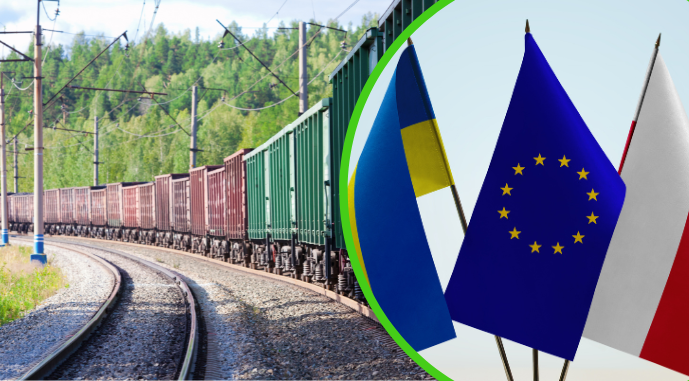
What Will Happen After 2027
Trade between the EU and Ukraine is largely complementary. Each side exports goods in which it has an export advantage: Poland exports dairy products, while Ukraine exports vegetable oils and oilseed meals.
Pavlo Martyshев, an agri-food market expert at the Kyiv School of Economics, predicts that after 2027, the EU Common Agricultural Policy will be changed and become more decentralized, with a stronger focus on small farmers.

Pavlo Martyshев, Agri-Food Market Expert at the Kyiv School of Economics
Competitive in grains, oilseeds and poultry farming, Ukraine will likely focus more on the markets of the Middle East and North Africa.
«We do not expect significant competition in the European market. During the liberalization of trade between Ukraine and the EU at the beginning of the full-scale war, part of Ukrainian grain was imported into Eastern Europe, but wheat prices in Poland moved completely in sync with global prices. The European Commission acknowledged that there was no dumping of Ukrainian products on the Polish market,» Pavlo Martyshев explains.
Svitlana Tsybulska, AgroPortal.ua


 02 October 2026, 07:201137
Shifting Trade Flows: What Opportunities Are Available to Ukrainian Producers?
 18 September 2026, 07:201415
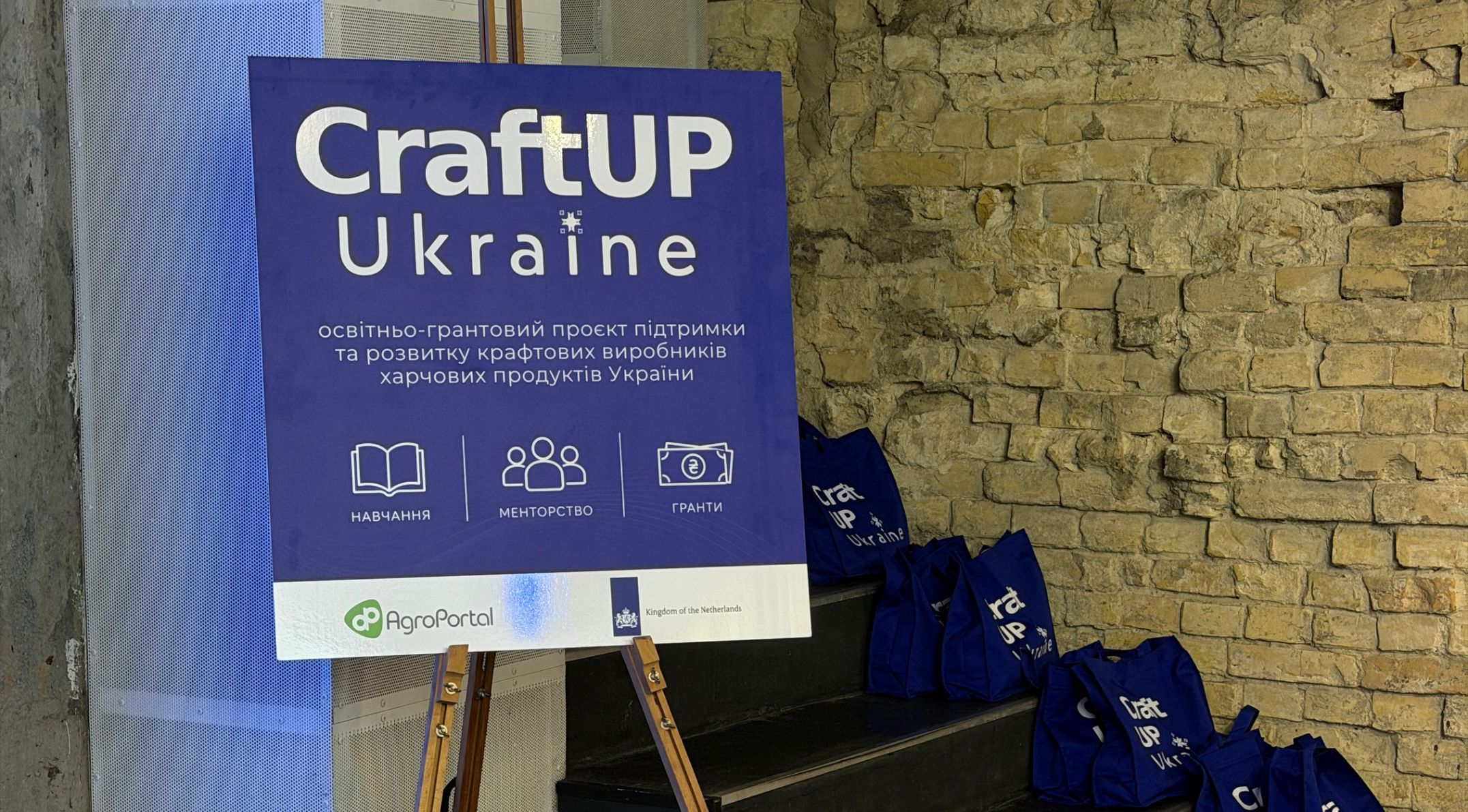
CraftUP Ukraine: Finalists Presented Their Business Projects and Received Grants
 03 August 2026, 07:201732
UCAB Agrotechnologies 2026. West: All Winning Solutions in One Field
- 07 October 2026, 14:25 749
 Business Calls for Preventing Transit of russian Grain via the Baltic
The European Business Association has called on the Ukrainian government to intensify diplomatic efforts with the Baltic countries and EU institutions to prevent an increase in exports of russian agricultural products through Baltic Sea ports.
- 08 July 2026, 08:00 2263
 More Than 12 Million Ukrainians Grow Potatoes for Their Own Consumption
An estimated 12.4 million Ukrainians, including minors, grow potatoes for their own household consumption.