
El Niño Opens a Window of Opportunity for Ukrainian Grain Exports

Record-breaking heat across Europe has had only a limited impact on early grain crops, but corn losses are expected. Ukrainian grain could help offset these shortages, although export opportunities will largely depend on logistics.
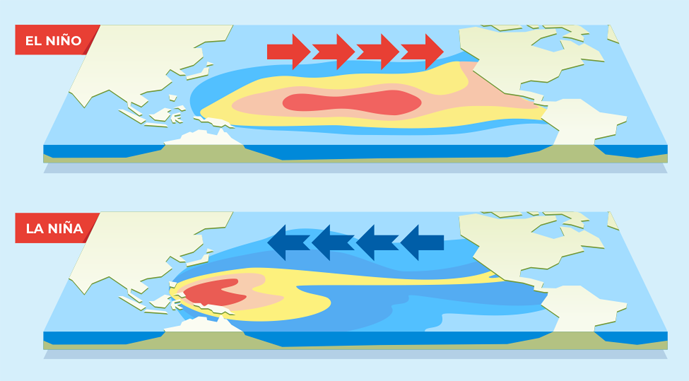
This year, the El Niño phenomenon has re-emerged. It is measured by sea surface temperatures in the Niño 3.4 region of the Pacific Ocean. When temperatures rise above the long-term average, it indicates the development of El Niño conditions.
According to the Australian Bureau of Meteorology, the probability of a strong or very strong El Niño event exceeding 50% is expected from August onward.
Impact on Crops
El Niño generally has a negative effect on wheat yields, is largely neutral for corn, and may even provide modest benefits for soybean production.The highest risks are expected in India and Australia, while the most significant global impacts are likely to be felt across the Southern Hemisphere.Conversely, El Niño could improve growing conditions for corn and soybeans in Argentina. In Brazil, its effects may vary by region: central areas could suffer from drought, while southern regions may benefit from increased rainfall.
EarthDaily Agro assessed the situation as of June 2026.
- In India, the monsoon season has started later than usual, although it is still too early to determine how weak or strong it will ultimately be.
- In Brazil, it remains premature to assess whether excessive rainfall could disrupt the completion of the 2026 wheat-growing season.
- In Australia, no pronounced drought scenario has yet developed across major wheat, barley and canola-growing regions, although the situation continues to require close monitoring.
«For now, it is still too early to assess the real impact of the new El Niño on crop production in most key regions. The coming months will be decisive,» said Mickael Attia, agronomist and analyst at EarthDaily Agro, during the Trend&Hedge Club webinar.
Heat Stress Across Europe
The current European heatwave should not be attributed solely to El Niño, as atmospheric processes are much more complex.
According to Attia, France, Spain and the United Kingdom are expected to be affected the most, while Germany and Poland are likely to experience milder impacts.
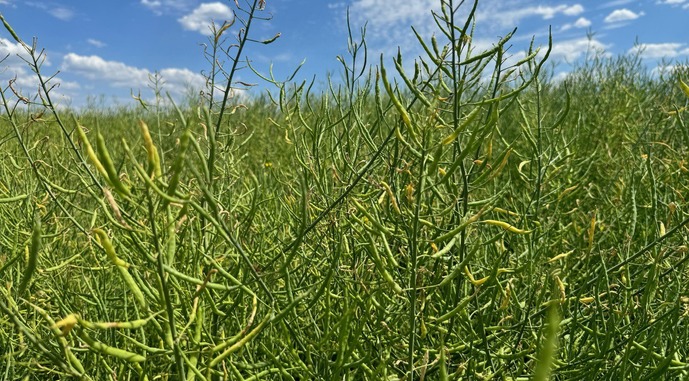
Late-sown wheat and spring barley are the most vulnerable, whereas canola is expected to be less affected. Some yield reductions are possible, but overall grain production across Europe is still projected to remain at a relatively strong level this season.
«The heat has slightly reduced yield potential. However, it is already too late in the season for it to significantly affect canola, since its yield potential has largely been established. Therefore, no major decline in European canola production is expected,» Attia explained.
Yield Adjustments
Although long-range weather forecasts are not perfectly reliable, grain markets have already started pricing in potential weather-related risks.
According to Bohdan Kostetskyi, Operating Partner at Barva Invest, if El Niño follows its typical seasonal pattern during the second half of summer and into autumn and winter, production of Australian canola, as well as Malaysian and Indonesian palm oil, could be negatively affected.
This, in turn, may strengthen demand for the oilseed complex in Europe — creating opportunities for Ukraine.
«Weather volatility is unprecedented. Rather than waiting for demand to emerge, market participants should adopt a proactive marketing strategy,» he said.
Due to the recent heatwave, some yield adjustments may occur for early grain crops. Wheat and barley were already in their grain-filling stage.
«The heat may reduce test weight. On the other hand, it could improve wheat protein content. We may see something similar to the Kazakh scenario — slightly lower yields but somewhat better quality,» Kostetskyi noted.
Corn Losses
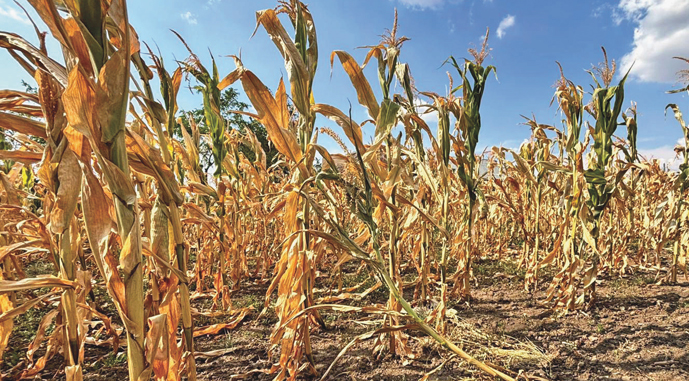
No major problems are expected for European canola production.Corn, however, presents a different picture.In France and Germany, crops had just accumulated vegetative biomass before being hit by severe heat stress.The most serious damage has been reported in Hungary and Romania, where corn entered tasseling and early ear formation, making it particularly vulnerable to drought.As a result, significant production losses are expected.
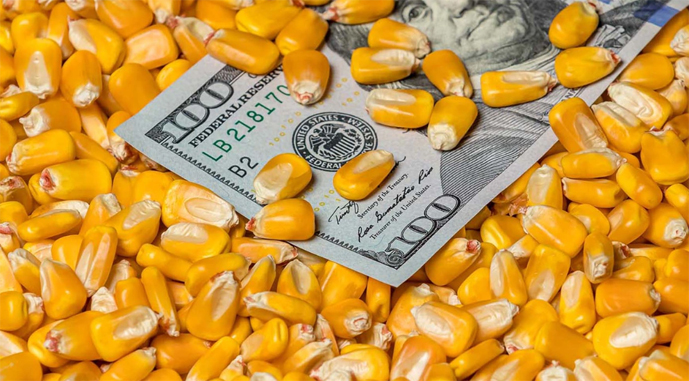
The market reacted immediately.Corn futures on Euronext rose from €208/t at the beginning of June to €226/t in early July.Nevertheless, the European exchange remains relatively illiquid, with most market participants continuing to rely primarily on Chicago futures.Meanwhile, U.S. corn prices remain below production costs for American farmers.
Corn Market Between Seasons
New-crop corn trading remains relatively slow, with limited producer interest so far.According to Barva Invest, forward sales have mainly been made by large agricultural holdings and established market players, yet even they report significantly lower sales volumes than last season.Ukraine is expected to carry over substantial corn stocks of approximately 4.3 million tonnes. After an active selling campaign in May, market participants have largely paused to assess pollination conditions across the Northern Hemisphere.Over the coming weeks, crop prospects will become clearer. However, analysts are already expected to significantly reduce their production forecasts for Western Europe, particularly France and Spain.
Meanwhile, Ukraine could face one of its largest export programs since the start of the full-scale invasion.

With current carry-over stocks and a harvest of around 31 million tonnes, Ukraine could supply more than 25 million tonnes of corn to international markets, as no significant production losses have been recorded so far. The key challenge, however, is physical export capacity. Continuous enemy attacks on infrastructure have reduced the capacity of export logistics by around 2 million tonnes. This affects grain elevators, railway hubs, locomotives, port infrastructure and even the vessels used for grain shipments.
High Production Expectations, Low Prices
Barva Invest analysts expect another strong harvest of early grain crops.
Current forecasts estimate:
- Wheat: 22.1 million tonnes
- Barley: 5.8 million tonnes
Several southern regions are already reporting record yields, which have been incorporated into current forecasts.However, analysts remain more cautious regarding parts of central and western Ukraine.Should field data exceed expectations, the wheat harvest forecast could increase by another 2 million tonnes, placing additional downward pressure on prices.At the same time, Ukrainian farmers are not in a financial position where they are forced to sell grain at any price.Many producers are able to wait for more favourable market conditions. Working capital remains available thanks to government-supported loans under Ukraine’s 5-7-9%affordable lending programme, while exchange-rate movements also help compensate part of financing costs.
«Banks have been willing to finance agricultural producers. According to our banking partners, agriculture remains one of the few stable and profitable sectors under current conditions, while interest-rate compensation further encourages lending,» Kostetskyi added.

The Cheapest Barley in the World
According to data from Ukraine’s профильное ministry, barley yields are reaching record levels.More than 135,000 tonnes have already been harvested, with an average yield of 3.9 tonnes per hectare.The actual figure may be even higher, as some producers have yet to report full harvest data.Traders and exporters are also observing exceptionally strong yields, prompting aggressive price reductions and increased competition on export markets.
Ukrainian barley has lost around $15 per tonne over the past ten days, making it the cheapest barley in the world. At this point, most of its downside potential has likely been exhausted. Feed mills are actively purchasing barley to cover their needs for the coming months, effectively providing price support. Back in May, they were paying around $25 per tonne more.
A similar level of demand is expected from flour mills for wheat, as wheat prices have also declined sharply, falling by approximately $30 per tonne over the past month.As a result, Ukrainian wheat has become highly competitive compared with alternative suppliers such as russia and Romania.
However, export opportunities remain limited.Türkiye, following another good harvest, has once again restricted grain imports, while Egypt has already purchased nearly 5 million tonnes of wheat for its strategic reserves.Consequently, CIF prices at the Port of Alexandria remain noticeably depressed.
Storage Instead of Immediate Sales
Given the current market situation, Ukrainian grain will have access to only a limited number of export destinations over the next two months, primarily Algeria and, potentially, Indonesia.The key question is how much grain producers will be willing to sell at today’s depressed prices.So far, farmers have been reluctant to accept current port prices: UAH 10,000/t for Grade 4 wheat; UAH 9,000/t for barley.Instead, many producers are choosing to store their grain.
At present, it makes more sense to harvest wheat and barley and place them into storage facilities or grain bags. Storage will add approximately $10–11 per tonne per month until mid-winter. However, there is a strong likelihood that prices will recover enough to offset those storage costs.
Canola Heads for Processing
Domestic canola prices remain closely linked to Euronext quotations.While previous seasons typically saw around 1 million tonnes contracted in advance by this point, forward sales have been minimal this year.The main reason is Ukraine’s recently introduced «canola amendments,» which impose a 10% export duty on canola while allowing registered producers to reclaim the duty through the State Agrarian Register (DAR).The policy has largely benefited domestic processors.Processors have been actively purchasing small lots from farmers who prefer not to register with DAR or wait for export-duty reimbursement, particularly given wartime risks.Meanwhile, intermediaries have had little choice but to sell canola to domestic crushers, whether the crop was received as payment for agricultural inputs or purchased directly from farmers.
Processing volumes continue to grow:
- 2024/25: 490,000 tonnes
- 2025/26: 1.3 million tonnes
- 2026/27 (forecast): 1.5–1.6 million tonnes from an expected 3 million-tonne harvest.
In other words, an increasing share of Ukraine’s canola crop is now being absorbed by domestic processing.Processors have effectively captured part of the margin that producers previously earned by exporting raw canola without the additional export duty.
«Competition in the canola market will remain strong. The export duty should encourage further domestic processing and increase exports of canola oil and meal to European markets by land. Large producers can register with DAR, fulfil their export contracts and receive foreign currency revenues,» Barva Invest analysts noted.
Current canola prices remain attractive and provide reasonable profitability. Port prices stand at approximately $570 per tonne, while domestic processors are paying around UAH 26,000 per tonne for canola with 44% oil content.
«Given the sharp price volatility and objectively higher production costs for wheat and barley, profitability for early grain crops remains under pressure, meaning producers are unlikely to rush sales. Canola, however, is a different story. Farmers are willing to sell it, making it one of the first sources of cash flow for the new marketing season,» Kostetskyi concluded.
For reference: EarthDaily Agro is an international company specializing in satellite-based agricultural monitoring, crop condition assessment, yield forecasting and weather-risk analysis using Earth observation data.
Svitlana Tsybulska, AgroPortal.ua


 02 October 2026, 07:20759
Shifting Trade Flows: What Opportunities Are Available to Ukrainian Producers?
 18 September 2026, 07:201275
CraftUP Ukraine: Finalists Presented Their Business Projects and Received Grants
 03 August 2026, 07:201697
UCAB Agrotechnologies 2026. West: All Winning Solutions in One Field
- 05 October 2026, 13:23 270
 Ukraine’s Share of EU Rapeseed Oil Imports Exceeds 75%
At the beginning of the season, Ukraine reduced rapeseed exports to the European Union but significantly increased supplies of rapeseed oil.
- 04 October 2026, 08:40 1075
 El Niño threatens the global sugar market with shortages and rising prices
Weather anomalies linked to El Niño are dampening the outlook for sugar production in key producing countries. After an expected surplus, the market may shift to a deficit in the new season, and raw sugar futures have risen by more than 25% since July.
- 02 October 2026, 07:20 760Shifting Trade Flows: What Opportunities Are Available to Ukrainian Producers?
At the end of September, the Ukrainian Pulses and Soybean Association (UPSA) brought together representatives of agribusiness and international trade from 30 countries at AgroFoodSummit 2026 in Mersin, Türkiye.