
Bitter Apples for Cider, Sweet Ones for Juice: How Apple Orchards Are Made Profitable in Zakarpattia
Kiviks Musteri: How a Family Apple Orchard Became One of Sweden’s Best-Known Brands
27 August 2026, 06:11 607
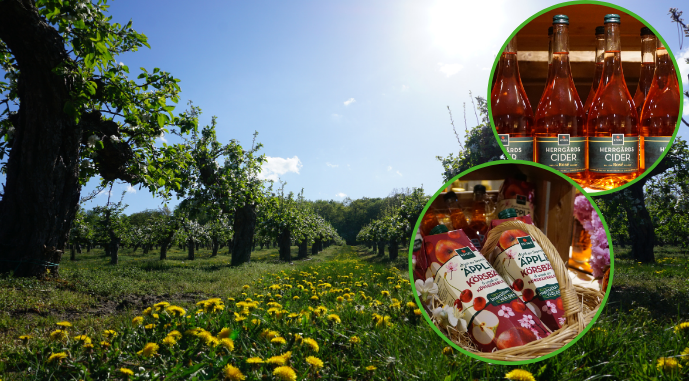
The Swedish family-owned company Kiviks Musteri, spanning five generations, is located in one of the most picturesque and environmentally valuable regions of southern Sweden — Österlen. Its grounds are literally immersed in a landscape shaped by nature, with Hanö Bay, Stenshuvud National Park and the company’s own apple orchards nearby.
This geographical «isolation by nature» has become more than just a backdrop — it forms the foundation of the company’s business philosophy. Sustainability and responsibility are not separate initiatives here; they are embedded in the company’s very way of thinking. The idea is simple: if you operate in such an environment, you cannot help but care for it, because the future of the business depends on its condition.
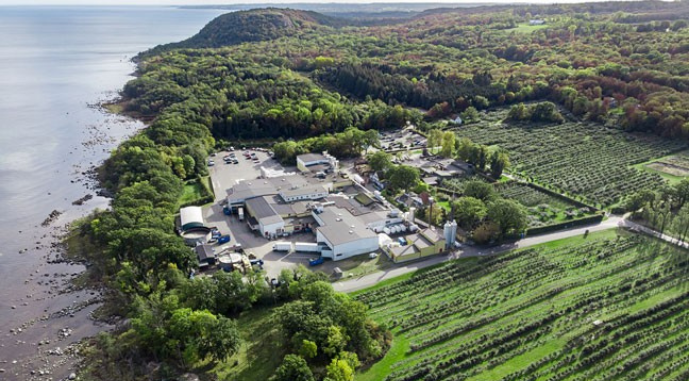
The experience of Kiviks Musteri demonstrates how a small family farm can grow into a national brand by combining its own production, processing, tourism, cooperation with local farmers and continuous innovation.
For Ukraine, this example is particularly interesting because added value is created not only through growing produce, but also through processing, brand development and business diversification.
From a Few Apple Trees to Sweden’s Largest Apple Producer
Today, Kiviks Musteri is one of Sweden’s best-known apple-growing and processing companies. Its history began in 1888, when Henrik Åkesson planted the first apple trees on the slopes of Stenshuvud. This laid the foundation for what would later become Sweden’s first professional apple orchard. Due to challenging soil conditions, conventional farming in the area was not very efficient, so the founder chose to focus specifically on fruit growing. He was among the first to recognize the potential of Österlen’s local sandy yet mineral-rich soils, which proved ideal for growing apples.
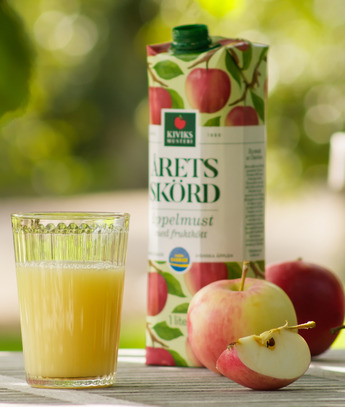
At the time, the family was already growing and selling fruit in the region, but the real turning point came in 1935, when Henrik’s son Ivar decided to establish a small production facility directly in the orchard. This marked the emergence of the first musteri — a place where apples were turned into juice. Production was entirely manual: the apples were milled, pressed and bottled by hand, and the first apple juice became the foundation of the future Äppelmust brand.
In the 1950s, the company entered a new stage of development. When management passed to Ivar, the land area was expanded, new orchards were planted and technologies that were modern for the time were introduced.
Despite this, some processes — bottling, capping and labeling — remained manual for a long time, clearly illustrating the gradual nature of the company’s modernization.
- In the 1960s, the small farm developed into an industrial enterprise.
- In 1969, cider production was launched and quickly gained popularity in Sweden. One of the first products, Kiviks Herrgårdcider, remains on sale today, highlighting the brand’s longevity and stability. During the same period, the company introduced concentrate production technologies and became one of the few companies in the country capable of producing apple juice year-round.
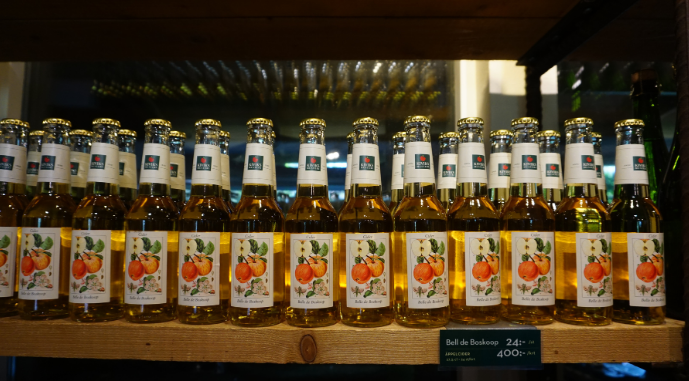
- The 1970s brought another technological change — the introduction of Tetra Pak packaging, which significantly transformed the scaling of production and distribution.
- As production grew, the company’s role in the region also changed. In the late 1980s, the first farm shop opened, and in 1996, Äpplets Hus was established — an educational space dedicated to apples, their cultivation, history and processing. This became an important step toward combining production and education. During the same period, the company actively supported Swedish fruit growers and local agriculture, including through campaigns promoting locally grown apples. At the same time, new products were introduced, including sparkling beverages, demonstrating the brand’s capacity for innovation.
- In 1999, another generational change took place in the company’s management. The company subsequently expanded through the acquisition of wine and horticultural businesses, the opening of cafés, and the development of nurseries and agritourism activities.
- In the 2010s, the company grew significantly through new orchards and expanded apple cultivation. Today, Kiviks Musteri is a large diversified business combining production, tourism, retail and education. More than 250,000 people visit it every year.
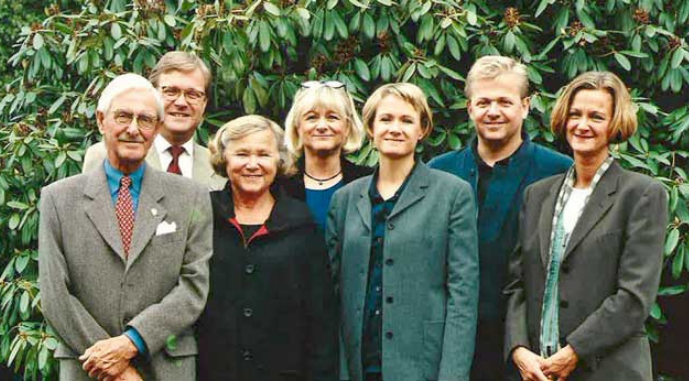
«Kiviks Musteri has remained a family business for more than 130 years. For us, it is important not only to produce products, but also to maintain our connection with the place where it all began. We always say that production must remain here in Kivik because it is part of our history and our responsibility to the local community,» says Christian Ek, Product Development Manager at Kiviks Musteri.
Apple Growing Remains the Foundation of the Business
Over more than 130 years, Kiviks Musteri has evolved from an apple orchard into a diversified company.
Its main areas of activity include:
- apple growing;
- production of juices, ciders, jams, purées and other products;
- filling and packaging services for other brands;
- private-label production;
- gastronomic tourism and agritourism;
- its own network of stores.
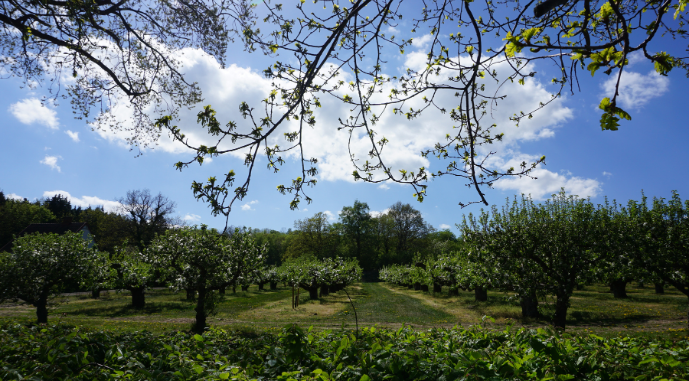
Apple growing remains the foundation of the business. The company is one of Sweden’s largest producers, combining organic and conventional growing methods. Some of the fruit is grown by the company itself, while some is produced in partnership with other businesses, helping maintain stable production volumes.
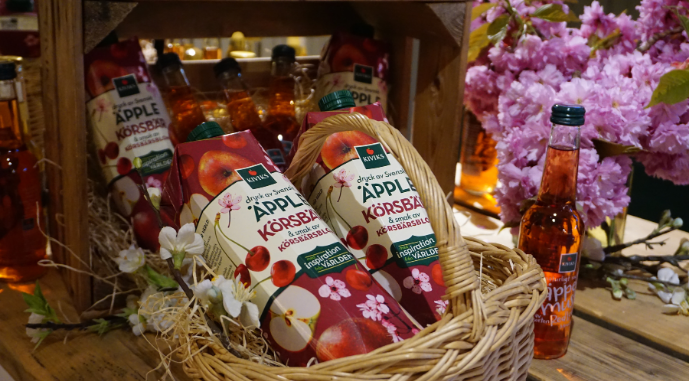
Fruit processing is the second key area. This is where most of the added value is created: apples are transformed into juices, cider, concentrates and other products. Processing is at the heart of the business model, allowing the company to operate not merely as a farm, but as a food producer on a national scale.
«We started as an apple orchard, but the real development began when we started processing our own produce. Today, we create a wide range of apple products — from juices and purées to ciders. Processing is what allows us to create added value and makes the business more resilient,» explains Christian Ek.
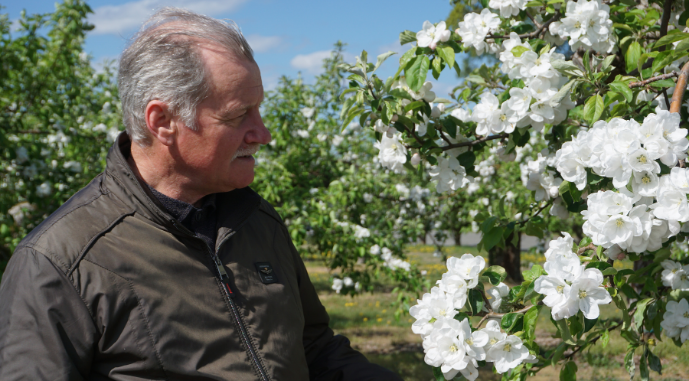
Brand development and distribution constitute another distinct area of the business. Kiviks Musteri products are available throughout Sweden and are associated with quality, local origin and tradition. It is a classic example of how an agricultural product can become a national brand.
Agritourism is another important part of the business. The company’s grounds function as an open space for visitors, featuring a museum, orchards, tasting areas, a restaurant and a shop. In this way, the farm becomes not only a production site, but also a place where consumers can gain experiences and interact directly with the brand.
«Our business is not limited to our own brand. We also work with private labels, provide filling and packaging services, and develop tourism. This diversification is precisely what helps us remain resilient even during periods of crisis and market change,» says Christian Ek.
From Farm to Table: Quality, Safety and Responsibility
Sustainability at Kiviks Musteri is not a separate area of activity — it permeates the entire value chain. The company operates according to a “farm-to-table” principle, controlling every stage, from growing fruit to processing, packaging and sales.
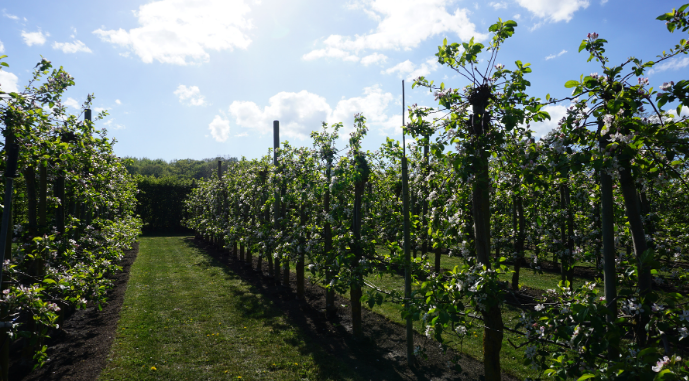
Apple trees here are viewed as part of the ecosystem. They not only produce a crop but also perform environmental functions: absorbing CO2, supporting soils and contributing to biodiversity. Production is therefore integrated into natural processes rather than being placed in opposition to them.
The company continuously works to reduce its environmental impact, improve food safety and increase resource efficiency. Its approach combines quality, safety and responsibility — both in production and in communication with consumers.
«The orchards are not just about production. We cooperate with researchers and maintain dedicated areas for studying pollinating insects. It is important to us that business development goes hand in hand with biodiversity conservation and research,» says Christian Ek.
Transforming a Traditional Farm into a Multi-Level Food and Brand Business
Kiviks Musteri is an example of how a traditional farm can be transformed into a multi-level food and brand business. Agricultural production is only the foundation on which a much broader system is built: processing, branding, retail, tourism and education.
It is a model in which raw materials are not the final product, but only the beginning of the added-value chain. Processing and branding are what allow the company to remain large-scale, stable and recognizable nationwide.
Kiviks Musteri demonstrates how an agricultural business can evolve into a cultural and consumer brand. It shows how a farm can become not only a producer, but also a space for experiences, education and interaction with consumers.
Most importantly, it demonstrates how a long-term family strategy can combine tradition, innovation and sustainability within a single business.
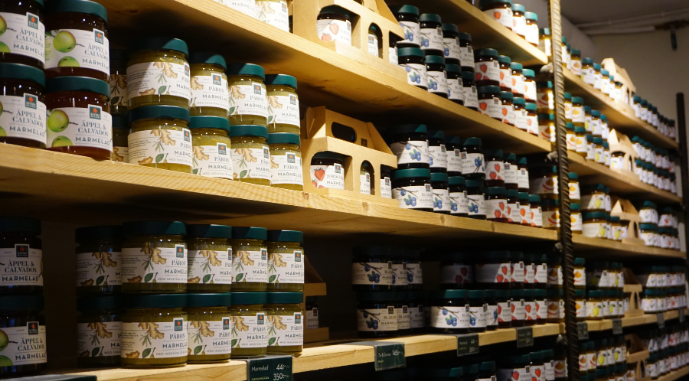
One of the company’s distinctive features is its diversified revenue structure.
According to company representatives:
- around 45% of turnover comes from the Kiviks Musteri brand;
- around 43% comes from private-label production;
- around 8% comes from alcoholic beverages;
- the remainder comes from other areas of activity.
The company not only sells its own products but also provides filling, packaging and production services for other customers.
The Company Processes 50 Apple Varieties, Including Ukraine’s Antonivka
The company emphasizes that selling raw materials is not the foundation of its business.
The fruit goes through a complete processing cycle, with several different products made from the same apple, while the residues left after pressing are used as animal feed.
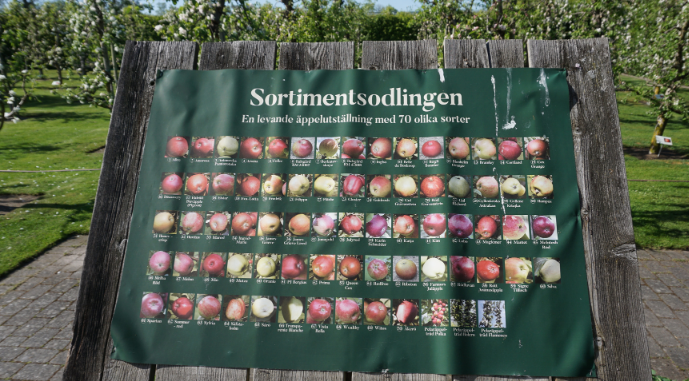
Kiviks Musteri uses more than 50 apple varieties in its production, including Ukraine’s Antonivka, which produces some of the largest fruit in the orchard.
Some products are created by blending dozens of varieties to achieve the desired flavor profile. Alongside mass-market products, the company also produces niche ranges of juices and ciders made from specific apple varieties or individual orchards. These products are sold primarily through the company’s own stores and tourist locations.
Kiviks Musteri’s Experience That May Be Relevant to Ukrainian Fruit Growers
The experience of Kiviks Musteri demonstrates several principles that may be relevant to the development of small and medium-sized farming in Ukraine:
- creating added value through processing;
- developing an own brand;
- combining production with tourism;
- cooperation with other producers;
- diversifying sources of income;
- cooperation with researchers;
- using almost all raw materials with virtually no waste.
It is precisely this approach that has enabled a family apple orchard established in the late 19th century to become one of Sweden’s best-known food brands.
For reference: This material was prepared as part of the FarmForce project, funded by the Swedish Institute and bringing together partners from Sweden and Ukraine — Agroforestry Sweden, the Swedish University of Agricultural Sciences (SLU), Ivan Franko National University of Lviv, the National University of Life and Environmental Sciences of Ukraine, and WWF-Ukraine.
Svitlana Yatsenko, AgroPortal.ua
