
The scale of the reduction in winter crop areas will depend primarily on the financial resilience of producers. If the state and international partners can ensure access to working capital financing and support grain logistics and storage, the scale of the reduction can be significantly limited.
1 Million Fewer Hectares of Winter Crops for the 2027 Harvest: How Farmers Are Redistributing Resources
10 September 2026, 05:43 277
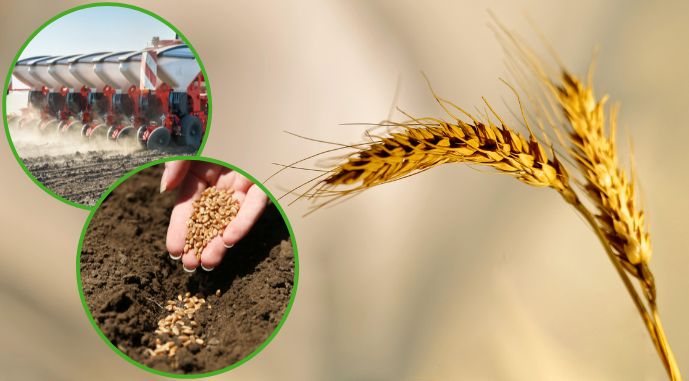
The area under winter crops for the 2027 harvest will most likely be smaller than during the 2026 sowing campaign. Under an adverse scenario, the reduction could reach up to 1.0 million hectares.
First and foremost, this will depend on the security situation and farmers’ financial capacity to carry out the sowing campaign, the National Scientific Centre «Institute of Agrarian Economics» told AgroPortal.ua.
The greatest risks are associated with frontline territories, where some land remains physically inaccessible or poses high risks for fieldwork. No less important than the physical ability to carry out sowing is the shortage of working capital. Additional pressure comes from logistics problems, unstable exports and high transportation costs. Combined with lower purchase prices, this significantly worsens the economics of grain production.

Oleksandr Zakharchuk, Head of the Department of Investment and Material and Technical Support at the NSC Institute of Agrarian Economics, Corresponding Member of NAAS
The Institute of Agrarian Economics does not rule out that winter wheat areas may see the largest reduction. The Institute recalled that, based on the results of sowing for the 2026 harvest, the area sown with winter wheat was 5.3% smaller than the previous year. This trend may continue during the current campaign.
A reduction in the share of winter barley and rye in the total planted area is also expected due to their lower margins compared with other crops, particularly oilseeds.

Dmytro Liudvenko, Doctor of Economics, Leading Researcher at the Department of Agricultural Production Economics at the NSC «Institute of Agrarian Economics»
The overall reduction in the area under winter crops is forecast at 4–5% compared with last year. Farmers plan to partially redistribute resources in favour of economically justified areas of agricultural production, such as soybeans or sunflower. A number of farms are also opting for winter rapeseed or durum wheat varieties, driven by changing climatic conditions and complicated logistics infrastructure.
At the same time, an informal survey conducted during LFM 2026 confirmed that farmers are considering reducing winter crop areas, although not all of them are doing so. TAS Agro, for example, does not plan to change its winter wheat area, as it is the main preceding crop for rapeseed.

Oleh Zapletniuk, CEO of TAS Agro LLC
Wheat profitability should be calculated together with rapeseed over a two-year period. And the numbers look quite good. Rapeseed has generated our main revenue and our main liquidity this year. We have already completed rapeseed sowing, while around 35% of winter wheat has been sown.
The agricultural company IMC shares this position. It also does not plan to reduce the area under winter wheat.

Oleksandr Verzhykhovskyi, CEO of IMC
IMC’s strategy is not to deviate from the crop rotation that has been established and refined over the years and not to react impulsively to external factors. As practice and our experience show, this is a justified strategy in the medium and long term.
The AGROTRADE Group also does not plan to make any changes regarding winter wheat and rapeseed, confirmed Ivan Kriuchkov, Director of the Group’s Agro-Industrial Department.
HarvEast, however, plans to reduce its winter wheat area.

Dmytro Skorniakov, CEO of HarvEast agricultural holding
Profitability really should be calculated over two years, but we will reduce the area under wheat because I do not see that we have those two years right now. We need to get through one year without going bankrupt. So oilseeds currently make much more economic sense, and we will increase sunflower and soybean areas.
At Eridon, rapeseed was not sown due to weather conditions, while the company took the risk of keeping the wheat area at the same level as last year. Company owner Serhii Krolevets clarified that the crop is being sown into dry soil in anticipation of rainfall.

As for costs, scientists at the Institute of Agrarian Economics estimate that the overall cost of Ukraine’s sowing campaign for the 2027 harvest will increase by an average of 5–10%. The main factors are higher diesel fuel prices, particularly amid the escalation of the situation in the Middle East, as well as further increases in mineral fertiliser prices.
Oleksandr Zakharchuk, Head of the Department of Investment and Material and Technical Support at the NSC Institute of Agrarian Economics, Corresponding Member of NAAS
To carry out the main autumn fieldwork, the agricultural sector needs around UAH 200 billion in working capital financing: UAH 70 billion for sowing winter crops, UAH 80 billion for harvesting late crops and UAH 50 billion for preparing the soil for spring fieldwork in 2027. Taking into account payments to landowners, loan servicing and other financial obligations, the total requirement could reach UAH 250–280 billion.
The main risk lies in a gap emerging between the need for funds and farmers’ ability to generate them through product sales.
Export restrictions contribute to grain accumulation, exacerbate the shortage of grain storage facilities and force some producers to sell their products at low prices. The increase in supply, in turn, puts pressure on purchase prices, reduces farmers’ incomes and deepens the shortage of working capital.
At the same time, a number of farms are already optimising production, Dmytro Liudvenko concludes. Research results indicate a shift towards resource-saving technologies — the use of Strip-Till or No-Till, which make it possible to save fuel and reduce machinery operating time — as well as changes in the crop structure in favour of less costly crops, such as soybeans instead of corn.
Alla Stryzheus, AgroPortal.ua
