

Сирні тренди: у складні часи з’являється глибший потяг до дослідження свого
How to evaluate thousands of cheeses in a few days: the experience of judging at the World Championship Cheese Contest
13 March 2026, 07:00 2094
Professional cheese competitions are not just about medals and winners. For producers, it is primarily a professional assessment of product quality, and for the industry, it is a way to set standards.
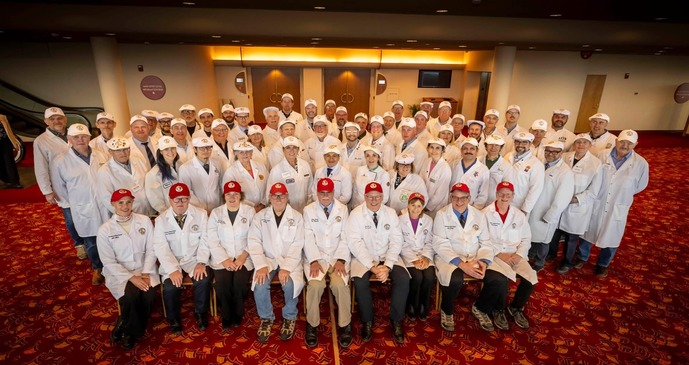
One of these competitions is the World Championship Cheese Contest, one of the oldest and most respected cheese championships in the United States. It is organized by the Wisconsin Cheese Makers Association, a professional community that actually initiated this format of evaluation so that independent experts from different countries could professionally analyze cheeses. That's why the experts include technologists, consultants, affinity cheesemakers and other specialists who work with cheese on a professional level.
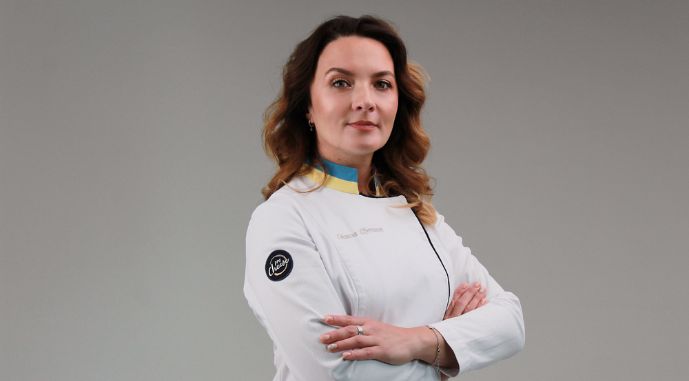
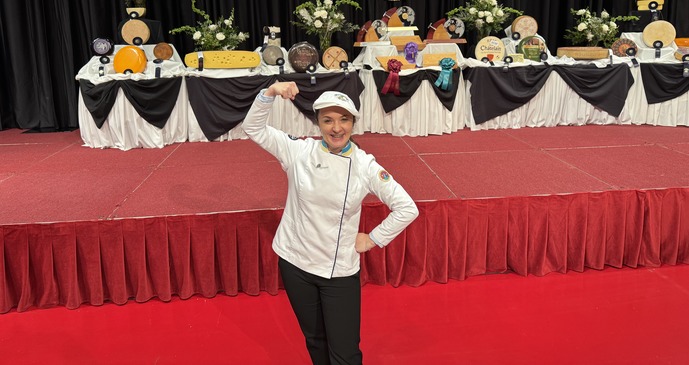
This year, for the first time, a Ukrainian, cheese expert Oksana Chernova, joined the World Championship Cheese Contest judges. In this column, she shares her experience of judging and talks about the behind-the-scenes of one of the most authoritative cheese competitions in the world.
How do you get into the jury
The international cheese community has a kind of network of experts — people who develop cheese culture in their countries: they conduct training, work with producers, popularize the product and form professional standards.
Contest organizers monitor these activities and invite those who show themselves in the development of the industry.
I received an invitation letter three years ago. I was supposed to come to the previous competition, but I didn't have time to get a visa. So I was automatically invited again, and this year I was able to join the jury.
How does a judge's day go
- A single day of judging lasts from 8:00 am to 4:00 pm. It's a full day with only one break for lunch.
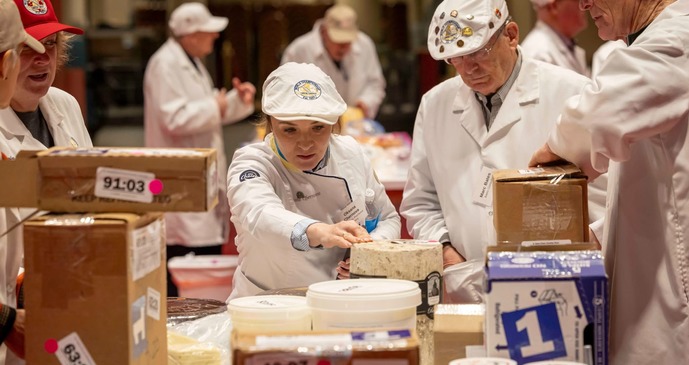
- During the day, each judge evaluates approximately 66-68 cheeses and has to work with three different categories of cheese. In my case, these were the classes of mozzarella, blue cheese, and low-fat cheeses.
- The competition is technical: the main focus is on the technological quality of the product.
- Each judge works with an individual iPad program, which lists all possible defects for the respective category of cheese. The judge's task is to carefully evaluate the product and record whether there are any defects. This information is then passed on to the manufacturer as professional feedback.
Independence of evaluation
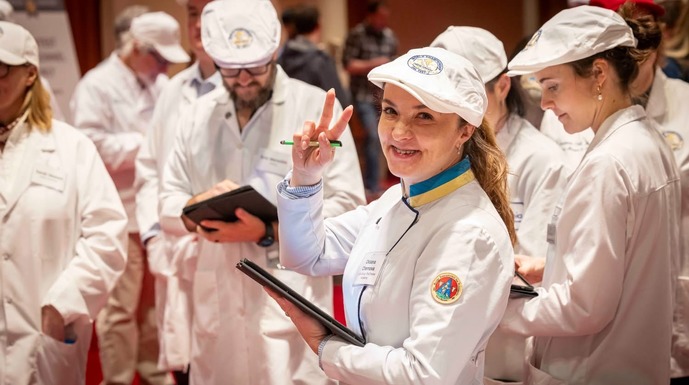
The judges work in parallel — at the same table, but completely independent of each other.
We stand opposite each other, share the cheese, but each works with his or her own feelings and knowledge. No one sees what the other is writing, and no one discusses the cheese during the evaluation.
The rules of the competition strictly prohibit any influence of one judge on another. If there is a significant discrepancy in the scores, the cheese may be brought back for additional evaluation.
In such cases, a third judge is sometimes involved to help reach a common decision.
The physical side of tasting
Judging is not only analytical, but also physically demanding. Most of the time, you have to work standing up, and evaluating dozens of cheeses in a row tires your receptors.
To restore taste perception, you use water and green apples. Sometimes even Coca-Cola helps.
It is important to understand that this is tasting, not eating. Cheese does not need to be eaten — it can be spit out in the same way as during a professional wine tasting.
What impressed me among the cheeses
The cheeses that impressed me the most were, in particular, Gouda Royal Grand Cru from Bimster, which eventually became the winner of the competition. By the way, this cheese is also sold in Ukrainian chains, having an exclusive import from Ardis Group.
Oaxaca Mexican cheese was also very interesting, as it had a perfect shape and no defects.
I was also impressed by Swiss cheeses aged for more than 12 months — in this category, there are styles that are well known to Ukrainian consumers, such as Appenzeller.
Another discovery was American blue cheese. It is made using the Gorgonzola technology, but has a denser texture and a softer, more moderate flavor and can really compete with Italian cheese.
Differences of the American market
This competition takes place on another continent, so it reflects the peculiarities of the local market. For example, the difference in the size and weight of cheeses is very noticeable.
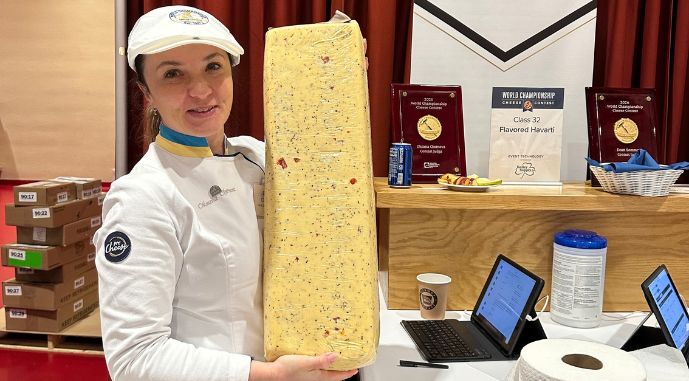
While in Europe or Ukraine a standard head of cheese can weigh one or two kilograms, in the American market much larger formats are common — 13-16 kilograms.
Even the mozzarella I judged weighed about three kilograms.
This demonstrates the difference in approaches to the market and product marketing.
Diversity of categories
The competition covers the widest possible range of categories. It evaluates not only different styles of cheese, but also other dairy products. For example, the competition included experts who evaluated milk powder and whey. That is, almost all possible categories of dairy products are represented."
The most difficult thing for a judge
The most difficult thing for a judge is to correctly identify a defect. Sometimes two defects may look very similar on the surface, but in fact have a different nature. In such cases, you need to carefully analyze the product to make a professional decision.
Of course, we are all human, and even experienced experts can sometimes make mistakes.
Why such competitions are important for the industry
Such competitions are of great importance for shaping global trends and for manufacturers.
They receive not just a grade or a medal, but a professional technical analysis of their product: what is good about it and what else needs to be worked on.
This is what allows manufacturers to improve technologies and improve product quality. Therefore, almost every country has specialists who will help to refine and bring the product to perfection, taking into account technology, production features, etc.
The problem of expert support
Another point that is very noticeable at such international events is the support of experts.
Most judges come to the competition with the support of the state, industry consortia, or companies they work for. In fact, almost all experts receive assistance with flight or other expenses.
Unfortunately, in Ukraine, such support for experts is almost absent.
Conclusions
World Championship Cheese Contest shows how systematic the work with product quality can be in the cheese industry. For producers, this is not just an opportunity to win a medal, but, above all, a professional technical analysis of their work.
It is thanks to such competitions that a quality culture is formed: producers receive detailed feedback, and experts have the opportunity to compare different technologies and approaches to production in different countries.
Such events show that cheese has long been a full-fledged industry with its own standards, experts and professional community.
Oksana Chernova, cheese expert at ProCheese Academy, cheese culture researcher and judge of the international World Cheese Awards competition from Ukraine
